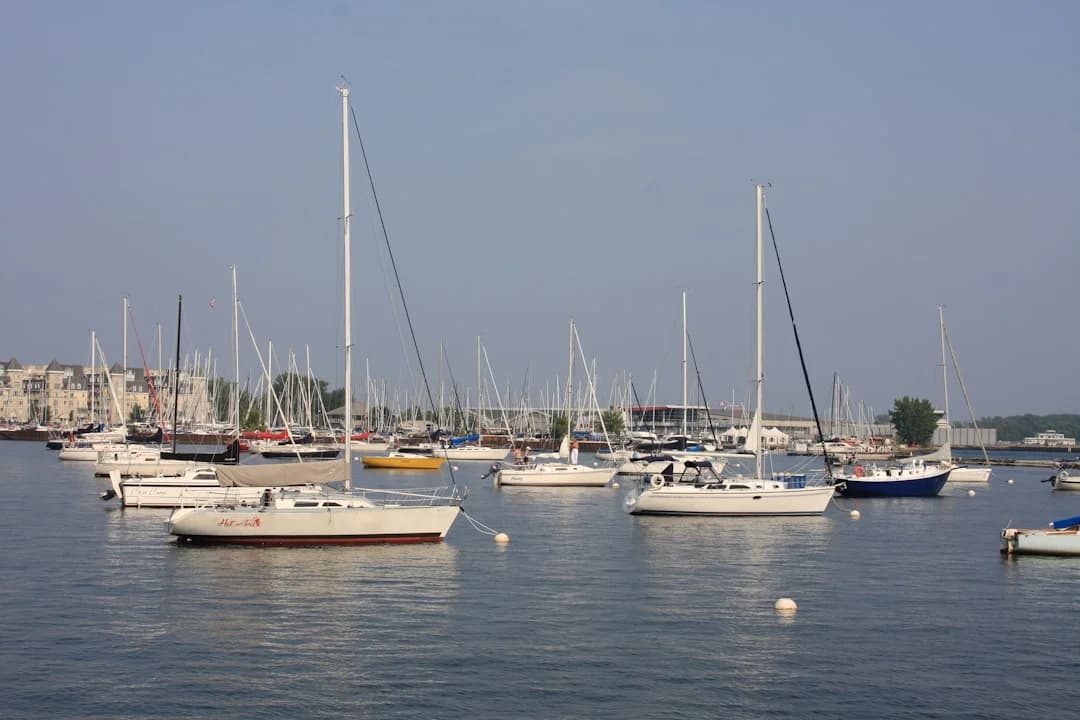
Living on a sailboat sounds romantic until you try to cook dinner in a galley the size of an airplane lavatory while the boat rocks in someone's wake. Then it sounds romantic again the next morning when you have coffee in the cockpit watching dolphins swim past your hull. The liveaboard life is a constant oscillation between "why would anyone live any other way" and "I would sell a kidney for a proper shower."
About 100,000 people live aboard boats in the US alone, and the number is growing — driven by housing costs, remote work, and a post-pandemic appetite for freedom. But the Instagram version of liveaboard life leaves out the diesel engine maintenance, the mildew, and the fights about storage space. Here's the honest truth about living on a sailboat — the genuine pros, the real cons, and the numbers behind both.
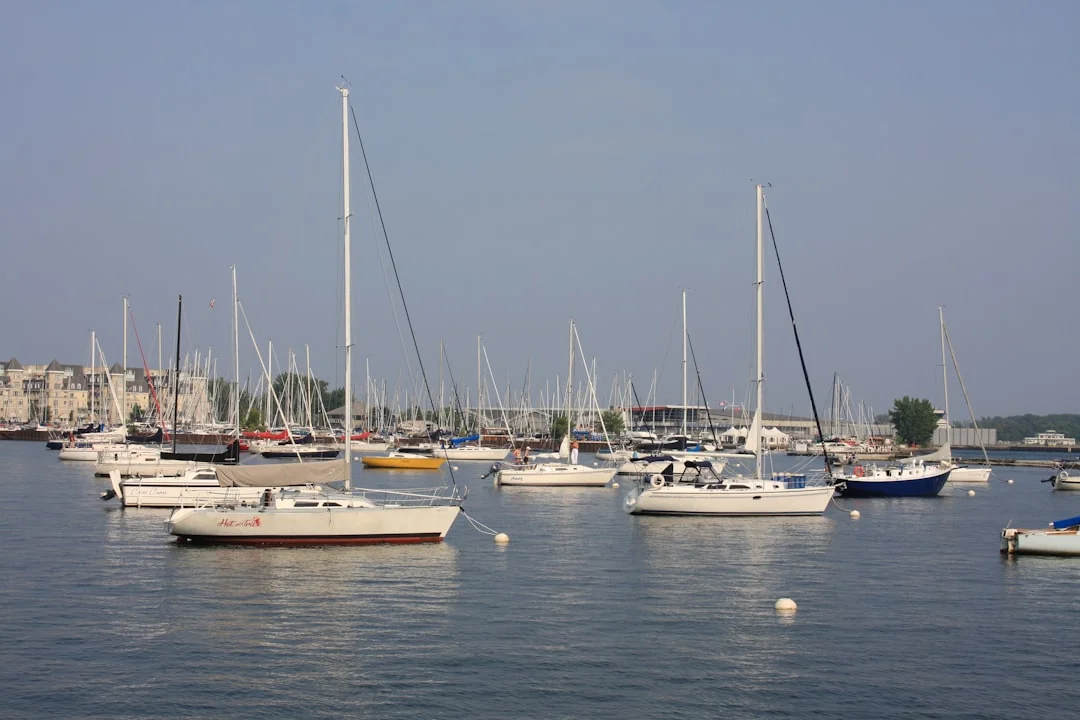
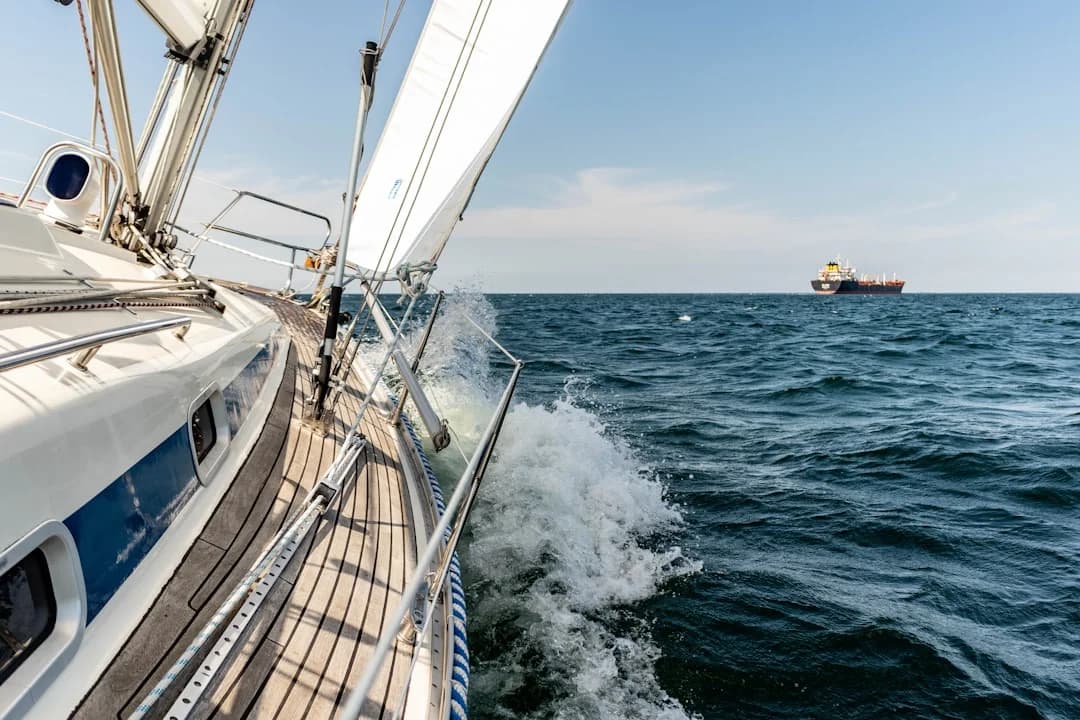
Photo by Abhinav Gorantla on Unsplash
The Genuine Pros
Freedom of Movement
This is the big one, and it's real. Your home can move. Wake up in one city, sail to another for lunch, anchor in an empty bay for dinner. No lease, no mortgage, no HOA. If you don't like your neighbors, you raise the anchor and leave. Try doing that with a house.
For cruisers, this means following the seasons — Caribbean in winter, Mediterranean in summer, New England in fall. Your "commute" is a sail between islands. Your backyard changes every day.
Even marina-based liveaboards (who rarely move) enjoy a degree of flexibility that landlubbers don't. Most marinas allow month-to-month stays. Don't like the area? Motor to a different marina. Your home equity comes with you.
Lower Cost of Living (Usually)
Living aboard can be dramatically cheaper than renting or owning on land — but only if you're honest about the math.
| Expense | Land (1BR apartment, coastal city) | Liveaboard (38-ft sailboat, marina) |
|---|---|---|
| Rent/slip fee | $1,800–$3,500/month | $800–$1,800/month |
| Utilities | $150–$300/month | $50–$150/month (less space to heat/cool) |
| Insurance | $100–$200/month (renter's) | $200–$400/month (marine) |
| Maintenance | $0–$200/month (landlord handles) | $300–$800/month (you handle everything) |
| Property tax | $0 (renter) / $500+ (owner) | $0 |
| Total | $2,050–$4,200/month | $1,350–$3,150/month |
The savings are real — especially in expensive coastal cities where a marina slip costs a fraction of equivalent housing. In San Francisco, a 40-ft slip runs about $1,200/month. A one-bedroom apartment in the same neighborhood is $3,500. In Fort Lauderdale, slips are $800–$1,500/month versus $2,000+ for an apartment.
But maintenance is the hidden equalizer. Boats break. Constantly. Budget 10% of the boat's value per year for upkeep, and you'll be close.

Photo by David Yao on Unsplash
Simplicity and Minimalism
A 38-foot sailboat has roughly 250 square feet of living space. You physically cannot accumulate clutter. Every possession must justify its space. This forced minimalism sounds restrictive, but most liveaboards describe it as liberating. You own less, clean less, and spend less time managing stuff.
Your wardrobe fits in two lockers. Your kitchen has four burners and a small fridge. Your "living room" is the cockpit, which has a better view than any penthouse. The simplicity becomes addictive — after a year aboard, visiting a suburban house feels absurdly oversized.
Connection to Nature
You feel the weather, the tides, the seasons. You know when the wind shifts because it changes the sound of the rigging. You see sunrises because your bedroom has 360-degree windows. Dolphins, pelicans, sea turtles, and fish are your daily companions. The water lapping against the hull becomes your white noise machine.
This isn't hippie nonsense — it's a genuine quality-of-life difference that most liveaboards cite as their primary reason for staying.
Community
Marina liveaboard communities are tight. You share dock carts, lend tools, watch each other's boats, and have sundowner drinks in someone's cockpit every evening. It's the neighborliness that most suburban developments promise but rarely deliver. When something breaks, there's usually someone three slips down who's dealt with the same problem.
The cruising community is even more connected. VHF nets, potluck dinners on the beach, and the shared experience of anchoring in remote bays creates bonds that last decades.
The Real Cons
Space (or Lack of It)
No amount of clever storage solves the fundamental problem: a 40-foot boat is small. Two people can live comfortably on a 38–45 footer. Three is tight. Four is only viable on a catamaran. If you need a home office, a hobby room, or space for kids to run around — a monohull isn't it.
Specific space pain points:
- No standing headroom in many parts of the boat (ducking becomes second nature)
- One bathroom (called the "head"), usually tiny, often shared
- Galley counter space measured in inches, not feet
- No closets — just lockers, cubbies, and bins
- No guest room — visitors sleep in the V-berth or the saloon

Photo by Anthony Maw on Unsplash
Maintenance Never Stops
A house sits still. A boat floats in a corrosive environment that actively tries to destroy it. Saltwater attacks metal. UV degrades canvas and fiberglass. Marine growth fouls the bottom. Moisture breeds mildew in every locker.
Typical annual maintenance for a 38-ft liveaboard:
| Task | Frequency | Cost (DIY) | Cost (Pro) |
|---|---|---|---|
| Bottom paint | Annual | $500–$800 | $2,000–$4,000 |
| Engine service | Annual | $200–$400 | $500–$1,000 |
| Rigging inspection | Annual | $0 (visual) | $300–$600 |
| Zincs replacement | Every 6 months | $50–$100 | $150–$300 |
| Brightwork (varnish) | Annual | $100–$300 | $500–$1,500 |
| Canvas/dodger repair | As needed | $100–$500 | $500–$2,000 |
| Unexpected repairs | Always | $500–$2,000 | $1,000–$5,000 |
| Total | $1,450–$4,100 | $4,950–$14,400 |
The boat always needs something. Accept this or don't move aboard. If you enjoy fixing things with your hands, boat maintenance is satisfying puzzle-solving. If you don't, it's an expensive, never-ending headache.
Weather Dependence
When a storm hits land, you close the windows. When a storm hits a marina, you check every dock line, add extra fenders, set anchor alarms, and lie awake listening to the wind howl through the rigging wondering if the boat two slips down is going to break free and hit you.
Heavy rain tests every hatch seal and portlight gasket. Heat turns a boat into an oven (fiberglass absorbs solar radiation efficiently). Cold requires running a diesel heater or bundling up — boats have minimal insulation.
Wind affects everything: cooking, sleeping, leaving the dock, getting the dinghy ashore. Landlubbers don't think about wind. Liveaboards think about it constantly.
Logistics
Things that are trivial on land become missions on a boat:
- Laundry: haul it to the marina laundry room in a bag (or a dinghy ride + walk to a laundromat)
- Groceries: carry bags down the dock, down the companionway, into tiny lockers
- Mail: use a PO box or a friend's address. Many banks and government agencies don't accept marina addresses
- Trash: carry it up the dock. Some remote anchorages have no trash collection at all
- Internet: marina WiFi is usually terrible. Most liveaboards use a cellular hotspot or Starlink ($120/month)
- Parking: most marinas have limited parking, and it costs extra
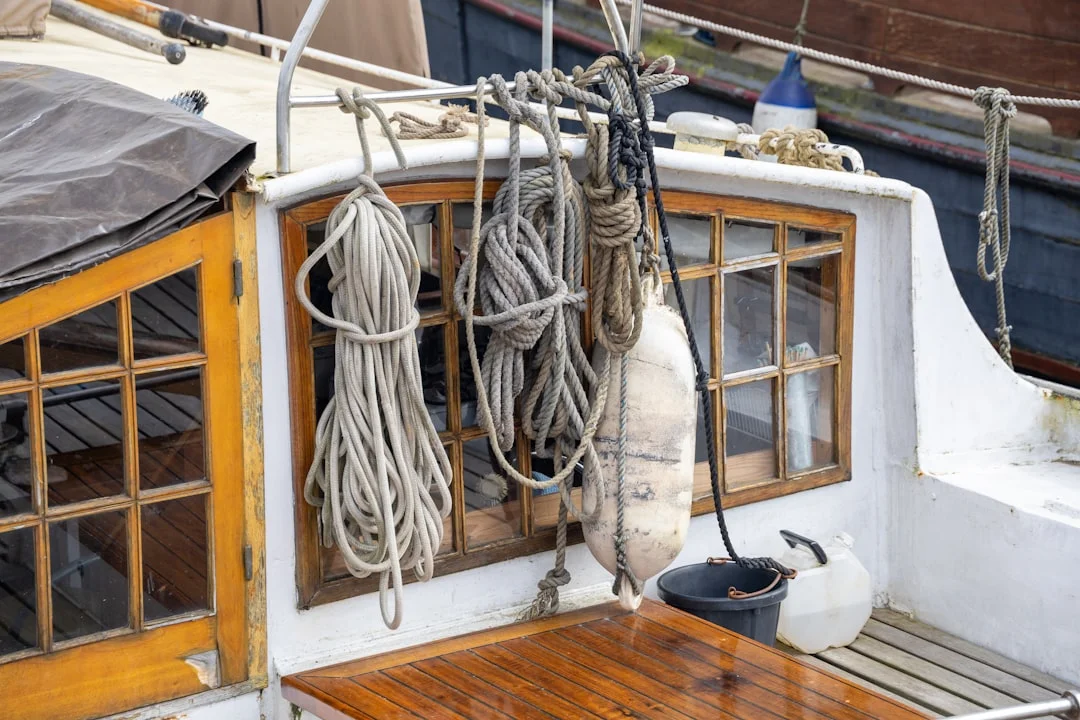
Photo by Stock Birken on Unsplash
What Boat Should You Live On?
Monohull vs. Catamaran
| Factor | Monohull (38–42 ft) | Catamaran (38–42 ft) |
|---|---|---|
| Living space | 250–350 sq ft | 400–600 sq ft |
| Headroom | 6'0"–6'4" in saloon | 6'2"–6'8" throughout |
| Stability at anchor | Rolls in beam waves | Very stable (no rolling) |
| Bedrooms | 2–3 cabins | 3–4 cabins, each with own head |
| Purchase price | $80,000–$200,000 (used) | $200,000–$500,000 (used) |
| Slip cost | $800–$1,500/month | $1,200–$2,500/month (wider beam) |
| Sailing performance | Better upwind | Faster downwind, no heeling |
Catamarans are better for living aboard by almost every metric — more space, more stable, better ventilation, and separate cabins for privacy. The tradeoff is cost: a used 40-ft catamaran costs 2–3x more than an equivalent monohull, and marina fees are higher because of the wider beam.
If your budget is under $150,000, you're looking at monohulls. Above $250,000, catamarans become viable. For detailed pricing on charter catamarans (a good way to test the lifestyle), see our yacht charter cost guide.
Ideal Liveaboard Size
- Solo: 30–36 feet (manageable alone, enough space for one)
- Couple: 36–42 feet (the sweet spot — comfortable without being overwhelming)
- Family with kids: 42–50 feet catamaran (space for school area, play space, separate cabins)
Under 30 feet is cramped for full-time living. Over 50 feet is expensive to maintain and harder to find marina space.
The Financial Reality
Buying a Liveaboard Boat
A solid, used, liveaboard-ready sailboat costs:
- Budget option: $30,000–$60,000 (older monohull, 34–38 ft, needs some work)
- Mid-range: $80,000–$180,000 (well-maintained monohull, 38–45 ft)
- Premium: $200,000–$500,000 (catamaran or newer large monohull)
The refit trap: buying cheap and upgrading sounds smart but often costs more than buying right. A $40,000 boat that needs $60,000 in work is a $100,000 boat that took two years of your life. Buy the best-maintained boat you can afford.
Monthly Costs
| Expense | Marina-Based | Anchored/Cruising |
|---|---|---|
| Slip/mooring | $800–$2,000 | $0–$300 |
| Insurance | $200–$400 | $200–$400 |
| Maintenance reserve | $300–$800 | $300–$800 |
| Fuel | $50–$100 | $100–$300 |
| Provisions | $400–$800 | $400–$800 |
| Internet | $50–$120 | $120–$200 (Starlink) |
| Misc | $100–$200 | $100–$200 |
| Total | $1,900–$4,420 | $1,220–$3,000 |
Cruisers who anchor out most of the time If you're cruising rather than staying in a marina, solid anchoring skills are non-negotiable. can live on $1,500–$2,500/month as a couple. That's less than most studio apartments in a US coastal city.
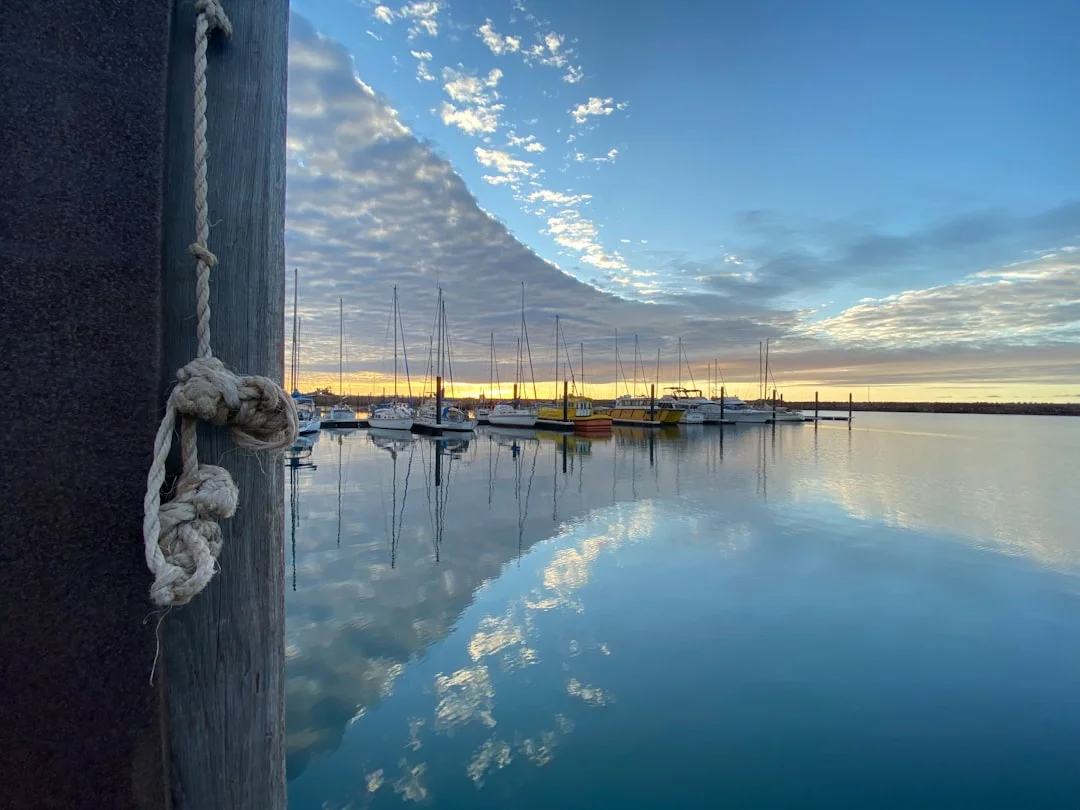
Photo by Rhys Moult on Unsplash
How to Get Started
- Charter first: spend a week on a charter boat before committing. A bareboat charter in Greece or the Caribbean will teach you more about boat living than months of YouTube videos.
- Take a sailing course: if you can't sail yet, start with our beginner sailing guide and get certified.
- Visit marinas: talk to liveaboards. Most are happy to give tours and honest opinions. Ask about the marina's liveaboard policies — some limit the percentage of slips available for full-time residents.
- Budget realistically: boat purchase + 6 months of expenses + $10,000 emergency fund, minimum.
- Use Breezada's sea distance calculator to plan potential cruising routes between liveaboard-friendly harbors.
Frequently Asked Questions
Is living on a sailboat legal?
In most places, yes — but marina rules vary. Some marinas welcome liveaboards; others restrict them to a percentage of slips or ban them entirely. Cities like San Francisco, Fort Lauderdale, Annapolis, and Key West have established liveaboard communities with decades of history. Always check the marina's liveaboard policy before signing a contract.
Can I work remotely from a boat?
Yes — and this is why liveaboard numbers have exploded since 2020. Marina WiFi is unreliable, so invest in a cellular hotspot (Verizon/T-Mobile, $50–$80/month) or Starlink ($120/month, works at anchor). Starlink has been a game-changer for cruisers — reliable internet in remote anchorages was previously impossible.
What about mail and legal address?
You need a land address for your driver's license, voter registration, and bank accounts. Options: a PO box, a family member's address, or a mail forwarding service (like Escapees or St. Brendan's Isle, $15–$30/month). Some states (Florida, South Dakota, Texas) are popular legal domiciles for liveaboards because of favorable tax and registration policies.
How do liveaboards handle healthcare?
Same as anyone — through employer insurance, marketplace plans, or private insurance. The main difference is finding doctors near your marina. Cruisers who move between countries often carry international health insurance (IMG, SafetyWing, $50–$200/month). Dental and emergency care can be excellent and affordable in Mexico, the Caribbean, or Southeast Asia.
Is it lonely?
The opposite, usually. Marina communities are social by nature — you share close quarters, common facilities, and a shared lifestyle choice. Sundowner drinks, potlucks, and dock parties are frequent. Cruising communities are even tighter. If you want solitude, you can anchor alone. If you want company, there's always someone at the next slip.
About the Author
Related Articles
Code Zero vs Genoa: Jib & Spinnaker Guide
Compare Code Zero vs genoa, jib, and spinnaker by wind range and angle. Choose the right headsail for your boat—read the guide now.
By Breezada Team
Starlink Mini on a Boat: Plans, Power & Offshore Use
Learn Starlink Mini on a boat—plans, power draw, and offshore performance. Compare Roam vs Mobile Priority and get setup tips. Read now.
By Breezada Team
Boat Courtesy Flag & Q Flag Etiquette for Yachts
Learn boat courtesy flag and Q flag etiquette for yachts—what to fly, where to hoist it, and common mistakes. Get the checklist before landfall.
By Breezada Team

French Canals Boat Trip Guide Beyond Canal du Midi
Plan a french canals boat trip beyond the Midi with routes, costs, licenses & lock tips. Compare regions and map your itinerary—start now.
By Breezada Team