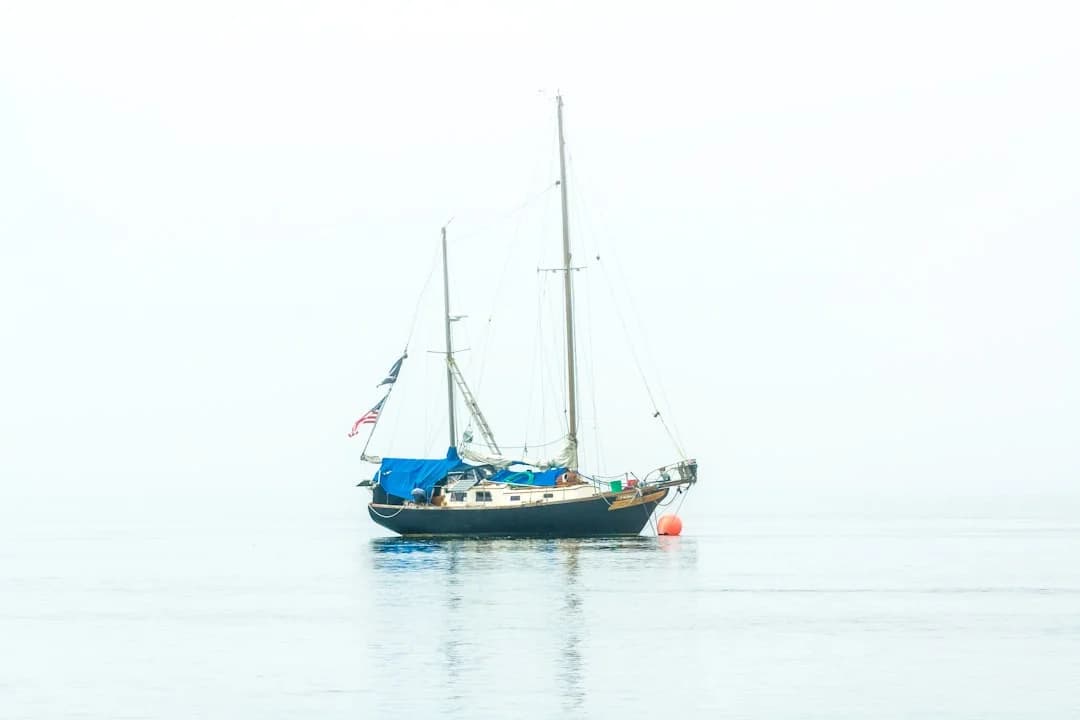
Anchoring looks simple — drop the heavy thing, let out some chain, and you're done. In reality, a surprising number of sailors get it wrong, and the consequences range from embarrassing (dragging into another boat at 3am) to dangerous (ending up on a lee shore in a squall). The good news is that anchoring well is a learnable skill, and the fundamentals haven't changed in centuries. If you're new to sailing, start with our beginner's sailing guide before tackling anchoring.
This guide covers everything from choosing the right anchor to setting it properly, calculating scope, and sleeping soundly while your boat swings at 20 tons of tension on a piece of galvanized steel.
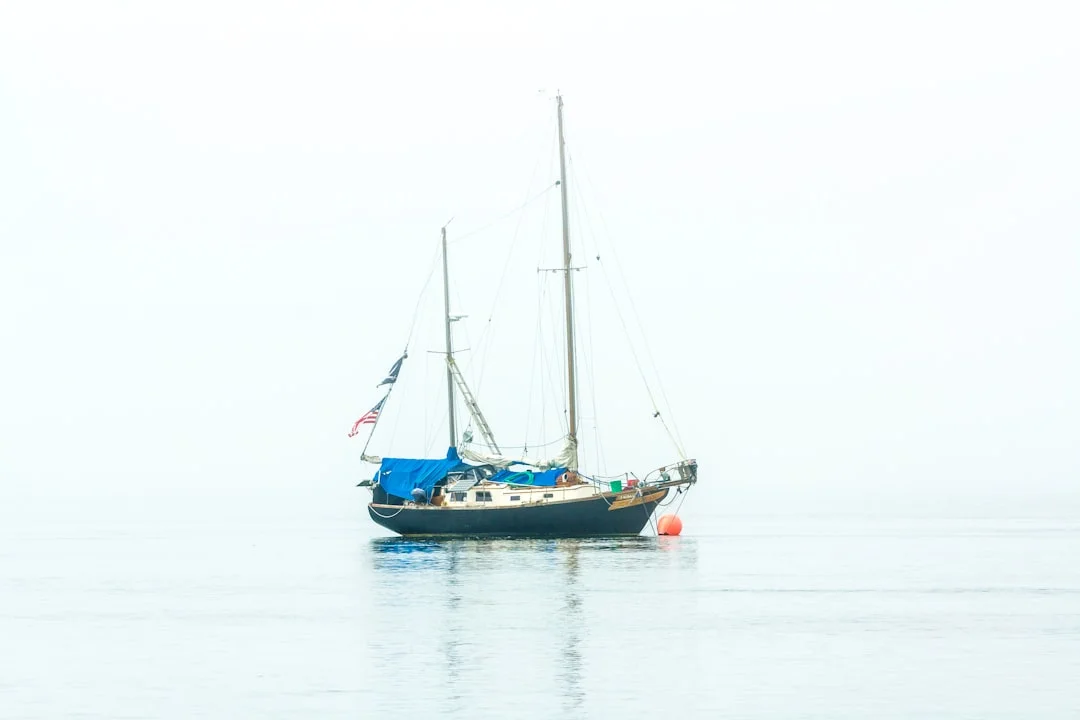
Photo by Donald Giannatti on Unsplash
Choosing the Right Anchor
Not all anchors work in all bottoms. The "best" anchor depends on where you sail.
Anchor Types Compared
| Anchor Type | Best In | Weak In | Weight for 35-40 ft boat | Price Range |
|---|---|---|---|---|
| CQR / Plow | Sand, mud | Rock, grass | 35–45 lb | $200–$400 |
| Bruce / Claw | Sand, mud, coral rubble | Soft mud, grass | 33–44 lb | $150–$350 |
| Danforth / Fluke | Sand, firm mud | Rock, grass, coral | 22–35 lb | $80–$200 |
| Rocna / Mantus (new gen) | Almost everything | Hard rock | 33–55 lb | $400–$800 |
| Delta | Sand, mud, clay | Thick grass | 35–44 lb | $200–$400 |
The honest recommendation: if you're buying one anchor for general cruising, get a new-generation design like a Rocna, Mantus, or Vulcan. They set faster, hold harder, and reset better than traditional designs. They cost more, but your anchor is the single most important piece of safety equipment on the boat after the life raft. Don't cheap out.
Carry two anchors: a primary (oversized new-gen) and a secondary (Danforth or Fortress, lighter, good for kedging off in a grounding). Most cruisers also carry a lunch hook — a small, light anchor for short stops in calm conditions.
How to Set an Anchor (Step by Step)
1. Choose Your Spot
Before you even think about dropping anchor:
- Check the chart: What's the depth? What's the bottom type? Sand is ideal. Mud is fine. Rock is bad (anchor won't set). Grass/weed is unreliable.
- Check the wind forecast: Where will the wind be tonight? Tomorrow? You want to be in the lee of land for the expected conditions.
- Check the swinging room: Your boat will swing in a circle around the anchor. Make sure there's enough room that you won't swing into another boat, the shore, or a reef. Use Breezada's distance calculator to measure distances between hazards in unfamiliar anchorages.
- Check the depth: Ideal anchoring depth for most cruisers is 3–8 meters (10–25 feet). Shallower than 3m risks hitting the keel; deeper than 15m requires a lot of chain and makes retrieval harder.
2. Approach into the Wind
Motor slowly upwind to your chosen spot. When you reach the point where you want the anchor to land, put the engine in neutral. Let the boat drift backward naturally or gently reverse.
3. Lower — Don't Drop — the Anchor
Lower the anchor to the bottom under control. Don't just throw it — a pile of chain landing on top of the anchor can foul it. Lower it until you feel it touch bottom, then slowly pay out chain as the boat drifts backward.
4. Set the Anchor with Reverse
Once you've paid out the right amount of chain (see Scope section below):
- Cleat off the chain on the windlass or bow cleat
- Put the engine in reverse at idle for 30 seconds
- Check if you're moving backward — watch a transit (line up two objects on shore). If they're not moving relative to each other, you're holding.
- Increase to moderate reverse (1,500–2,000 RPM) for another 30 seconds
- If the anchor holds at moderate reverse, it'll hold in most conditions overnight
If the anchor drags (you see the transit shifting, or the GPS shows you're moving): let out more chain, try again. If it still drags, pull it up, move 50 meters, and re-anchor. Some bottoms just won't hold — accept it and move.
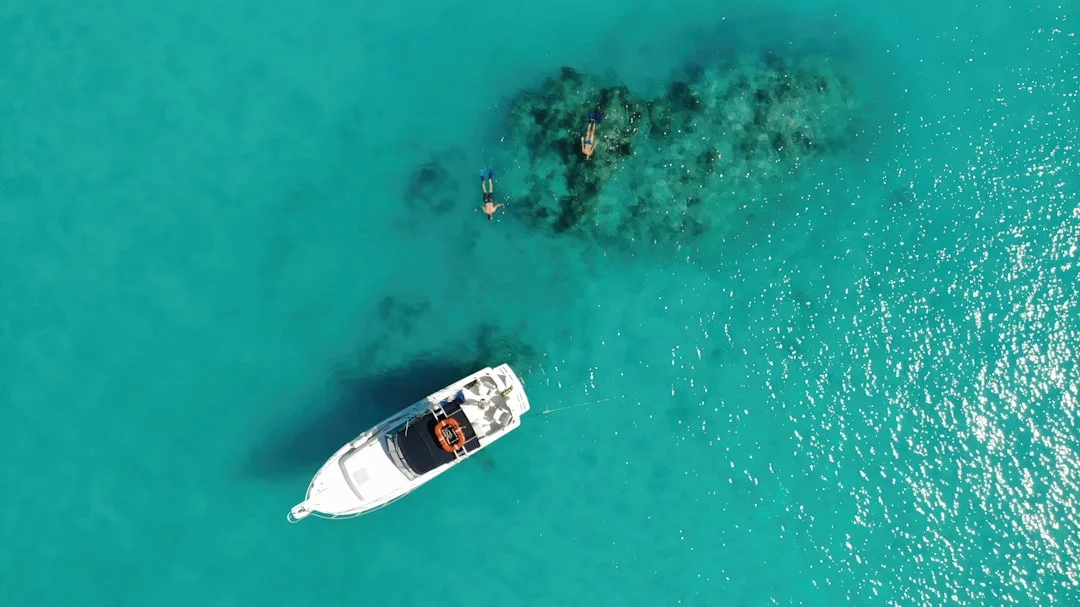
Photo by Marc Snailum on Unsplash
Scope: The Most Important Number
Scope is the ratio of anchor rode (chain + rope) deployed to the depth of water plus the height of your bow above the water.
The Formula
Scope = Length of rode / (Water depth + Bow height)
For a boat anchored in 5 meters of water with a bow 2 meters above the surface: total depth = 7 meters.
| Scope Ratio | Chain Out (for 7m total) | When to Use |
|---|---|---|
| 3:1 | 21 meters | Lunch hook, calm conditions, short stop only |
| 5:1 | 35 meters | Normal overnight, moderate wind (<15 kt) |
| 7:1 | 49 meters | Heavy weather, strong gusts, exposed anchorage |
| 10:1 | 70 meters | Storm conditions, maximum holding needed |
The minimum for overnight: 5:1 scope with all-chain rode. If you have a rope-and-chain combination (rope rode with a short chain leader), use 7:1 because rope doesn't provide the same catenary (sag) as chain.
Why scope matters: at low scope (3:1), the pull on the anchor is mostly upward — this tends to break it out of the bottom. At high scope (7:1+), the pull is nearly horizontal — this drives the anchor deeper into the seabed. More scope = more holding power. Always.
Don't Forget the Tide
If you anchor at low tide in 3 meters of water and the tidal range is 2 meters, high tide will put you in 5 meters. Your 5:1 scope at low tide becomes 3.5:1 at high tide — not enough. Always calculate scope for the maximum expected depth (high tide or highest surge).
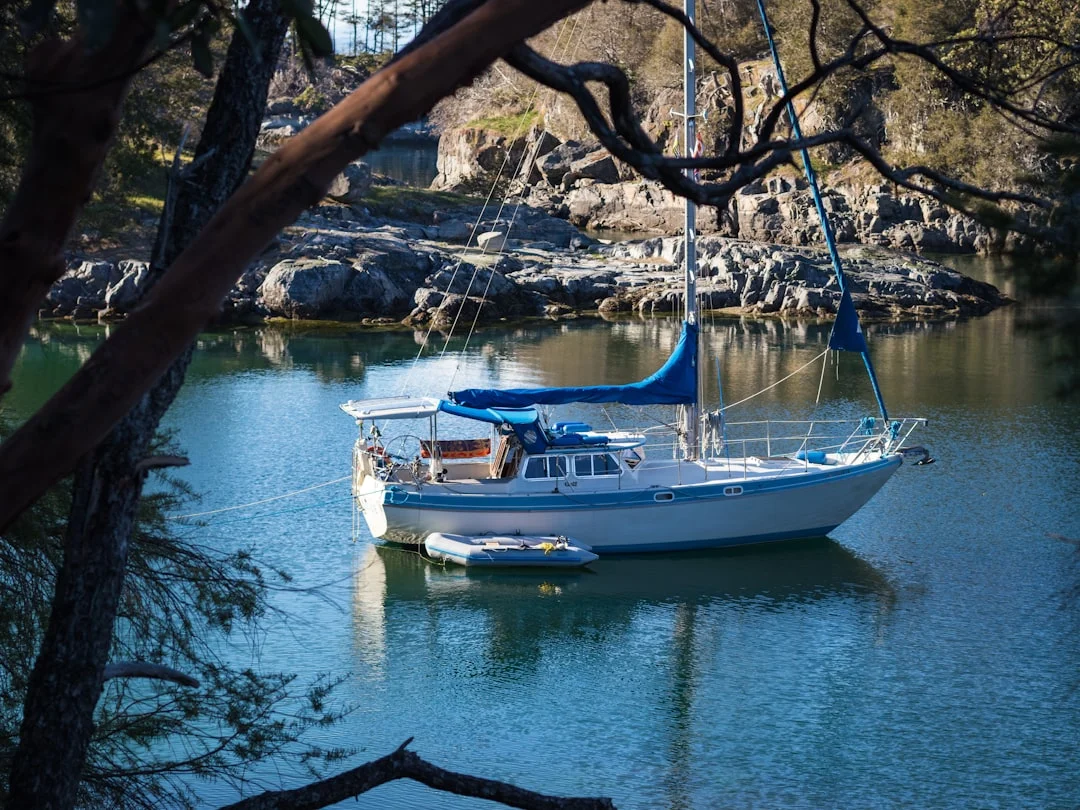
Photo by Greg Rosenke on Unsplash
Anchoring Techniques for Specific Situations
Med Mooring (Stern-To)
Common in Mediterranean marinas and town quays. You drop your anchor 50–80 meters from the quay, reverse toward the dock, and tie your stern to the quay with mooring lines. Your anchor holds the bow; the quay holds the stern.
The trick: approach perpendicular to the quay, drop the anchor early (further out than you think), and reverse slowly. Have someone on the bow paying out chain, and someone on the stern with fenders and mooring lines ready. This maneuver looks elegant when it works and catastrophic when it doesn't. Practice in uncrowded harbors first.
If you're chartering in the Mediterranean, our Greek islands sailing guide covers which harbors require Med mooring and which have lazy lines.
Anchoring in Coral
Never drag your anchor chain across living coral. The ecological damage is irreversible and illegal in many countries (fines up to $10,000 in marine parks). Instead:
- Use a mooring ball if available (most marine parks have them)
- Anchor in a sandy patch between coral heads
- Use a trip line so you can retrieve the anchor vertically without dragging
Two-Anchor Setup (Bahamian Moor)
In a narrow anchorage or a tidal river, set two anchors — one upstream, one downstream — to limit swinging. Deploy the first anchor normally, motor past your target spot, drop the second anchor, then settle back to the middle, adjusting chain on both until you're centered.
Stern Anchor
In a tight bay, a stern anchor prevents swinging. Set your bow anchor normally, then run a second anchor off the stern on a line. This keeps the boat pointed into the bay and prevents it from swinging beam-on to waves. Useful in anchorages where the fetch changes with the wind.
Photo by Adem Percem on Unsplash
Overnight Anchoring: How to Sleep Soundly
Set an Anchor Alarm
Every modern chartplotter and most phone apps (Anchor Watch, DragQueen) let you set a GPS-based anchor alarm. Draw a circle around your position — if the boat moves outside the circle, the alarm sounds. Set the radius to your scope + boat length + 20 meters of margin.
The Snubber
A snubber (also called a bridle) is a length of nylon rope (10–15 meters, 14–16mm diameter) attached to the anchor chain with a chain hook, then cleated on the bow. It absorbs shock loads that would otherwise jolt the chain, windlass, and your sleeping body all night. Without a snubber, the chain goes taut with every gust and you'll hear BANG... BANG... BANG all night as it snaps tight.
Always use a snubber overnight. Pay out enough chain that the snubber takes all the load and the chain hangs slack between the hook and the bow roller.
The 3am Check
Set a gentle alarm for 3am — or whenever you expect the wind to shift. Check your position on the chartplotter, look around for other boats, and make sure you haven't dragged. Most dragging happens during wind shifts, when the anchor needs to reset in a new direction. A 30-second check can save you from waking up on a beach.
Anchor Retrieval
Standard Retrieval
- Motor slowly toward the anchor while someone on the bow takes in chain (windlass or by hand)
- When the chain is vertical (straight up and down), the anchor should break free from the bottom
- Continue pulling until the anchor is at the surface
- Wash off mud with a bucket of seawater before bringing it aboard
If the Anchor Is Stuck
- Motor over it: drive past the anchor so the chain pulls from the opposite direction. This often breaks it free.
- Use a trip line: if you set one, pulling the trip line lifts the anchor from the crown (top), rotating it out of the bottom
- Wait for tide change: if the current is pinning the chain, a tide change may release the tension
- Dive on it: in warm, clear water, snorkel down and manually rotate the anchor out. In the Caribbean, this is standard practice. The Caribbean is an anchoring paradise — hundreds of free bays with pristine holding in sand.
Frequently Asked Questions
How much anchor chain do I need?
For coastal cruising: at least 50 meters (165 feet) of chain for a 35–42 foot boat. For offshore cruising or the Mediterranean (deeper anchorages): 75–100 meters. The chain should be 8mm for boats under 35 feet, 10mm for 35–45 feet, and 12mm for 45+ feet. All-chain rode is preferable to rope-and-chain for cruising.
Does a heavier anchor always hold better?
Not always — design matters more than weight for initial setting. A 35 lb Rocna will outhold a 45 lb CQR in most bottoms. But once set, extra weight does help resist dragging in extreme conditions. The rule of thumb: 1 lb of anchor per foot of boat length for traditional designs, slightly less for new-generation anchors.
Should I anchor bow or stern to the wind?
Always bow to the wind unless you have a specific reason not to (like using a stern anchor in a tight cove). Boats are designed to weathervane — the bow naturally swings into the wind, which puts the least strain on the anchor and keeps waves on the bow rather than the beam.
How close can I anchor to another boat?
Allow enough swinging room so that at maximum scope, your boat won't reach the other boat at their maximum scope. In practice, leave at least 30–50 meters between anchor positions. Boats on all-chain and boats on rope rode swing differently — chain boats swing less. Be the polite neighbor: if the anchorage is filling up, reduce your scope slightly rather than crowding others.
Can I leave the boat unattended at anchor?
For short periods (dinghy ashore for dinner) — yes, if conditions are stable and your anchor is well set. For longer periods, use an anchor alarm on your phone and check the weather. Never leave a boat at anchor overnight without someone aboard in unsettled weather.
About the Author
Related Articles
Code Zero vs Genoa: Jib & Spinnaker Guide
Compare Code Zero vs genoa, jib, and spinnaker by wind range and angle. Choose the right headsail for your boat—read the guide now.
By Breezada Team
Starlink Mini on a Boat: Plans, Power & Offshore Use
Learn Starlink Mini on a boat—plans, power draw, and offshore performance. Compare Roam vs Mobile Priority and get setup tips. Read now.
By Breezada Team
Boat Courtesy Flag & Q Flag Etiquette for Yachts
Learn boat courtesy flag and Q flag etiquette for yachts—what to fly, where to hoist it, and common mistakes. Get the checklist before landfall.
By Breezada Team

French Canals Boat Trip Guide Beyond Canal du Midi
Plan a french canals boat trip beyond the Midi with routes, costs, licenses & lock tips. Compare regions and map your itinerary—start now.
By Breezada Team