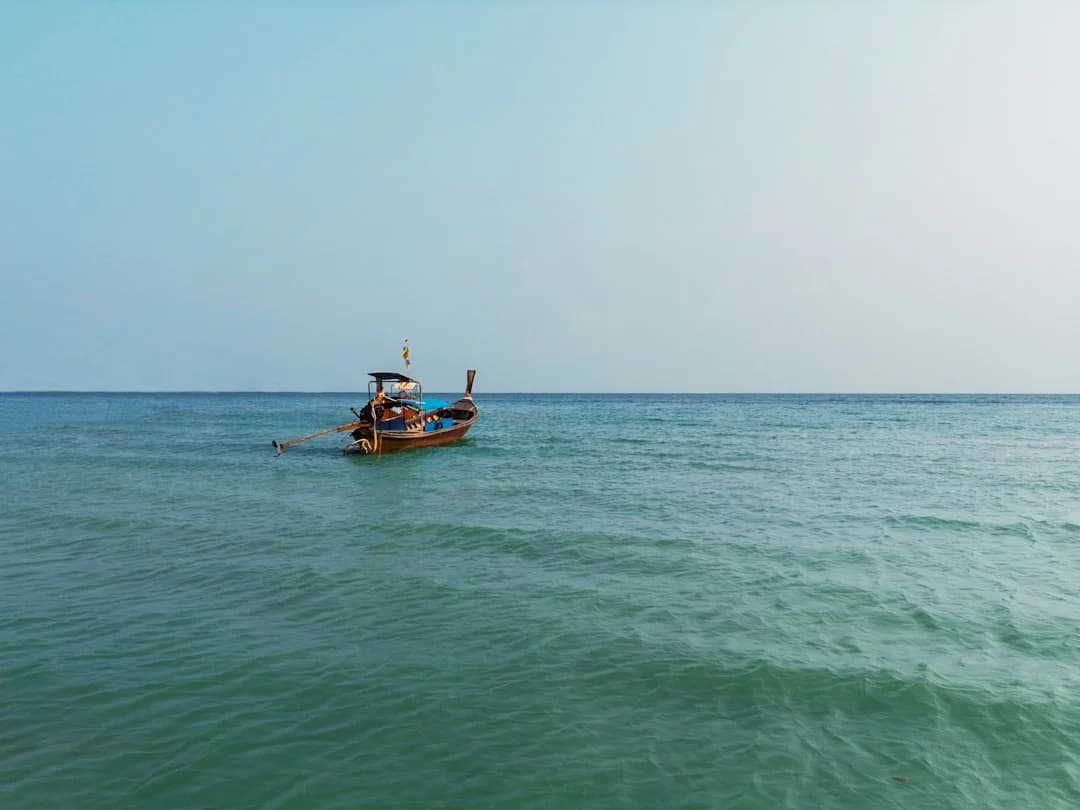
Sailing Thailand is one of those rare cruising grounds where you can wake up to a limestone karst rising vertically out of jade water, sail thirty miles south to a Malaysian duty-free archipelago, and — if you have the paperwork and the time — keep going west into the Indian-administered Andaman Islands. The whole region sits inside a single weather system, runs on a single sailing season (November to April), and is genuinely beginner-friendly inside Phang Nga Bay while staying interesting enough for offshore cruisers heading to Sri Lanka.
This guide covers what actually matters when you're sailing the Andaman Sea: the three main destinations (Phuket, Langkawi, the Indian Andamans), the season, the marinas, the routes between them, charter logistics, and the formalities at each border. Real numbers, real anchorages, no embellishment.
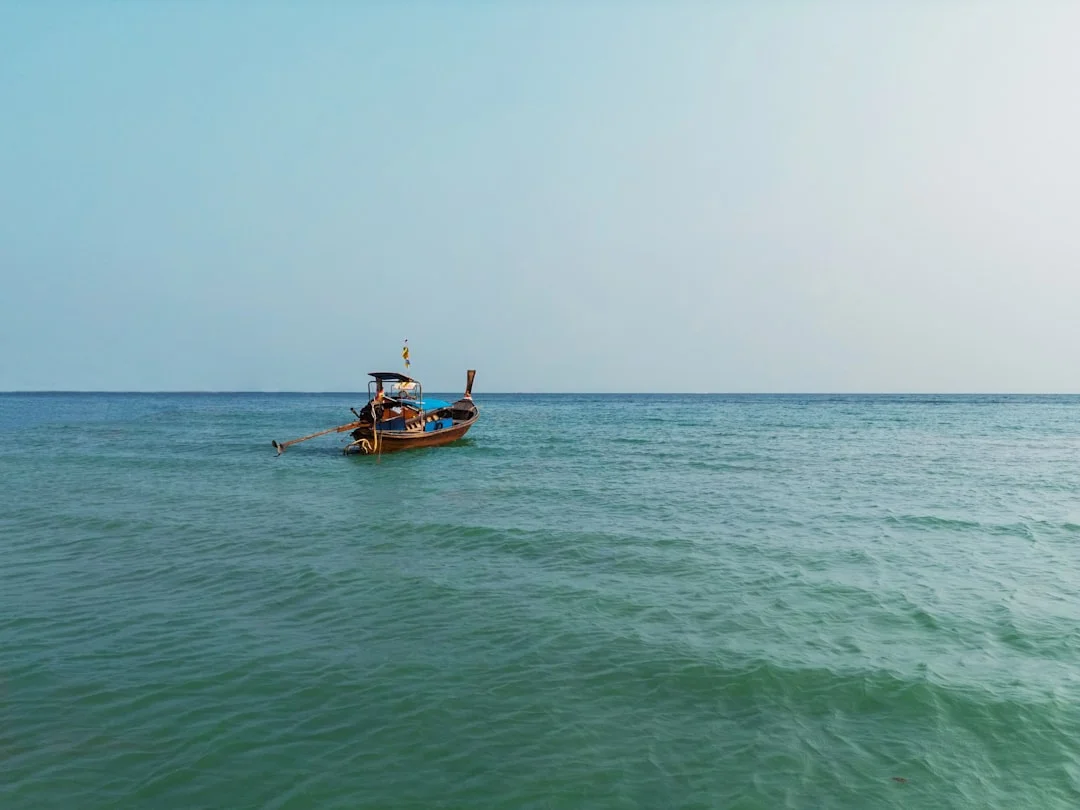
Photo by Yannick Apollon on Unsplash
Why Sail the Andaman Sea
The Andaman Sea is the eastern arm of the Indian Ocean, bounded by the Malay Peninsula to the east, Myanmar to the north, the Andaman and Nicobar Islands to the west, and Sumatra to the south. For sailors, it has three things you don't get together anywhere else in Asia:
Reliable trade-wind sailing in season. From mid-November through April the northeast monsoon brings 8–18 knots from the NE-E, almost no rain, and flat seas inside the lee of Phuket. You can plan a passage three weeks out and still have it work.
Short, manageable hops between major destinations. Phuket to Phi Phi: 25 nm. Phi Phi to Ko Lanta: 18 nm. Ko Lanta to Langkawi: 60 nm. The whole Phuket-Langkawi corridor is roughly 130 nautical miles of sheltered island cruising, with three or four good anchorages every day.
A genuinely cheap charter market. Phuket has more bareboat operators per capita than anywhere east of the Mediterranean. Off-peak (mid-November or April) you can take a 40-foot monohull for the price of a Greek shoulder-season boat — €2,500 to €3,500 per week — and the chandlery, fuel, and provisioning costs are a third of European numbers.
The catch — and there's always one — is that the season is short and bookended by the southwest monsoon, which renders the west coast unsailable from mid-May through October. Plan around that or go elsewhere.
Phuket: Where Almost Every Trip Starts
Phuket is Thailand's largest island and its only real yachting hub. Three things make it the natural base: a deep-water airport with direct flights from most of Asia and Europe, four full-service marinas on the protected east coast, and immediate access to Phang Nga Bay — which is genuinely one of the world's best protected cruising grounds.
The Four Phuket Marinas
| Marina | Location | Berths | Notes |
|---|---|---|---|
| Yacht Haven | Northeast, near airport | 320 | Deepest, most popular liveaboard base |
| Royal Phuket Marina | East coast, near Boat Lagoon | 200 | Upmarket, integrated residences |
| Ao Po Grand | Northeast, Phang Nga gateway | 280 | Closest to the karst islands |
| Phuket Boat Lagoon | East coast | 250 | Tide-locked entrance, full yard services |
Yacht Haven and Ao Po Grand are the two most cruiser-friendly. Both have customs and immigration on site (or within a 15-minute drive) and both keep the gates manned 24 hours, which matters when you're checking in at 02:00 after a delivery from Langkawi.
Phang Nga Bay
The bay is the showpiece. Roughly 400 square kilometres of shallow, well-protected water studded with vertical limestone islands — many of which are hollow inside (the hongs, sea caves accessed by kayak at low water). Holding is good (mud and sand, mostly), depths are manageable (8–15 m in the main anchorages), and the bay is sheltered from the prevailing NE monsoon by the islands themselves.
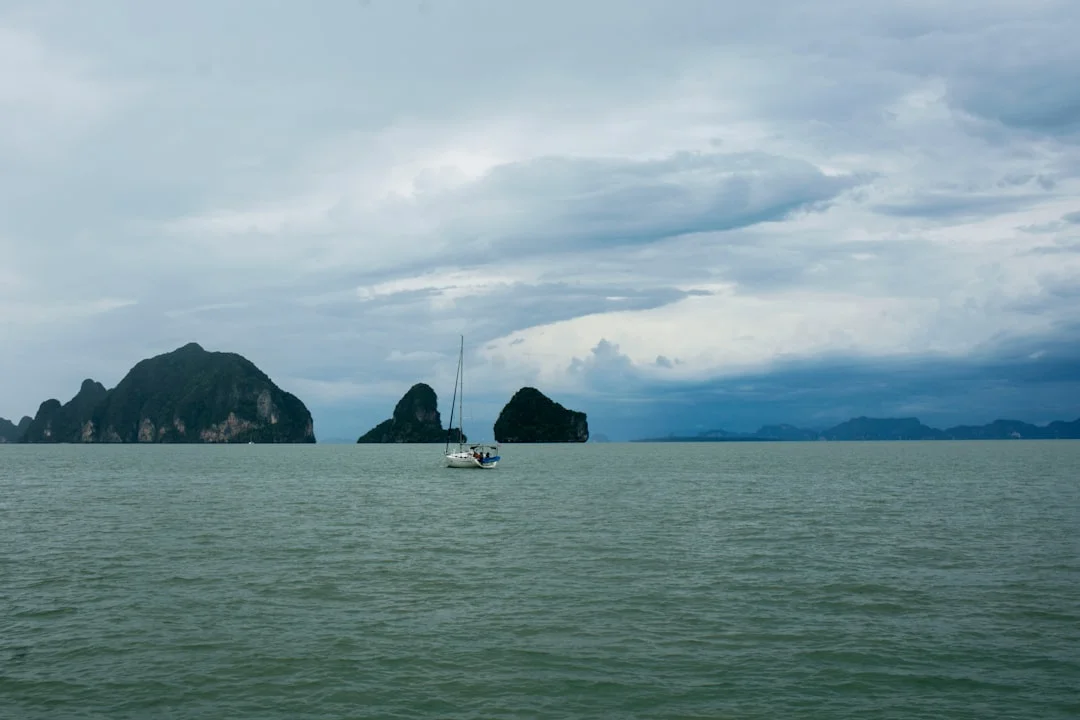
Photo by Juliia Abramova on Unsplash
A standard week from Ao Po Grand looks roughly like this:
- Day 1: Ao Po → Ko Naka Yai (5 nm, shake-down)
- Day 2: Ko Naka Yai → Ko Hong (Phang Nga) (12 nm, kayak the hongs)
- Day 3: Ko Hong → James Bond Island / Ko Tapu anchorage (10 nm)
- Day 4: Ko Tapu → Ko Phanak / Ko Roi (8 nm)
- Day 5: Ko Roi → Ko Yao Noi (15 nm, restaurant ashore)
- Day 6: Ko Yao Noi → Phi Phi Don (22 nm)
- Day 7: Phi Phi → return to Ao Po (35 nm)
That itinerary covers about 107 nm with the longest single leg under 35 nm. Anchoring depths rarely exceed 15 m. Picking the right anchor matters when you're swinging in 12 m of mud overnight in a thunderstorm — our guide to choosing the best anchor for a sailboat is worth a read before you take a bareboat out, because charter-fleet anchors are often undersized for the boat.
Phi Phi and the South
Phi Phi Don and Phi Phi Leh sit about 25 nm SE of Phuket and are deservedly famous. The bad news: in high season the main bays are crowded with day-tripper speedboats from 09:00 to 16:00. The fix is to anchor for the night in Loh Lana Bay or Loh Bagao on the east side of Phi Phi Don — both are quiet after the speedboats leave, both have decent holding in 6–10 m of sand, and both are close enough to Tonsai for a dinghy run for dinner.
Continuing south you reach Ko Lanta (45 nm from Phuket), then Ko Muk with its famous Emerald Cave, then Ko Kradan and the Trang archipelago. From the southernmost Thai islands, Langkawi is roughly 50 nm further south.
The Similan and Surin Islands
The Similan Islands sit about 50 nm NW of Phuket, in the open Andaman Sea. They're a different proposition — exposed, often rolly at anchor, no protected bays for big westerly swell — but the diving is among the best in Asia and during a settled high-pressure NE pattern in January or February the conditions are excellent.
The Surin Islands are 60 nm further north again, near the Myanmar border, and are even more remote. Both groups are national park, both require entry permits, and both close from mid-May to mid-November. If you charter a boat in Phuket and want to visit the Similans, ask the charter company first — many fleets restrict their boats to the inshore islands and Phang Nga Bay.
Sailing to Langkawi: The 130 nm Hop South
Langkawi is the obvious next destination — duty-free Malaysian island, excellent marinas, and a clean fresh customs/immigration cycle that resets your Thai 30-day visa-on-arrival. Most cruisers do this trip at least once a season; many do it twice (for the visa run alone).
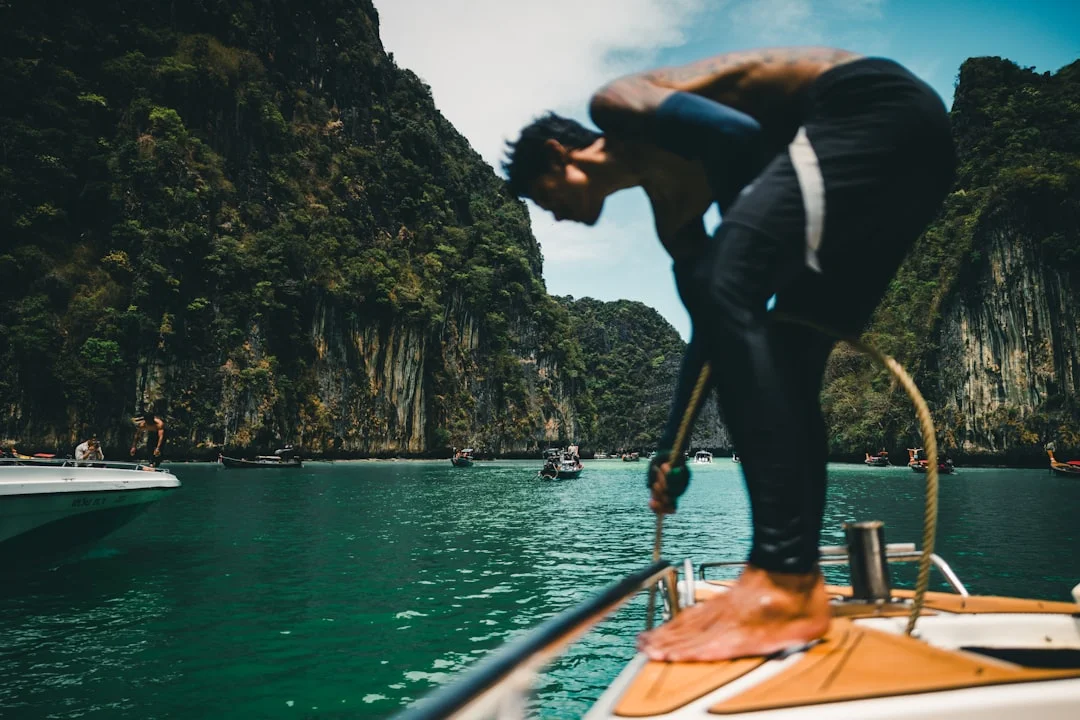
Photo by Ali Kazal on Unsplash
The route island-hops down through Ko Phi Phi, Ko Lanta, Ko Muk, Ko Bulone, and across the maritime border into Pulau Langkawi. Total distance is about 130 nm, typically broken into 3–5 day-sails of 25–40 nm each. Our Andaman Sea passage guide from Thailand to Malaysia goes deeper into the leg-by-leg waypoints, the Tarutao National Park stop, and the customs procedure at Bass Harbour and Telaga Harbour. If you want to sanity-check the leg distances yourself, Breezada's sea distance calculator gives you the exact great-circle nautical miles between any two ports.
Langkawi Marinas
There are three serious marina options in Langkawi:
- Telaga Harbour Marina — newest, on the west coast, customs/immigration on site. The clear first choice for arrivals from Thailand.
- Royal Langkawi Yacht Club — central, walking distance to Kuah town, slightly older but well-run.
- Rebak Marina — on a private island 15 minutes by ferry from Langkawi proper. Quietest and best for long-term storage during the SW monsoon.
Berthing is roughly MYR 80–150 per night for a 40-footer (about USD 18–34), and monthly rates make Langkawi one of the cheapest places in Asia to leave a boat. Many cruisers haul out at Rebak for the wet season and fly home.
Why Langkawi Is Worth a Week (Not Just a Day)
The duty-free status keeps wine, spirits, and chandlery cheap. The Kilim Geoforest Park — a mangrove and karst river system on the northeast side — is genuinely worth a day. The mountain interior is jungle-clad and rises to 880 m. And Pulau Payar Marine Park, 25 nm south, is a worthwhile detour if you want clear-water snorkelling that isn't overrun.
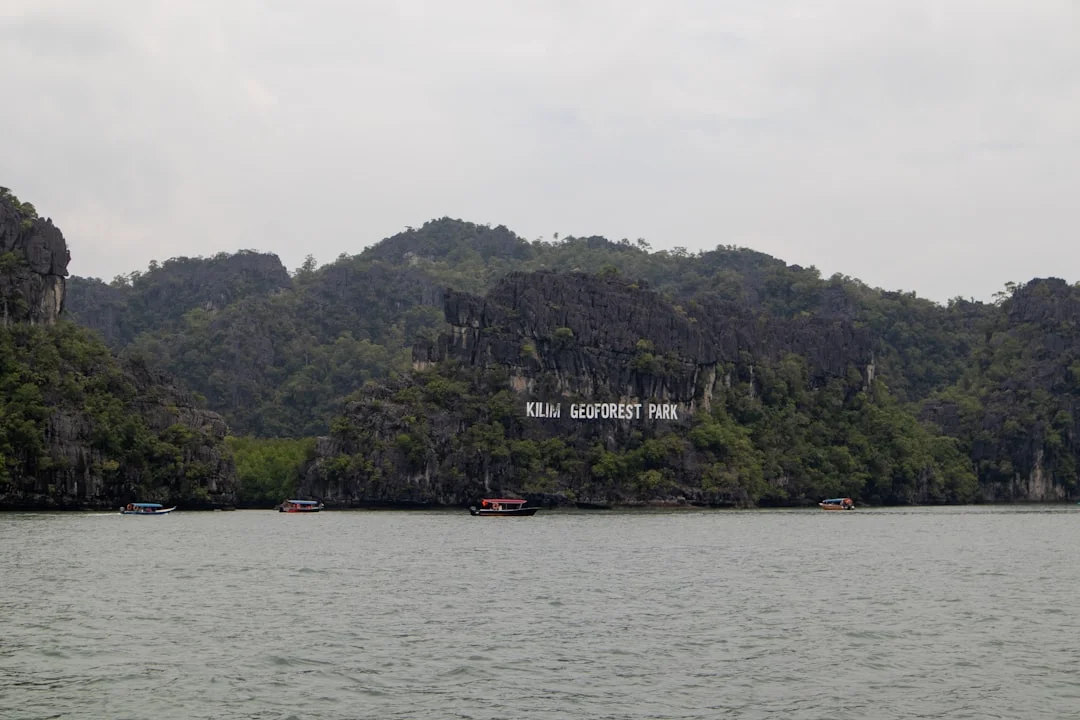
Photo by Pranesh Ravi on Unsplash
The Indian Andaman Islands: A Different World
This is where it gets serious. The Andaman and Nicobar Islands are an Indian Union Territory roughly 430 nm WNW of Phuket — a 3 to 4 day passage in the NE monsoon. The islands themselves are spectacular: largely uninhabited, dense rainforest, white-sand beaches, near-zero light pollution, and reefs that have seen almost no diving pressure.
But the formalities are heavy. Foreign yachts require a Restricted Area Permit (RAP) issued in advance. Clearance is done at Port Blair on South Andaman, where the procedure typically takes 1–2 working days with multiple agencies (customs, immigration, harbour master, navy, port health). You cannot freely cruise the islands — you can only visit a list of approved anchorages, and the tribal-reserved islands of North Sentinel, Strait Island, and most of the Nicobars are completely off-limits.
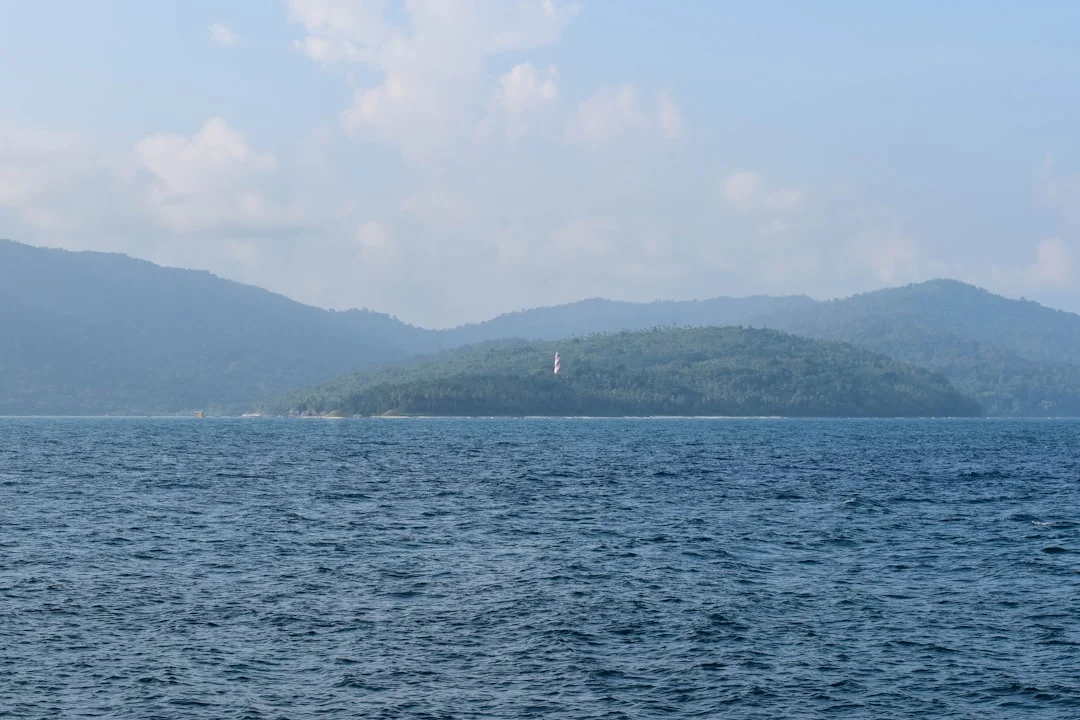
Photo by Debarghya Meikap on Unsplash
Practical reality: most cruisers who visit the Andamans use a local agent in Port Blair (figure USD 600–900 in agent and government fees plus a refundable deposit), arrive between mid-January and mid-March (best weather window), and stay 2–4 weeks before either returning to Thailand or continuing west to Sri Lanka. The 430 nm passage from Phuket is mostly a trade-wind reach — pleasant, downwind, and fast for a well-found cruising boat.
If you're planning the leg, you can check the exact Phuket-Port Blair distance and waypoints to budget fuel and provisions properly. Most boats do the passage in 72–96 hours.
Season, Weather, and Timing
The Andaman Sea has two monsoons and they dictate everything.
| Period | Monsoon | Wind | Rain | Sailing |
|---|---|---|---|---|
| Mid-Nov to mid-Apr | Northeast | NE-E, 8-18 kn | Minimal | Excellent |
| Mid-Apr to mid-May | Transition | Variable, light | Moderate | OK |
| Mid-May to mid-Sep | Southwest | SW-W, 15-25 kn + squalls | Heavy | Avoid west coast |
| Mid-Sep to mid-Nov | Transition | Variable | Decreasing | Marginal |
The high season is December through March. January and February are the most reliable — easterly winds, low humidity, almost guaranteed dry days. November and April are shoulder months with cheaper charters and slightly more variable weather, but still very sailable.
What you absolutely cannot do is take a bareboat into the Andaman Sea from June to September. Charter operators won't insure boats during the SW monsoon. Liveaboards either move east to the Gulf of Thailand (Ko Samui, Ko Pha Ngan) or south to Langkawi — the Malaysian island happens to sit just inside the protective lee of Sumatra and stays sailable year-round, which is why so many boats winter there.
Charter Logistics: Bareboat, Skippered, or Cabin
Phuket has a deeper charter market than anywhere else in the region. Roughly:
- Bareboat monohull, 38–44 ft: EUR 2,500–4,500/week
- Bareboat catamaran, 40–46 ft: EUR 4,000–7,500/week
- Skippered catamaran with cook, 45–50 ft: EUR 8,000–14,000/week
- Cabin charter (shared catamaran): EUR 1,200–2,200 per person per week
Add roughly USD 200/week for fuel, USD 50/day for marina nights ashore, and USD 100/day for a cleaner-cum-hostess if you want one. The cruising tax (national park fees) adds around USD 30 per person per day for time spent in Phang Nga or Phi Phi marine parks.
Bareboat qualification is straightforward: most operators accept an ICC, RYA Day Skipper, ASA 104, or equivalent. Local conditions are forgiving — short passages, good visibility, well-charted waters — but the lack of tides on some charts and the unmarked rocks in Phang Nga catch out crews who don't pay attention.
Formalities, Money, Connectivity
Thailand: 30-day visa-on-arrival for most nationalities. Yacht entry at Phuket is straightforward at any of the three customs ports (Yacht Haven, Ao Chalong, Boat Lagoon). Cruising permit not required for foreign yachts in transit. Cash is THB; cards work everywhere; ATMs are universal.
Malaysia: 90-day visa-on-arrival for most nationalities. Entry at Telaga Harbour or Bass Harbour is 30–60 minutes if paperwork is in order. Cash is MYR; cards work in marinas and major restaurants.
India (Andaman): Visa required in advance (e-visa works). RAP for the islands must be applied for at least 30 days ahead. Local agent strongly recommended. Cash is INR; ATMs in Port Blair only.
Connectivity is excellent across all three: Thai SIMs (AIS, True) cover almost the entire west coast and Phang Nga; Malaysian SIMs (Maxis, Celcom) cover all of Langkawi; in the Andamans, signal is limited to Port Blair and a few populated islands. Starlink works everywhere if you have it installed.
Frequently Asked Questions
When is the best time for sailing Thailand?
The northeast monsoon season — mid-November through mid-April — is the only realistic window for the Andaman Sea coast. December, January, and February are the most reliable months: light easterlies, low rainfall, and flat water inside Phang Nga Bay. April is hot and the wind goes light; May to October is the southwest monsoon and the west coast is essentially closed for sailing.
How long does it take to sail from Phuket to Langkawi?
The full 130-nautical-mile passage takes most cruising boats 3 to 5 days when broken into the obvious island stops (Phi Phi, Ko Lanta, Ko Muk, Ko Bulone, Langkawi). A direct overnight run from Ao Chalong to Telaga Harbour is possible in 24–28 hours but skips the best anchorages. Most charterers take a full week for the round trip with one-way drop-off available at extra cost.
Do I need a special permit to sail in Thailand?
Foreign yachts in transit do not need a cruising permit, but they must clear in and out at a designated customs port (Phuket has three: Yacht Haven, Ao Chalong, Boat Lagoon). National park fees apply inside Phang Nga, Phi Phi, Similan, and Surin — typically around 400 baht per person per day. A 30-day visa-on-arrival covers most nationalities at the airport; longer stays require a visa applied for in advance.
Is the Andaman Sea safe for beginners?
Inside Phang Nga Bay, yes — short distances, daylight sailing, mostly sheltered water, well-charted main passages. Outside the bay (the Similans, the open passage to the Andaman Islands, the offshore parts of the run to Langkawi) requires real passage-making skills. Bareboat operators in Phuket routinely rent to ICC-qualified Day Skippers but typically restrict their fleets to the inshore islands during the first few days of any charter.
Can I sail from Thailand to the Indian Andaman Islands?
Yes, but you need a Restricted Area Permit applied for at least 30 days ahead, an Indian visa, and ideally a local agent in Port Blair to handle clearance. The 430-nautical-mile passage from Phuket takes 3–4 days in the NE monsoon and is mostly a downwind reach. Once cleared in, you are restricted to a list of approved anchorages — most of the archipelago, including the Nicobars, is off-limits to foreign yachts.
What does a Phuket bareboat charter cost in high season?
A 40-foot monohull runs EUR 3,500–4,500 per week in December and January, dropping to EUR 2,500–3,000 in shoulder months. A 44-foot catamaran is EUR 5,500–7,500 per week in peak season. Add fuel (about USD 200/week for inshore cruising), marina fees if you berth ashore, and roughly USD 30 per person per day in national park fees. A skippered catamaran with a cook is roughly double the bareboat rate.
Are the Similan Islands worth visiting under sail?
For diving, yes — they are among the best dive sites in Southeast Asia. For pure sailing, they're more exposed and less interesting than Phang Nga Bay, with no truly sheltered overnight anchorages if a swell sets in. Most charter fleets restrict their boats to the inshore islands and don't allow Similan trips, but liveaboard dive boats and private yachts visit between November and April when the water is clearest.
How do I provision for a Thailand sailing trip?
Big-format provisioning is best done at Tesco Lotus or Makro on Phuket (both deliver to Ao Po Grand and Yacht Haven). Fresh produce and seafood is genuinely good and cheap at the morning market in Rawai or Phuket Town. Wine and spirits are cheaper in Langkawi (duty-free) than in Thailand, so cruisers heading south often top up there. Drinking water is universally available in 5L jugs at any 7-Eleven.
About the Author
Related Articles
Amalfi Coast vs French Riviera Sailing Guide (Costs & Routes)
Compare Amalfi Coast vs French Riviera sailing—costs, crowds, mooring rules, best months, and 7-day routes. Choose your coast and plan now.
By Breezada Team
Puget Sound Cruising Guide to Gulf Islands Routes
Plan routes, anchorages, and weather windows with this Puget Sound cruising guide for the Gulf Islands & San Juans. Read now and start plotting.
By Breezada Team
Sailing Amalfi Coast Guide: Ports, Anchorages & Rules
Sailing Amalfi Coast guide to Capri, Positano & Amalfi: best ports, anchorages, fees, VHF and rules. Plan your route—read now.
By Breezada Team
Dry Tortugas Sailing: Routes, Anchoring & Permits
Plan Dry Tortugas sailing from Key West with routes, weather windows, anchoring/moorings, and permits. Read the guide and plan your trip.
By Breezada Team