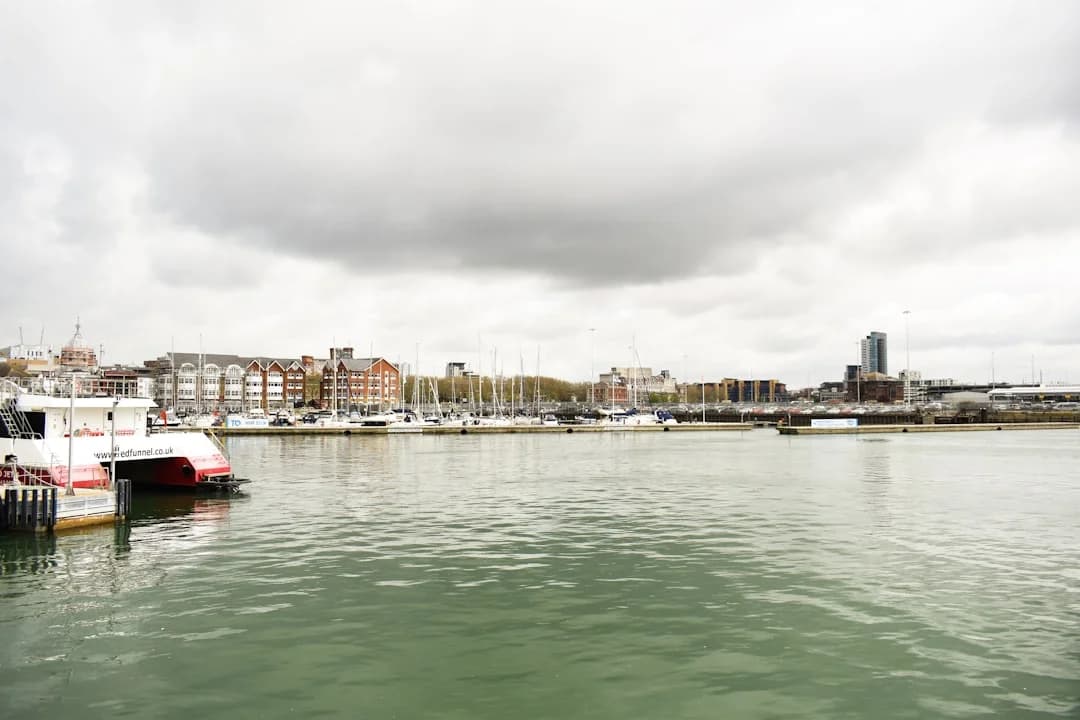
Southampton is the busiest sailing port in the United Kingdom and the most logical place to start a Channel crossing — but the choice of when, where, and how to leave is what separates a comfortable passage from a brutal one. The shortest crossing from Southampton to a French port is roughly 75 nautical miles to Cherbourg, a 12 to 15-hour run for most cruising boats, with the Solent's tides, the central shipping lanes, and the French coastal traffic separation scheme to thread through on the way.
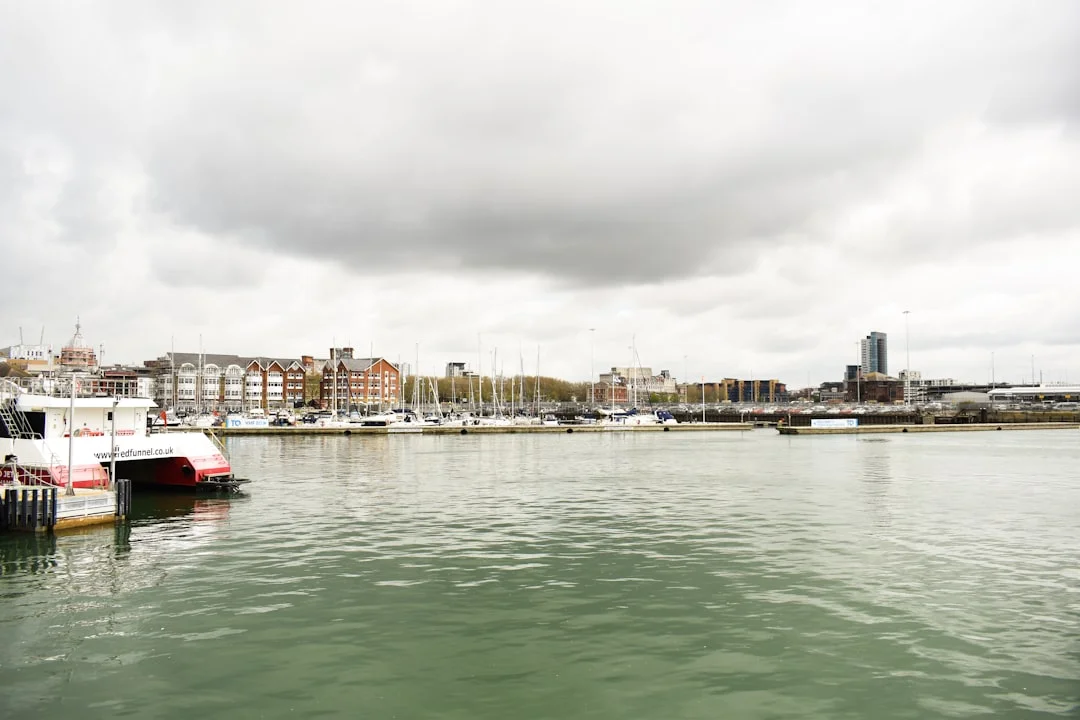
Photo by Simona Marinkova on Unsplash
This guide is written for skippers planning their first Channel crossing out of Southampton, and for crews who have done it once and want to do it better. It covers the four practical crossings — Cherbourg, Saint-Vaast-la-Hougue, Le Havre, and Saint-Malo via Alderney — along with tides, traffic, weather windows, customs, and what the passage actually feels like at 03:00 in mid-Channel.
Why Southampton is the Default Departure Port
Southampton sits at the head of Southampton Water, sheltered by the Isle of Wight, with deep water, a navigable approach in any tidal state, and direct rail links to London. Almost every charter base on the south coast — Hamble, Lymington, Portsmouth, Cowes — is within 20 nm of Southampton's commercial dock, and the marinas at Ocean Village, Shamrock Quay, Hythe, and Town Quay offer secure berths from £35 to £55 per night for a 35-foot cruising yacht.
The drawback is that you don't actually leave from Southampton. You leave from the Solent, which sits between the mainland and the Isle of Wight and acts as a 20-mile-long tidal funnel. Boats clearing Southampton Water still have to work down past Calshot, around the Bramble Bank, and out either through the Needles Channel at the western end or the Nab Tower at the eastern end before they reach the open Channel. Both exits are tide-gated. Get the timing wrong and you'll either be punching three knots of foul current or sitting in a dying breeze with the cliffs of the Isle of Wight uncomfortably close.
Most Channel-bound skippers leave through the Needles. The route is shorter and the geometry of the tide is friendlier for a southbound passage. East-bound destinations like Le Havre or the Belgian coast favour the Nab.
The Four Practical Crossings
Pick the destination that matches your weather window and your crew's stamina. Distances quoted are from Southampton's Calshot Spit to the foreign port entrance — you can verify the exact nautical miles between Southampton and any French port using a route planner before committing to a passage plan.
| From Southampton to | Distance | Typical passage time | Best wind direction |
|---|---|---|---|
| Cherbourg | 75 nm | 12–15 hrs | W to NW, F3–F5 |
| Saint-Vaast-la-Hougue | 80 nm | 13–16 hrs | W to SW, F3–F5 |
| Le Havre | 95 nm | 16–20 hrs | SW to W, F3–F4 |
| Saint-Malo (via Alderney) | 110 nm | 18–24 hrs | NW to N, F3–F5 |
Cherbourg is the workhorse crossing — a wide, sheltered harbour, 24-hour entry, English-speaking marina staff at Port Chantereyne, and easy onward routes east toward the Cotentin or west toward the Channel Islands.
Saint-Vaast rewards the extra five miles with a properly French village, a tidal lock that closes around HW±2.5, and the best oysters between Cherbourg and Honfleur. Plan your arrival for the lock window or you'll wait six hours offshore.
Le Havre is the longest of the popular crossings and the most commercial — the harbour entrance handles container ships and ferries continuously, and the approach in fog or at night is genuinely demanding. The reward is direct access to the Seine and Honfleur.
Saint-Malo is the long passage, and most boats break it at Alderney or Guernsey rather than running it in one go. The Alderney Race produces tidal streams of up to eight knots at springs, and that gate alone dictates the timing of the entire passage.
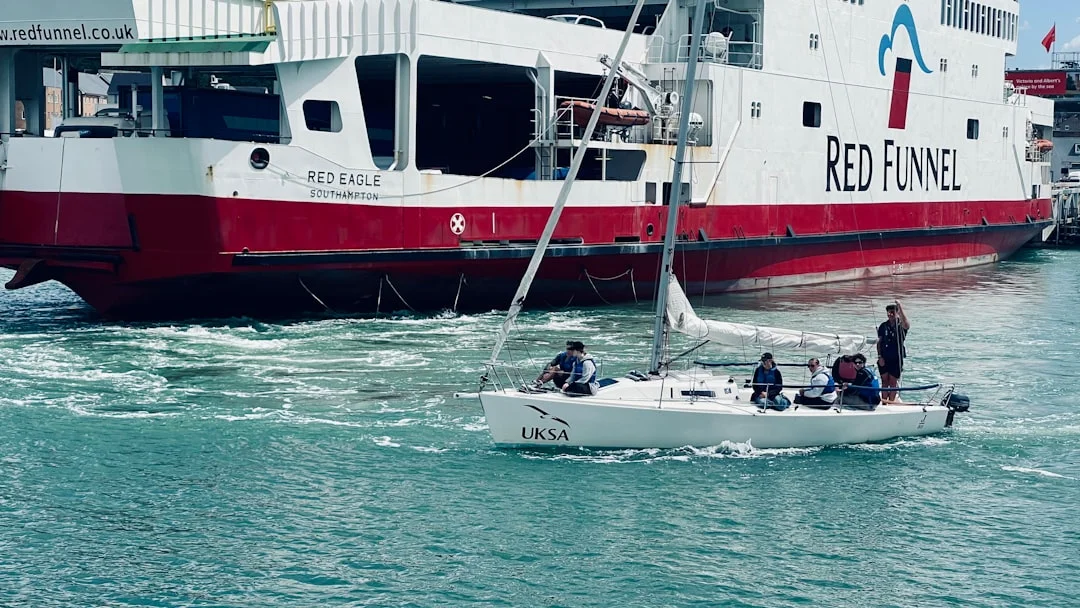
Photo by Andy Watkins on Unsplash
Reading the Tides — The Part That Actually Matters
The English Channel runs predominantly east-west, and the tide does the same — but it is not a simple ebb-and-flood pattern. The Solent has a double high water (a sustained high tide of around two hours), the central Channel runs at up to two knots at springs, and the French coast has its own complicated near-shore set.
A clean Cherbourg passage typically looks like this:
- Leave the Solent on a west-going tide — usually within an hour of HW Portsmouth so you carry the ebb out through the Needles
- Cross the central Channel at slack or with the south-going component — the cross-Channel tide is mostly east-west, so heading 180° south, you cross at right angles to the stream and get set sideways. Plan for this with a course-to-steer calculation, not eyeballing it
- Arrive Cherbourg in daylight if possible — the harbour entrance is wide but commercial traffic is constant, and the Petite Rade entry markings are easier to read in light
The classic mistake is to leave on the timing that suits the crew (after dinner, say) rather than the timing that suits the tide. A four-hour delay on departure can cost six hours of foul tide in the central Channel and turn a 13-hour passage into 19 hours of slogging.
Traffic Separation Schemes — The Big Iron in the Middle
The mid-Channel TSS is the single most important navigational feature on this passage. It runs roughly east-west between the Casquets (off Alderney) and Sandettie (off the Belgian coast), and within it commercial traffic moves in lane-disciplined streams of 15-20 ships per hour — tankers, container ships, ferries, car carriers — at speeds of 14 to 22 knots.
COLREGS Rule 10 requires you to cross the TSS as nearly as practicable at right angles to the traffic flow. Not "more or less perpendicular." A right angle. A surveyor with a protractor would call your heading 90 degrees relative to the lane. This is non-negotiable.
The practical consequences:
- Plan a heading, not a course over ground. If the tide is setting you east at 1.5 knots and you are sailing south at 5 knots, you are not crossing at 90°. You are crossing at roughly 73°. That is non-compliant. Steer 18° west of south to bring the actual heading back to perpendicular
- Cross during a watch change on commercial ships if you can — the bridge is fully manned, the radar is being actively monitored, and you are far more likely to be seen
- Use AIS aggressively. A Class B AIS transponder costs £450 fitted and is the single biggest safety upgrade for Channel crossings. Ships will see you. They will not always alter, but they will know you are there
A crossing typically takes a sailing yacht 90 minutes from entering the southbound lane to exiting the northbound lane. Plan that block as the tightest part of the passage — no cooking, no sail changes that put crew on the foredeck unnecessarily, and the most experienced helm at the wheel.
Weather Windows and the Channel's Mood
The English Channel is a funnel between two landmasses, and the weather it generates is almost always more vigorous than the synoptic chart suggests. A forecast Force 4 in mid-Channel reads as a Force 5 by the time the wave height stacks up over a 30-mile fetch and the tide turns against the breeze.
Optimal conditions for a Cherbourg crossing:
- Wind west to northwest, Force 3 to 5 (8-19 knots)
- Sea state 1.5 metres or less
- Visibility 5 nm or better
- Barometric trend stable or rising
Avoid at all costs:
- Wind over tide in the central Channel (produces short, breaking 2-3m seas)
- Easterlies above Force 5 (long fetch from Dover, exposed approaches to all French ports)
- Frontal passages within 12 hours of departure
- Spring tides combined with anything above Force 6
In practice, the working window for a comfortable Channel crossing is Mid-April to Mid-October, with June, July, and early September offering the most reliable weather. Get a serious GRIB forecast and an inshore waters forecast for both the Wight and Portland areas, and read them together — disagreement between the two is itself information. Our guide to the best sailing weather apps and routing tools covers the specific GRIB and routing tools that work for short offshore passages like this.
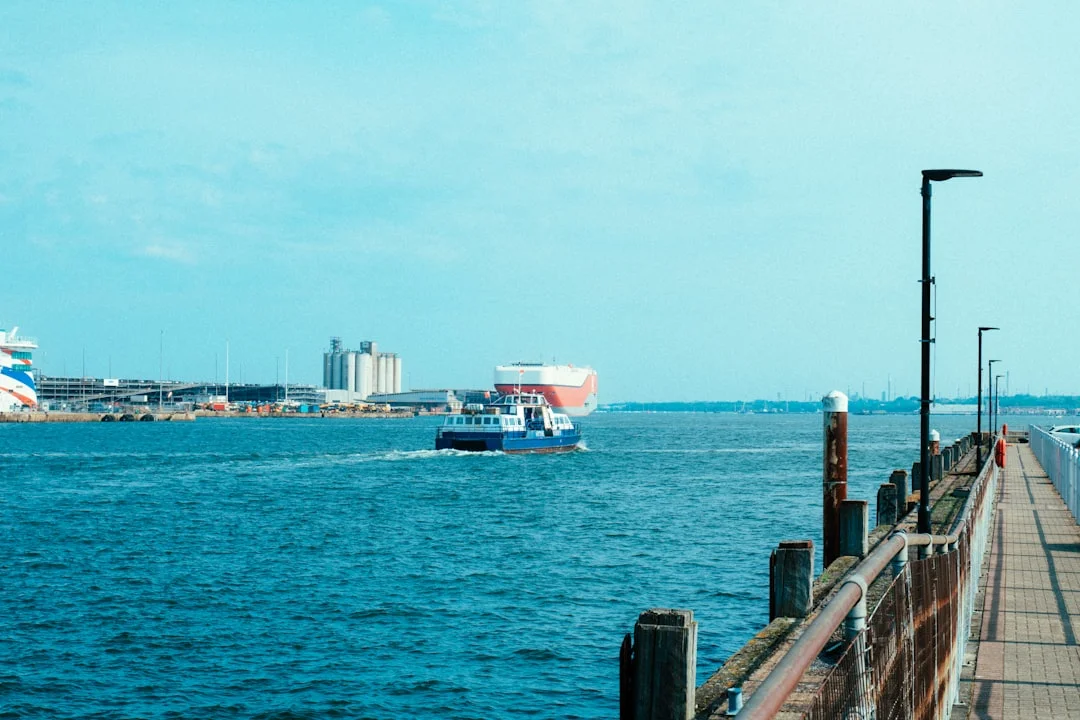
Photo by Mingming Ouyang on Unsplash
Departure Logistics — The Day Before
A Channel crossing is the kind of passage that punishes preparation gaps. The work happens in the 24 hours before you slip lines, not on the water.
Customs and crew clearance. Since the UK left the EU, crew leaving the UK for France must complete a PLEASURE form online at GOV.UK, with passport details for every person on board, the boat's registration, and the intended port of arrival. Submit this no more than 72 hours before departure. On arrival in France, fly the Q flag, call the harbour master on VHF Channel 9, and present passports — most marinas will sort the paperwork at the office.
Provisioning. For a 12-15 hour crossing, prepare food that can be eaten one-handed, in the dark, and cold if needed. Sandwiches in foil. Hard-boiled eggs. Soup in a thermos. Anything that needs to be cooked at 04:00 in a 25-degree heel will not be cooked.
Boat preparation.
- Top up fuel and water — you may motor for half the passage if the wind dies in the central Channel
- Check the engine: oil level, raw water filter clear, alternator belt tension
- Test the navigation lights, the VHF (DSC test call), the AIS, and the autopilot under sail
- Stow everything below as if you expect Force 6 — it will arrive at exactly the moment your crew is asleep
- Brief the crew on watch system, MOB drill, reefing points, and harness clip-in policy. Harnesses are clipped on after dark and in any conditions above Force 5, regardless of how settled it feels
Navigation prep. Have at least one paper chart of the Channel on board, even if you are running ECDIS or Navionics on a tablet. The instruments will fail at the worst possible moment and a paper chart with a pencil position never crashes. If your chart skills need refreshing, our guide to reading nautical charts walks through the symbols, soundings, and tidal diamonds you will use on this passage.
What the Crossing Actually Feels Like
The first three hours out of the Needles are usually the most pleasant — Solent waters, a fair tide, late afternoon light, the Isle of Wight falling away astern. Crew are fresh, the kettle is on, and someone notices a porpoise.
By 22:00 the wind has often built or veered, the lights of Cherbourg are still 50 nm away, and the boat is settled into a rhythm of three hours on, three off. You will spend most of this time alone in the cockpit listening to the diesel and watching AIS targets cross the screen at unsettling closing speeds. The galley becomes a hostile environment. Someone will be quietly seasick.
At 03:00 you reach the centre of the Channel. There is no land in any direction. Five-mile visibility means you see the lights of two ships at all times, sometimes four. The autopilot does its work and you adjust 2 degrees east, 3 degrees west, 2 degrees east, watching the cross-track error settle.
By dawn the Cotentin peninsula resolves on the horizon as a low grey line under a slowly warming sky. By 08:00 you can pick out the breakwater of Cherbourg, the radio mast above the town, and the white wakes of the morning ferry traffic. By 09:00 you are alongside in Port Chantereyne, the engine off, the lines made fast, and someone has produced a bottle of cidre from the marina cafe.
That is what a good Channel crossing feels like. The bad ones — the ones with wind over tide, with thick fog, with a sail change at 02:00 — are character-building in a way that nobody enjoys at the time and everybody enjoys describing afterwards.
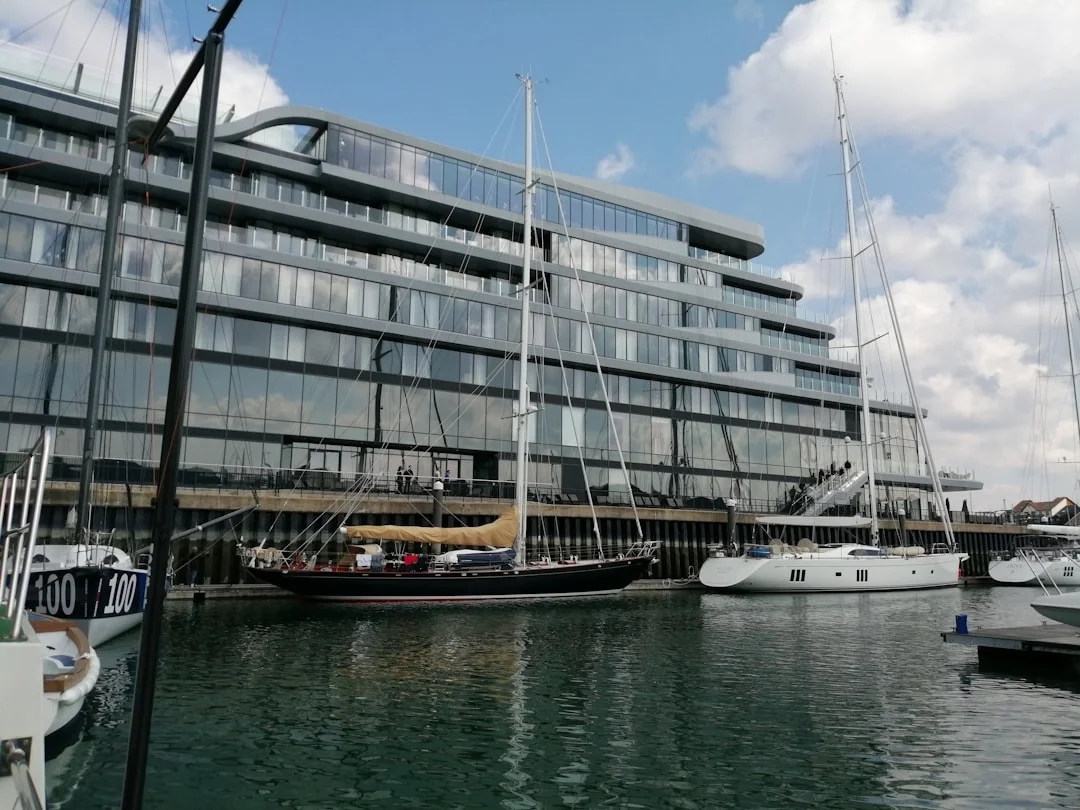
Photo by Hasan Karaman on Unsplash
Cost of a Cross-Channel Trip
For a typical week-long charter from Southampton to Cherbourg and back, with a 38-foot cruising yacht and four crew, expect:
| Item | Cost (GBP) |
|---|---|
| Bareboat charter (38-foot, mid-season) | £2,400 / week |
| Diesel (Southampton-Cherbourg-Saint-Vaast-Southampton, ~110 litres) | £200 |
| UK marina fees (1 night Hamble before departure) | £55 |
| Cherbourg marina (2 nights at Port Chantereyne) | £80 |
| Saint-Vaast marina (1 night) | £35 |
| Provisioning for 4 crew, 7 days | £300 |
| Eating ashore (3 lunches, 2 dinners) | £400 |
| Navigation charts / pilot books | £80 |
| Total | £3,550 |
That works out to about £127 per person per day for the boat portion, which is competitive with a Greek charter — and you sail home rather than fly. If you want to compare costs against other European cruising grounds, our guide to sailing destinations across Europe has a country-by-country breakdown.
Returning to Southampton
The return passage is the same distance but rarely the same passage. Westerly winds dominate the Channel for most of the season, which makes the return a beat where the outbound was a reach. Plan for an extra two to three hours each way and consider routing via the Channel Islands or the Cotentin coast for a more comfortable run.
If the forecast is settled, the fastest Channel return is overnight Cherbourg to the Solent, leaving 16:00, arriving Needles 06:00 with the flood tide carrying you straight back up to Southampton Water. Crew are tired but the boat is back on the home pontoon by lunch and there is time to clean up before the charter handover. You can check the exact distance and bearing for the return leg the same way you planned the outbound.
Frequently Asked Questions
How many nautical miles is it from Southampton to Cherbourg?
The shortest practical route from Southampton's Calshot Spit, through the Needles Channel, to Cherbourg's harbour entrance is approximately 75 nautical miles. The actual distance sailed depends on the route through the Solent and any deviation around the central Channel TSS, but most cruising yachts log between 78 and 85 nm on the GPS by the time they tie up at Port Chantereyne.
How long does it take to sail from Southampton to France?
For a typical 35 to 40-foot cruising yacht making good 5.5 to 6 knots, the Southampton-Cherbourg passage takes 12 to 15 hours. Saint-Vaast adds an hour or two. Le Havre is a 16-20 hour passage. A faster racing boat can do Cherbourg in 9-10 hours; a slower or heavily-laden boat under sail alone can take 18 hours if the wind is light or foul.
Do I need a passport to sail from Southampton to France?
Yes. Since 1 January 2021, every crew member on a UK-flagged vessel arriving in France must hold a valid passport (with at least three months' validity beyond the planned departure date) and complete an electronic PLEASURE form before leaving the UK. On arrival in France, the master must report to the harbour master and present passports for stamping if requested.
What's the best time of year for a Channel crossing from Southampton?
June, July, and early September offer the most reliable combination of mild weather, settled wind patterns, and long daylight hours. May and late September are workable but require closer attention to weather windows. Avoid August Bank Holiday weekend (heavily booked marinas), and avoid any crossing in winter unless you have a fully prepared boat and offshore experience.
Is sailing the English Channel dangerous?
The Channel is one of the busiest stretches of water on the planet, with around 500 commercial ships passing through the Dover Strait alone each day, but it is not inherently dangerous for a properly prepared boat with a competent crew. The real risks are commercial traffic (mitigated by AIS and TSS discipline), poor weather windows (mitigated by patience), and crew fatigue on overnight passages (mitigated by a strict watch system).
Can a beginner sail across the English Channel?
A first-time skipper should not attempt a Channel crossing as their first offshore passage. The minimum sensible experience is RYA Day Skipper qualification, plus 200 logged miles of coastal cruising including at least one night passage. Many UK sailing schools run a Channel-crossing training week with a qualified instructor on board, which is the safest way to gain the experience needed to do it independently afterwards.
Do I need a VHF radio licence to cross the Channel?
Yes — both the boat must have an SRC (Short Range Certificate) operator on board, and the radio must be licensed under the UK's Ship Radio Licence. Without an SRC, you cannot legally make routine VHF calls. DSC-equipped VHFs additionally require an MMSI registration.
What if the weather changes mid-passage?
Always have at least one bail-out option in your plan. From mid-Channel southbound, your bail-out options are turning back to the Solent (if conditions allow), bearing away east to Le Havre, or running west to Alderney depending on the wind direction. The decision to abort or divert is made early, while the weather is still merely uncomfortable, not later when it has become genuinely difficult.
About the Author
Related Articles

DSC Distress Call Guide: GMDSS, AIS, EPIRB & PLB
Learn the correct DSC distress call sequence, MMSI setup, and when to use AIS, EPIRB or PLB. Get it right—read the guide and drill it.
By Breezada Team
Sailing in Strong Currents: Tides, Tools & Examples
Learn sailing in strong currents with tide tools, rules of thumb, and real examples. Plan safer passages—read the guide and use the checklists.
By Breezada Team
NAVTEX for Sailing: SafetyNET Offshore Weather Guide
Learn NAVTEX & SafetyNET (Inmarsat-C) setup, filters, and what MSI to trust offshore. Get clearer forecasts—read the guide now.
By Breezada Team
Sailboat Hull Speed: Calculate It and Exceed It
Learn sailboat hull speed, the 1.34×√LWL formula, and when boats can exceed it. Get examples and tips—read now and calculate yours.
By Breezada Team