For most beginners, a sailing dinghy teaches the craft faster — but a keelboat is more comfortable, more forgiving in chop, and the right starting point if your goal is cruising rather than racing. The honest answer to dinghy vs keelboat depends on three things: what kind of sailor you want to become, your physical comfort with capsizing, and how much weather you want to feel through the boat. The wrong starting point won't ruin you, but the right one will save you a year.
I've taught both. I've watched a lifelong cruiser climb out of a Laser shaking and laughing because the boat finally explained, in five minutes, what twenty years of cruising never had: how a sail actually works. And I've watched dinghy sailors step onto a 35-foot cruiser and be completely lost trying to figure out where the boom is going. They are different sports that share a vocabulary. Choose with intent.
What Is a Sailing Dinghy?
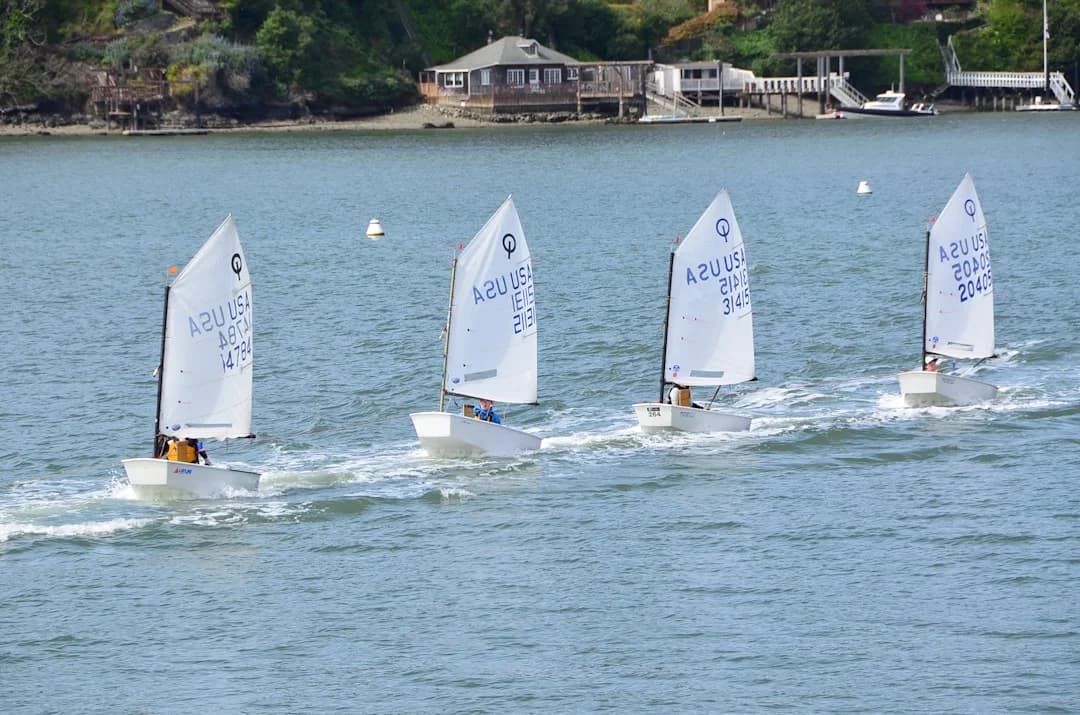
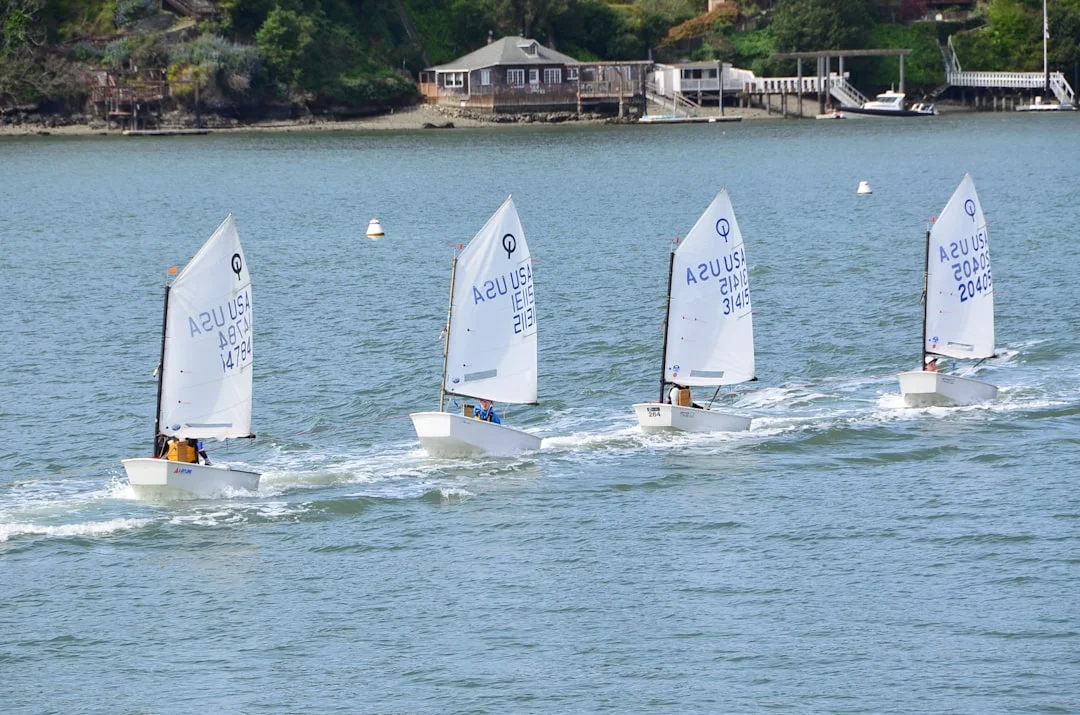
A sailing dinghy is a small, light, open boat — usually 8 to 16 feet long — with a centerboard or daggerboard rather than a fixed keel. There's no cabin. No engine, in most cases. The hull weighs less than the sailor inside it. When the wind gusts, you feel it in your hands and through the hiking strap. When you do something wrong, the boat capsizes. That last sentence is not a flaw — it's the entire teaching tool.
Common boats in this category: Optimist, Laser (now ILCA), Topaz, RS Quba, Sunfish, Pico, and double-handers like the 420 and RS Feva. Most weigh between 35 and 130 kg. They're cheap to buy used, easy to rig in 10 minutes, and you can tow them on a small trailer.
The defining quality of a dinghy is immediate feedback. Trim the sail wrong by ten degrees and you slow down noticeably. Steer too hard into a tack and you'll stall and slip backward. Lean too far the wrong way and you swim. There's no momentum mass to forgive errors — the boat punishes mistakes before you've finished making them, and this is exactly why dinghies produce technically excellent sailors.
What Is a Keelboat?
A keelboat is a sailboat with a fixed, weighted keel hanging below the hull. That ballast — typically 30-45% of the boat's total displacement — keeps the boat upright. Tip a keelboat over and physics rights it again. Keelboats range from 18-foot training boats like the J/22 or Sonar to 30-foot weekend cruisers to 50-foot offshore yachts.
The keel does three things: it provides the lateral resistance that lets a sail convert wind into forward motion (without it, you'd just slide sideways), it lowers the center of gravity so the boat resists capsizing, and it gives the boat enough mass that it carries momentum through tacks and lulls. That mass is the trade-off. A keelboat smooths everything out. The wind shifts; the boat reacts five seconds later. You do something wrong; you have time to notice and correct.
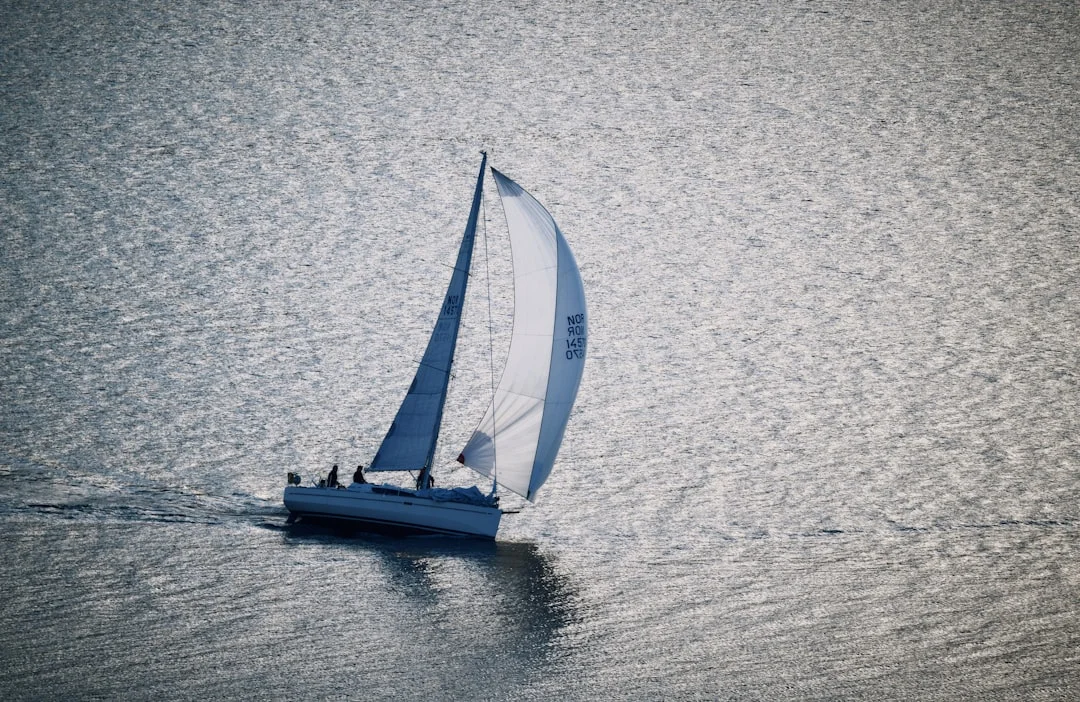
Photo by Vidar Nordli-Mathisen on Unsplash
Keelboats also come with things dinghies don't: a cabin (usually), a head (sometimes), an inboard or outboard engine, lifelines, winches, instruments, and the option to spend the night aboard. They cost more, take longer to learn end-to-end because there's more system, and reward sailors who like to think across multiple variables at once — sail trim, course, tide, weather, navigation, crew management — rather than focus all attention on a single tiller.
Dinghy vs Keelboat at a Glance
| Factor | Sailing Dinghy | Keelboat |
|---|---|---|
| Length | 8–16 ft | 18–50+ ft |
| Crew | 1–2 | 2–8 |
| Capsize risk | High (expected) | Very low |
| Feedback speed | Instant | Delayed, smoother |
| Cabin / overnight | No | Often yes |
| Engine | Rarely | Usually |
| Cost (entry, used) | $500–$3,000 | $8,000–$40,000+ |
| Storage | Garage / dolly | Marina or yard |
| Wet / dry | Wet — expect to swim | Mostly dry |
| Best for learning | Sail trim, balance, reflexes | Navigation, systems, cruising |
| Capsize recovery | Required skill | Not applicable |
| Weather window | Light–moderate winds | Wider range, including heavy |
Which One Teaches You to Sail Better?
For pure sail-handling fundamentals — the dinghy wins, and it's not close. There are reasons every Olympic sailor and most professional skippers came up through dinghies. The boat's weight is roughly the same as the sailor's body, which means you are part of the rig. Your weight, your position, your reactions — these directly affect boat speed and balance. You learn to read wind shifts on the water because you have to, not because someone told you to.
A new dinghy sailor will, in 20 hours of on-water time, develop:
- A real, body-level understanding of angle of attack and how trimming the mainsheet 5 degrees changes everything
- The reflex to hike out and shift weight to balance the boat without thinking about it
- The ability to feel a wind shift through the tiller and pressure on the sail before seeing it on the water
- Confidence with capsize recovery (which builds general water comfort that applies to every kind of sailing later)
- Strong upwind technique — pinching, footing, finding the groove
A new keelboat sailor in the same 20 hours will learn the vocabulary of all those things, but rarely the feel. The boat is too heavy and too forgiving. Mistakes get absorbed. You can sail a keelboat poorly for a long time before noticing.
That said: keelboats teach things dinghies cannot. Navigation. Engine handling. Berth approaches and Med mooring. Reefing systems. VHF protocol. Anchoring. Crew management. If your goal is to charter a 40-foot cruiser in Greece next summer, every dinghy hour helps a little, but you also need keelboat-specific skills that dinghies don't expose you to.
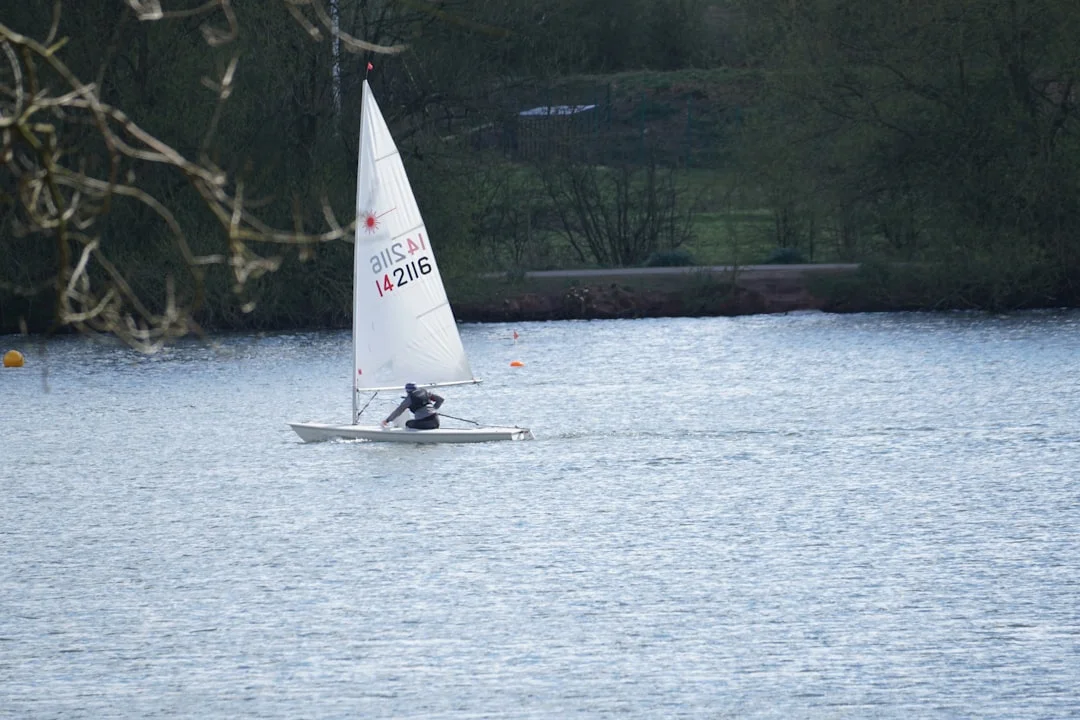
Photo by Luke Stanton on Unsplash
Which One Is More Comfortable?
The keelboat. Decisively. This matters more than experienced sailors usually admit when giving advice.
A dinghy is a wet sport. You sit on the side deck or hike off it in a wetsuit or quick-dry kit. Spray hits you. You will capsize — not might, will — and sometimes in cold water. Your gear gets soaked and stays soaked. After three hours you're tired in a way that's not entirely cardiovascular. It's cold-tired. For people in their 50s and 60s starting to learn, or anyone with back, knee, or shoulder issues, this matters. Hiking out of a Laser for an afternoon is a workout. So is righting a capsized dinghy with chop running.
A keelboat is a dry sport, mostly. You sit in a cockpit. You wear normal clothes plus a jacket. You can stand up. You can put down your coffee. You can keep sailing in 25-knot gusts that would have you upside down in a Laser within two minutes. For someone whose budget includes time off work, weekends with family, and recovery between sails — a keelboat is sustainable in a way a dinghy might not be.
This is why "sail the dinghy first" advice, while technically correct on the merits of skill development, ignores adherence. A sport you don't keep doing teaches you nothing. The best boat is the one you'll actually be on water in next Saturday.
Cost: Honest Numbers
Used dinghy entry points (boat only, ready to sail):
- Optimist: $500–$1,500
- Sunfish: $800–$2,500
- Laser/ILCA 7: $1,200–$3,500
- 420: $1,500–$4,000
Add roughly $200–$500 for sailing kit (PFD, hiking pants, gloves, dry bag), $150–$400/year for storage at a club, and almost nothing for maintenance. A motivated person can be sailing their own dinghy for under $2,000 all-in.
Used keelboat entry points (sailable, not project boats):
- 22-foot trailer-sailer (Catalina 22, Cal 22): $4,000–$10,000
- 27–28-foot weekender (Catalina 27, J/24): $8,000–$18,000
- 32-foot cruiser (Catalina 32, Beneteau 323): $20,000–$45,000
Then add 5–10% of purchase price annually for maintenance, plus marina fees ($150–$1,000/month depending on location), insurance ($300–$1,000/year), bottom paint every 1–2 years ($300–$700), and replaceable consumables like sacrificial anodes, fenders, lines, and electronics. A keelboat is a sailing boat plus a recurring bill.
If you want sailing without the bill: join a club. Most yacht clubs and community sailing programs offer dinghy use for $400–$1,200/year and keelboat membership (with shared boats) for $1,500–$4,000/year. Or charter — bareboat or skippered — and let someone else worry about the engine.
What About Lessons?
Both paths benefit enormously from formal instruction. The fastest learners I've seen all did some version of this:
- A weekend dinghy course in a Pico, RS Quba, or 420 — 12–16 hours on the water, capsize drills included. ASA 110 in the US, RYA Level 1 in the UK and Europe.
- A weekend keelboat course in a J/22 or J/24 — 2–3 days, gets you ASA 101 / RYA Day Skipper Theory level basics.
- Time — 50+ hours of unsupervised sailing in whichever direction calls them.
You can do them in either order. People who do dinghies first often progress faster on keelboats because the body-knowledge transfers. People who do keelboats first sometimes never feel the need to capsize for fun, which is reasonable.
For destination sailors — people whose end goal is bareboat charter in the Med or Caribbean — the keelboat track is the practical one. You'll need a recognized cruising certification anyway, so start there. You can always pick a beginner-friendly cruising ground like the Whitsundays or a short Mediterranean hop once you have a few weekends of keelboat time logged.
Which Should You Actually Choose?
Here's the honest decision matrix.
Choose a dinghy first if:
- You're under 50, reasonably fit, and don't mind getting wet
- You want to race eventually, or improve your sail-handling instincts
- Your budget is tight (dinghies are 5–10x cheaper to own)
- You have garage space and a small trailer
- You enjoy the workout aspect — trapeze sailing or Laser hiking is genuinely athletic
- You learn best by doing, failing, and iterating fast
Choose a keelboat first if:
- Your endpoint goal is cruising, chartering, or weekend overnighting
- You want to sail with family, partner, or friends who don't all want to be wet
- You're learning later in life (50+) and want to keep your knees
- You live somewhere with cold water (Pacific Northwest, UK, Scandinavia)
- You can join a sailing club or program with shared keelboats
- You enjoy the systems-and-navigation side of sailing as much as the steering
Choose both if you can: Spend a season alternating. Saturday morning in a Laser, Sunday afternoon on a 27-footer. The dinghy hours will sharpen your keelboat work, and the keelboat hours will give you the navigation and weather skills the dinghy never asks you to learn. This is the path most lifelong sailors converge on.
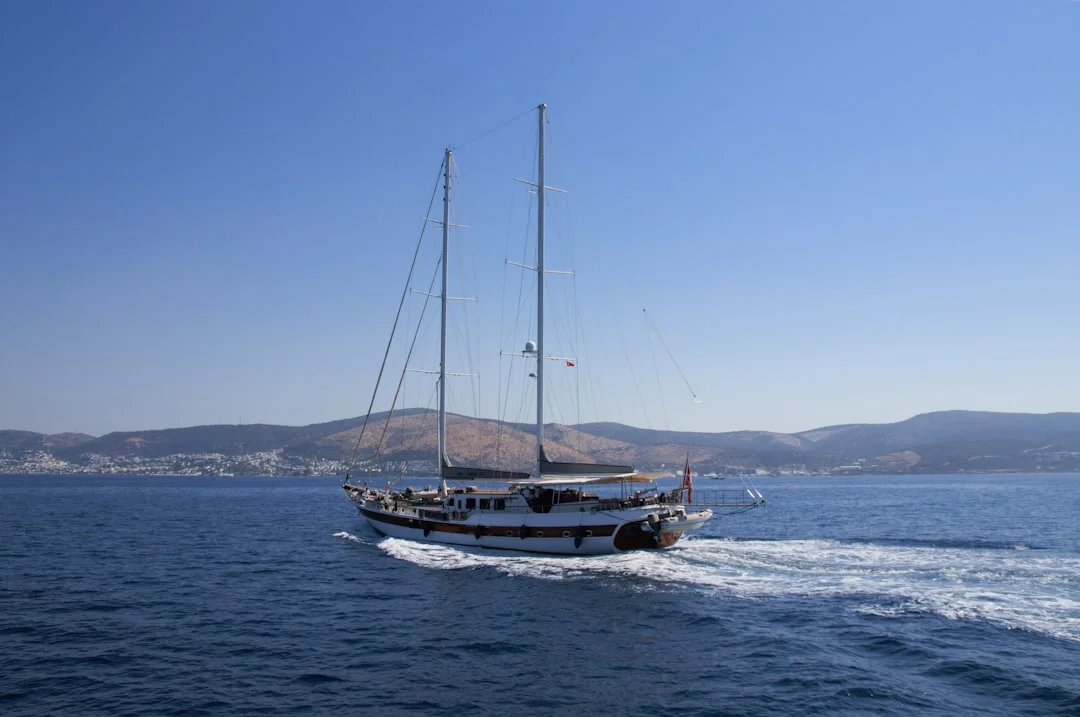
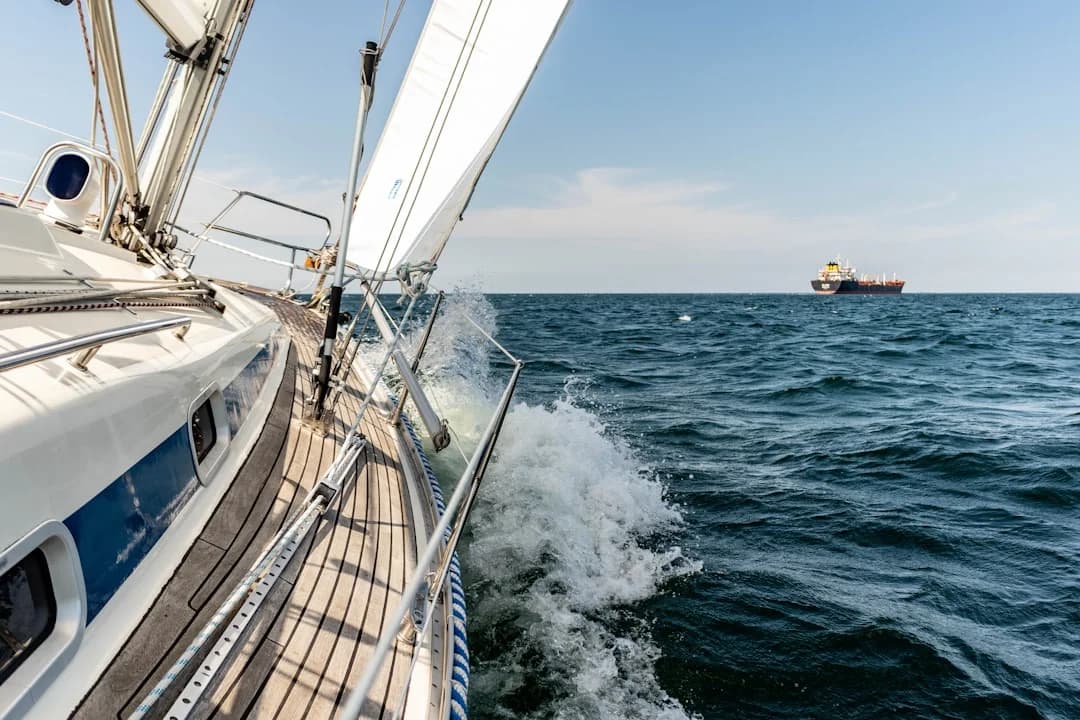
Photo by Georgii Eletskikh on Unsplash
What About Kids?
For children under 14, dinghy first, every time. Optimist sailing programs are how junior sailing works in essentially every country with a sailing tradition. The boats are scaled to a child's body. The mistakes are safe (everyone wears a PFD, water is warm, instructors hover in RIBs). Kids develop balance, water confidence, and sail-handling instincts that no keelboat program can match. Many of the world's best Olympic and offshore sailors started in Optis at age 8.
For teenagers transitioning to bigger boats, the 420 and 29er are the natural next steps before they touch a keelboat at 16 or 17.
Common Beginner Mistakes (Either Boat)
Watch for these. Both boats expose them, but keelboats hide them better.
- Death-gripping the tiller. Hold it like a wineglass. Let the boat tell you what's happening.
- Looking at the boat instead of the water. The wind shows up on the water 50 meters before it hits you. Train your eyes upwind.
- Over-trimming the main. When in doubt, ease until the luff just stops backing, then trim back two inches. More boats are sailed slow by over-trim than under-trim.
- Forgetting to think about where you're going to end up. Plan tacks and gybes 30 seconds in advance, not as you start them.
- Treating the boom like furniture. It is not furniture. It will hit you. Keep your head below boom height during tacks and gybes, always.
If you do plan to graduate to longer keelboat passages once your skills are solid, even a short Mediterranean crossing like Sicily to Malta makes a fine first overnight — predictable conditions, manageable distance, and you can check the exact nautical miles with Breezada's sea distance calculator when you start passage planning. The same tool is useful for sketching out any coastal route — calculate the distance between any two ports before you commit to a charter itinerary.
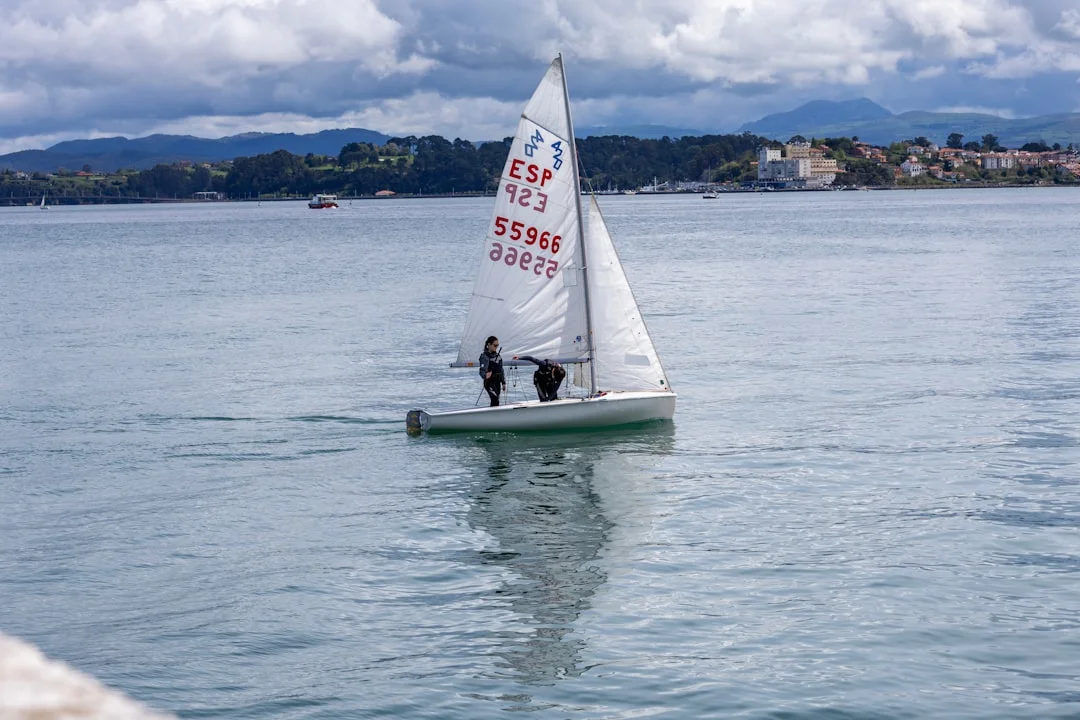
Photo by Frederick Adegoke Snr. on Unsplash
Frequently Asked Questions
Is a dinghy harder to sail than a keelboat?
Yes — in the sense that it's less forgiving and demands faster reactions. A dinghy will capsize if you ignore it; a keelboat will simply round up or stall. But "harder" doesn't mean "worse for beginners." The constant feedback is what teaches you to sail well. Most instructors agree: dinghy sailors who later learn keelboats become better keelboat sailors, while keelboat-only sailors often have lasting gaps in their sail-trim instincts.
Can I learn to sail in my 50s or 60s on a dinghy?
You can, but be honest about your body. Hiking off a Laser for an afternoon is genuinely athletic, and capsize recovery requires upper-body strength and getting back over a slippery hull. If you have shoulder, knee, or back issues, a stable trainer like an RS Quest or a small keelboat is far more sustainable. Plenty of people learn to sail in their 60s — most do it on keelboats and are very glad they did.
Do I need a license to sail a dinghy or keelboat?
For private recreational sailing in most countries, no license is required for either. However, bareboat chartering almost always requires certification — typically ASA 101+103+104 in the US, or RYA Day Skipper / ICC in Europe. Some EU countries (Spain, Greece, Croatia, Italy) require an ICC or equivalent license to charter. For your own boat in your own waters, a basic safety course is recommended but not legally mandatory in most jurisdictions.
Will dinghy skills transfer to a keelboat?
Most of them, yes. Sail trim, wind awareness, helm feel, points of sail, tacking and gybing technique, weather reading — all transfer directly and put you well ahead of someone starting from zero. What doesn't transfer: navigation, engine handling, mooring and docking under power, anchoring, reefing a roller furler, VHF use, and managing a crew of four people who don't all sail. You'll need to learn those separately when you move to a keelboat.
What's the cheapest way to start sailing?
A used Sunfish or Laser plus a club membership for storage. Total entry cost: under $2,000 in most regions, often under $1,000 if you're patient and search local sailing clubs and Facebook groups in spring. The next cheapest path is a community sailing program ($300–$700 for a 12-hour intro course, then $400–$1,000/year for boat use). Both beat keelboat ownership by an order of magnitude. If you want keelboat experience without owning one, a sailing club or a season pass to a fractional-ownership program is the practical answer.
How long until I'm a competent sailor?
For dinghies: roughly 20 hours to be safe and self-reliant in moderate wind, 100 hours to be genuinely good. For keelboats: roughly 40 hours of crewing plus a certification course to be a competent crew, 150–200 hours including overnight passages and docking practice to skipper your own boat with confidence. Sailing has no ceiling — the best sailors I know still say they're learning after 40 years. But the basic competence threshold is reachable in one focused season either way.
Should kids start on a dinghy or a keelboat?
Dinghy. Almost without exception. Optimist programs (ages 7–12) and 420 programs (ages 12–17) are how every sailing nation produces capable sailors. The boats are sized to children, the lessons are structured, the safety record is excellent, and kids develop balance and water-confidence that keelboat programs can't replicate. Keelboats become useful for teens at 15+ when family cruising or racing programs become an option.
Is a keelboat safer than a dinghy?
Yes, in raw terms — keelboats don't capsize and have lifelines, engines, and (usually) communications equipment. But "safer" is a soft word. The real safety question is what you do with the boat. A dinghy in 8 knots near shore with a PFD on is safer than a keelboat 30 miles offshore in a building gale with an inexperienced crew. Match the boat, the conditions, and your skill level — that's the actual safety calculus.
About the Author
Related Articles
Code Zero vs Genoa: Jib & Spinnaker Guide
Compare Code Zero vs genoa, jib, and spinnaker by wind range and angle. Choose the right headsail for your boat—read the guide now.
By Breezada Team
Starlink Mini on a Boat: Plans, Power & Offshore Use
Learn Starlink Mini on a boat—plans, power draw, and offshore performance. Compare Roam vs Mobile Priority and get setup tips. Read now.
By Breezada Team
Boat Courtesy Flag & Q Flag Etiquette for Yachts
Learn boat courtesy flag and Q flag etiquette for yachts—what to fly, where to hoist it, and common mistakes. Get the checklist before landfall.
By Breezada Team

French Canals Boat Trip Guide Beyond Canal du Midi
Plan a french canals boat trip beyond the Midi with routes, costs, licenses & lock tips. Compare regions and map your itinerary—start now.
By Breezada Team