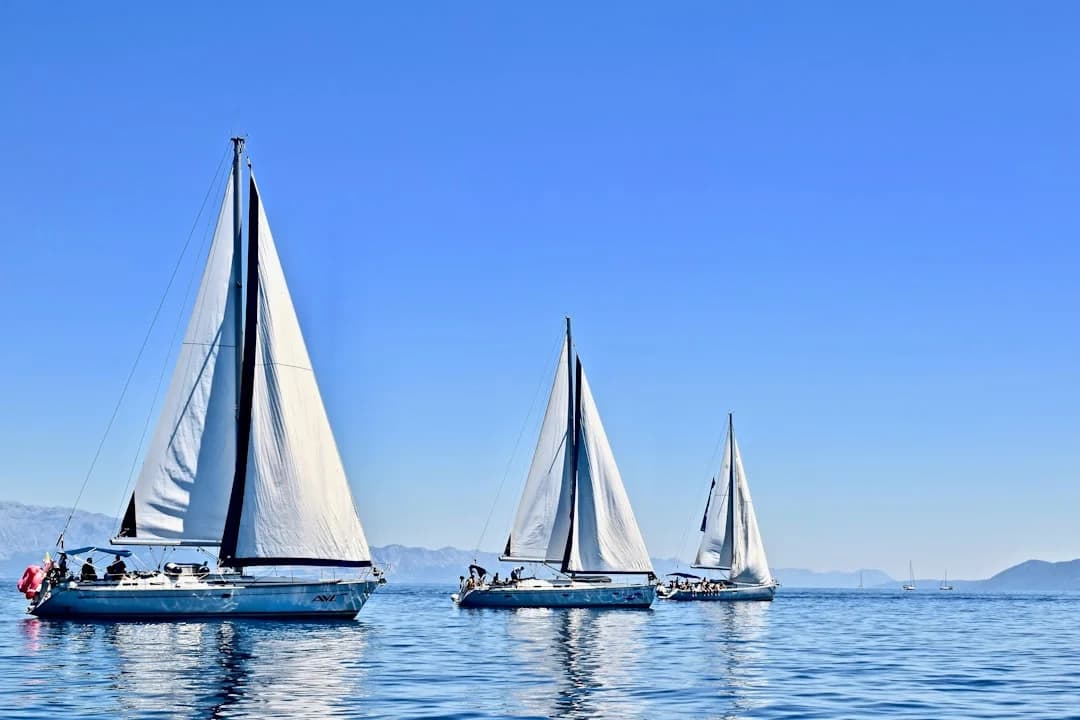
The shortest sailing passage from Thailand to Malaysia is the 130-nautical-mile run from Phuket to Langkawi down the Andaman Sea coast — a passage most cruising boats break into three or four days of relaxed island-hopping rather than a single overnight push. The route is sheltered, the islands are spectacular, and the formalities at both ends are well-worn enough that you can clear out of one country and into the other without losing a full day.
Photo by Karla Car on Unsplash
This guide covers what the sailing Thailand to Malaysia passage actually looks like in practice — distances, weather windows, the islands worth stopping at, what the ports of entry expect from you, and the costs you'll pay along the way. It's written for skippers planning their first Andaman Sea cruise and for charterers looking at the popular one-way Phuket-Langkawi run.
The Route at a Glance
The Andaman Sea hugs the western coast of the Malay Peninsula, separating it from the Andaman and Nicobar Islands. From a sailor's perspective, the Phuket-to-Langkawi corridor is the highway: deep water, modest tidal range, and an almost unbroken chain of islands and anchorages that lets you day-sail the whole thing.
| Leg | Distance | Typical Time |
|---|---|---|
| Phuket (Ao Chalong) → Phi Phi Don | 22 nm | 4–5 hours |
| Phi Phi Don → Ko Lanta | 18 nm | 3–4 hours |
| Ko Lanta → Ko Muk / Ko Kradan | 22 nm | 4 hours |
| Ko Kradan → Ko Lipe | 35 nm | 6–7 hours |
| Ko Lipe → Langkawi (Telaga Harbour) | 33 nm | 6 hours |
| Total | ~130 nm | 3–5 days |
You can compress this into a single 24-hour passage if you're delivering a boat — Phuket direct to Langkawi is a comfortable overnighter at 5 knots. Most cruisers don't, because the islands you'd skip are the entire point of being there.
If you want exact mileage between specific waypoints rather than the rough table above, use Breezada's sea distance calculator to plot the legs by lat/long.
When to Sail: The NE Monsoon Window
The Andaman Sea has a strong wet/dry split, and only one of those seasons is sailable in any comfortable sense.
November through April — the dry, NE monsoon season — is when this coast comes alive. Winds are light to moderate (5–15 knots, mostly NE-to-E), seas are flat, and rain is rare. December and January are the most reliable months. Charter fleets in Phuket and Langkawi are booked solid from mid-December to mid-February.
May through October — the SW monsoon season — brings 25–35 knot SW winds, heavy rain, and dangerous lee shores along the Thai mainland coast. Most charter operations close. The few cruisers who sail in shoulder months (early November or late April) often find decent weather, but the safety margin is thinner. The official ISAF/RYA guidance for the region is to be south of the equator or in protected waters by the end of April.
The transition months can fool you. April typically still works — winds are lighter and sometimes go variable, but rain remains scattered. By mid-May the SW pattern is locked in.
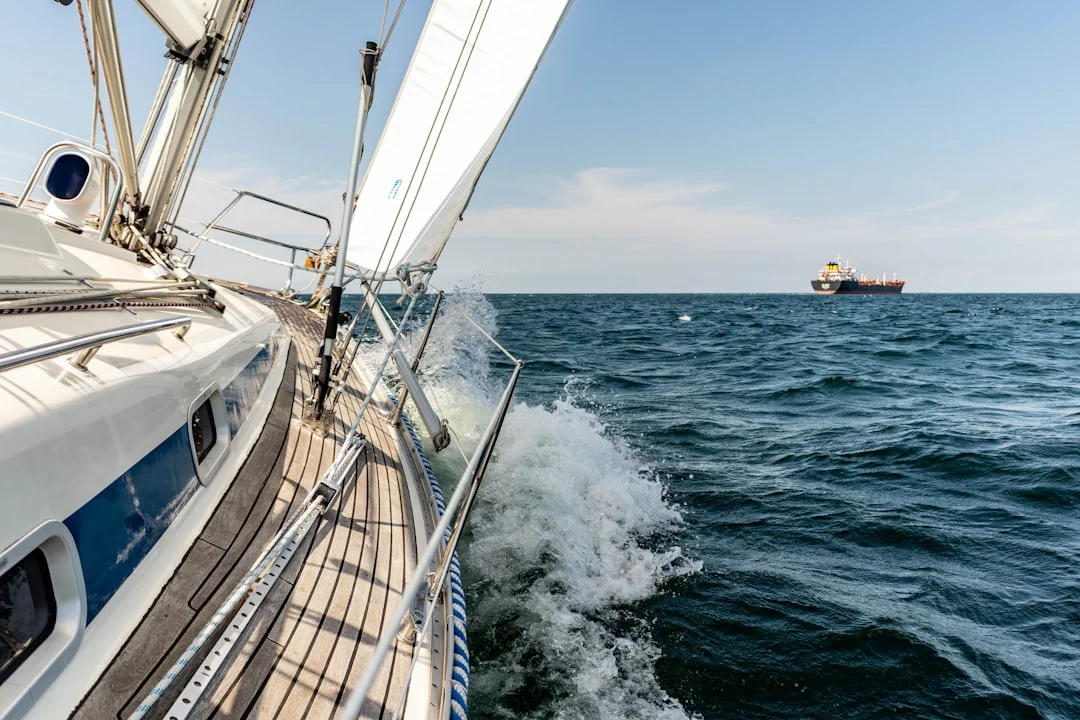
Photo by Michael Held on Unsplash
Departure: Clearing Out of Thailand
Most boats depart from one of three Phuket-area harbours:
- Ao Chalong Bay — the main yacht checkout port, with Customs, Immigration and the Harbour Master in one building near the pier. Anchorage is open and rolly in any southerly swell, but the formalities are fast.
- Yacht Haven Marina (north Phuket) — quieter, well-protected, full marina services. You can clear out from here with a bit of paperwork shuffling, but most skippers end up driving down to Chalong anyway.
- Phuket Boat Lagoon — convenient if you've been hauled out, less convenient for clearing out (you'll still need to deal with Chalong).
You'll need: passports, boat registration, last clearance (zarpe), a crew list, and the boat insurance certificate. Thai authorities issue an outbound clearance valid for 24–72 hours — get it close to your actual departure or you'll be re-clearing.
The fees are modest by international standards: roughly THB 1,200–2,500 ($35–75) for the full clear-out depending on overtime, agent fees if you use one, and the harbour master's tip culture. Most cruisers handle it themselves; agents charge $80–150 to do it for you, which is worth it if you don't speak Thai or have a same-day flight.
The Thai Islands: What's Worth Stopping For
The Thai leg of the route is where you'll spend most of your time. The islands are limestone karst — the iconic vertical cliffs and emerald lagoons that turn up on every Thailand poster.
Phi Phi Don and Phi Phi Leh sit 22 nm southeast of Phuket. Phi Phi Don has a busy ferry terminal and a bay full of long-tails, but the Tonsai anchorage thins out at night once the day-trippers leave. Phi Phi Leh's Maya Bay (yes, the Leonardo DiCaprio one) is closed to anchoring and now requires a daytime mooring booking, but Pileh Lagoon next door is still one of the most spectacular places in Asia to drop a hook for lunch.
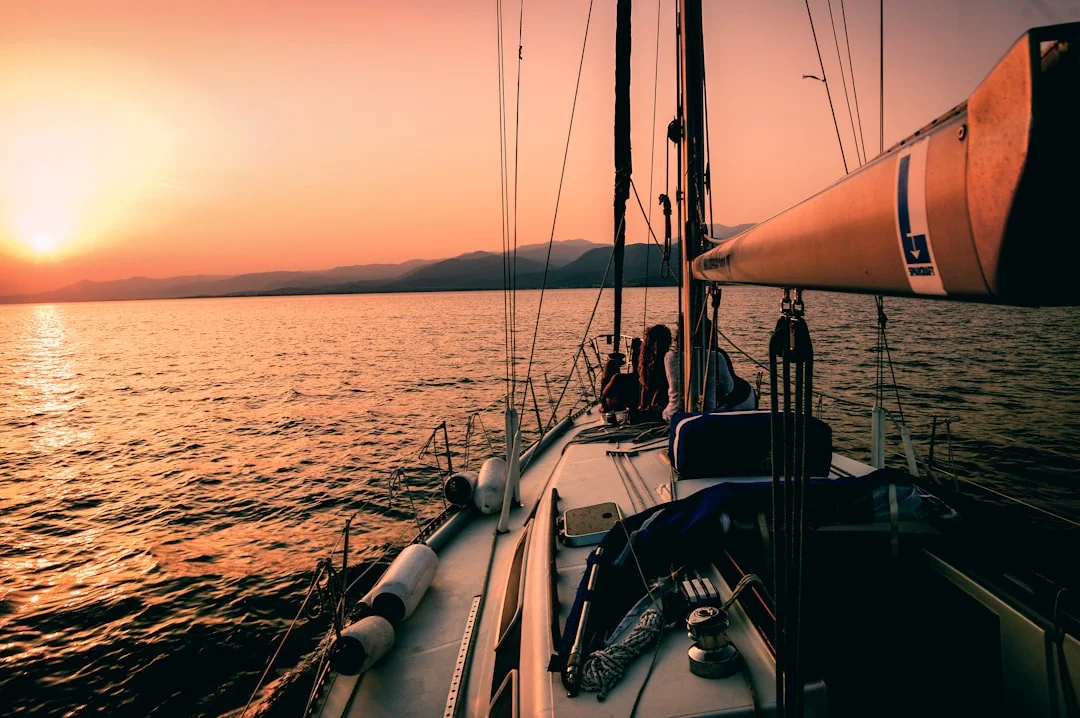
Photo by Markos Mant on Unsplash
Ko Lanta has a long, walkable strip of beach bars and a relaxed vibe. The anchorage off Klong Dao is fine in NE conditions, exposed in westerlies. Ferry traffic stops at sunset and the bay quiets down.
Ko Muk and Ko Kradan are quieter — fewer tourists, better snorkeling, and the famous Emerald Cave at Ko Muk where you swim through a 75-metre tunnel into a hidden interior beach. Anchor outside the cave entrance; depths shoal quickly.
Ko Rok Nok and Ko Rok Nai are inside Mu Ko Lanta National Park and require a small daily fee, paid to a ranger on Ko Rok Nai. They're worth the detour if you have an extra day — the snorkeling is among the best on the route.
Ko Lipe is the last Thai island before Malaysian waters. It has its own immigration post (seasonal), a busy beach scene, and reasonable provisioning. Most skippers do a final clearance check here even if they cleared out of Phuket — the rule technically says you should clear at your last Thai port.
The Border Crossing
The Thai-Malaysian maritime border runs roughly WSW from the southern tip of Tarutao National Park down to the small islands north of Langkawi. The crossing itself is uneventful — about 10 nm of open water between Ko Lipe and Pulau Langkawi's northern islands. You can sail it in two hours.
A few practical notes:
- Don't anchor in the no-man's-land between exit and entry. If something goes wrong overnight, the paperwork is messy.
- Both navies patrol the border. They're polite, but they want to see your clearance papers.
- Mobile coverage is patchy in the gap. Have your routing pre-loaded.
If you're new to long-distance navigation in unfamiliar waters, our guide to reading nautical charts covers the chart symbols and tidal data you'll be relying on for this kind of pilotage between islands.
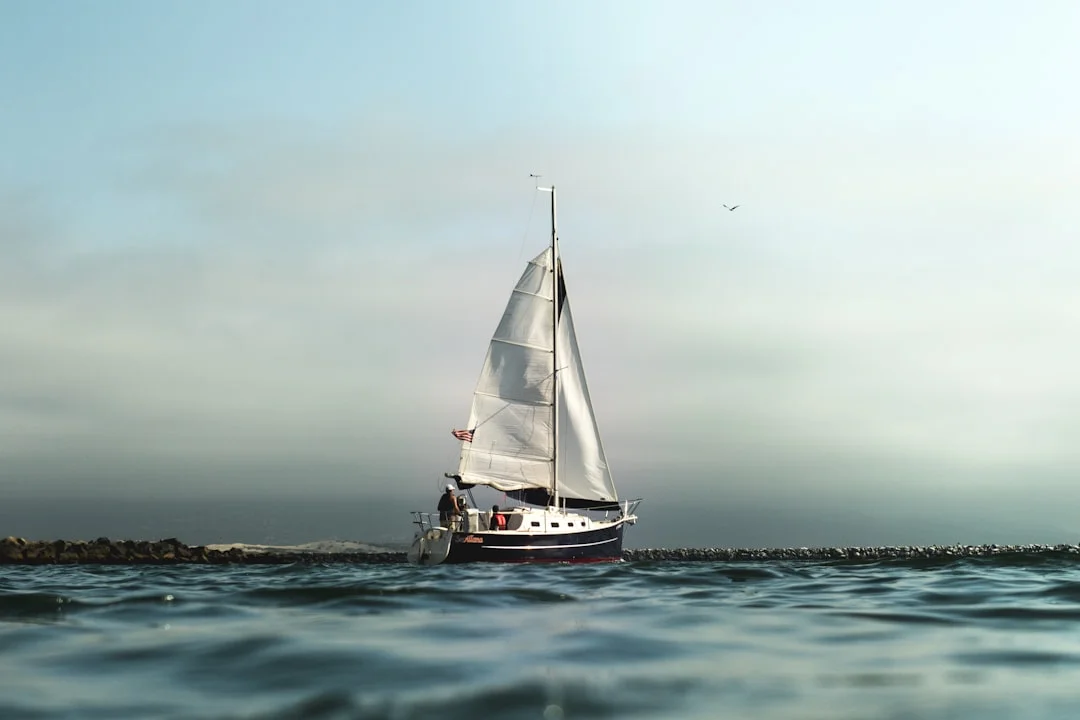
Photo by Jeremy Bishop on Unsplash
Arrival: Clearing Into Malaysia
Telaga Harbour Marina on Langkawi's western coast is the main yacht entry point. Customs and Immigration are right at the marina office — you tie up, walk over, hand in your forms, and you're done in under an hour if your paperwork is in order.
Alternatives:
- Royal Langkawi Yacht Club (RLYC) in Kuah town — easier provisioning, but you'll still need to send paperwork to the customs office in Kuah, which is more of a hike.
- Rebak Marina — fully serviced boatyard with good lift-out facilities, slightly out of the way for clearance.
Required documents are similar to Thai checkout: passports, registration, outbound clearance from Thailand, crew list, insurance. Malaysian formalities are free — there are no entry fees for visiting yachts at Langkawi, which is one of the reasons it's such a popular cruising hub. Langkawi is a duty-free port, so you can also stock alcohol and tobacco at far lower prices than anywhere else in the region. Boats often plan a multi-week stop here just for that reason.
You'll get a 30-day visa on arrival for most nationalities, extendable. The boat itself can stay on a temporary import permit for up to 90 days, renewable.
Costs: What the Passage Actually Spends
For a typical 40–45 ft monohull doing the Phuket-to-Langkawi run over a week:
| Item | Estimated cost |
|---|---|
| Thai outbound clearance | $35–75 |
| Thai national park fees (3–4 islands) | $15–30 |
| Malaysian inbound clearance | Free |
| Fuel (motor sailing 50%) | $80–140 |
| Marina nights (Phuket + Langkawi, 4 nights) | $200–350 |
| Anchorage fees | Negligible (mostly free) |
| Provisioning top-up at Ko Lipe | $40–80 |
So you're looking at $400–700 in hard costs for the passage on top of whatever the boat itself is costing you. If you're chartering, that's broadly in line with the figures in our yacht charter cost guide — bareboat one-way fees from Phuket to Langkawi typically add another $400–600 on top of the weekly charter rate.
What to Expect Underway
The Andaman Sea is one of the more forgiving cruising grounds in Southeast Asia. A few specifics that surprise newcomers:
Tides matter more than you'd think. Spring tides run 2.5–3 metres, and the gaps between islands funnel current up to 2 knots. Pilot the narrows on slack water if you can — Ko Muk's Emerald Cave entrance, in particular, is much easier on a rising tide.
Long-tail boats are everywhere. They're loud, they cut close, and they don't always show lights at dusk. Keep a good lookout coming into any popular anchorage in the last hour of daylight.
Squalls happen even in dry season. Mostly afternoon thermal cells lasting 20 minutes — 25-knot gusts and heavy rain, then nothing. Reef early, especially if you're motor-sailing with crew below.
The water is warm. 28–30°C surface temps year-round. You'll lose less body heat than you expect, but you'll dehydrate fast. Drink more than you think you need.
Visibility is generally good — 10+ nm in dry season — but smoke from agricultural burning on the mainland can cut it dramatically in February and March. Don't rely on visual landfall in haze.
For yachts considering longer overnight legs to compress the route, our tips for sailing at night cover the watch-keeping practices that matter most in shipping-dense waters like the Strait of Malacca approach.
The Reverse Direction: Langkawi to Phuket
The same route in reverse is a slightly slower passage because you're heading north into the prevailing NE wind. Plan for 5–6 days rather than 3–5, and expect more motor-sailing — typically 60–70% of the time on engine in light wind. Otherwise the route, anchorages, and formalities work the same way in reverse.
Many cruising boats do a round-trip from Langkawi: north to Phuket in November-December, cruise the Thai islands through January and February, then back to Langkawi for a March haul-out before the SW monsoon arrives.
Boats and Charter Options
The Phuket-Langkawi run is one of the most popular one-way bareboat routes in Asia. Sunsail, The Moorings, and several local Thai operators all offer it from October through April. Typical setup:
- Boat sizes: 38–47 ft monohulls, 38–46 ft catamarans
- Duration: 7 or 10 days, one-way fee included
- Qualifications: ICC or equivalent, plus a checkout sail with a base skipper if your CV is light
- Skippered option: $300–450/day on top of charter rate
Catamarans dominate the local charter fleet because shallow draft (~1.2 m) lets you tuck into anchorages a 2 m monohull can't approach. Cooler decks and better stability at anchor matter in 30°C heat. The trade-off is upwind performance — heading north against the NE monsoon is noticeably slower on a cat than on a similar-sized monohull.
For exact distances between specific anchorages on either coast, you can calculate the distance between any two ports to firm up a daily plan before departure.
Equipment Worth Having
Beyond standard offshore kit, the Andaman Sea benefits from a few extras:
- Generous awning or bimini extension — sun is intense from 10:00 to 16:00
- Reef-safe sunscreen — required by Thai national parks since 2021
- Snorkel kit per crew member — half the value of the cruise is underwater
- Spare anchor with at least 50 m of rode for the deeper coral anchorages
- Quality polarized sunglasses for spotting bommies in clear water
- Mosquito netting for hatches — the Thai islands have biting insects at dawn and dusk
- Thai/Malay phrasebook or translation app offline-capable for places where English is patchy
Frequently Asked Questions
How long does it take to sail from Phuket to Langkawi?
Most cruisers take three to five days, day-sailing through the Thai islands and crossing the border on the final leg. A direct passage without stops takes about 24 hours at 5 knots. Charter clients on a one-way booking typically allocate 7 days for the Phuket-to-Langkawi run to allow for weather, anchoring, and shore time at Phi Phi, Ko Lanta and Ko Lipe.
Do I need a visa for both Thailand and Malaysia?
Most Western nationalities get a 30-day visa-free entry to Thailand and a 30-day visa-on-arrival in Malaysia. EU, UK, US, Australian, and Canadian passports cover both. Check the latest rules with your embassy before departure — entry conditions for arriving by yacht can differ slightly from arriving by air, particularly around proof of onward travel.
What size boat do I need for this route?
Anything from a 32 ft monohull upwards is comfortable. The route is well-protected, distances are short, and the islands have plenty of bail-out anchorages. Most charter fleets run 38–47 ft boats. Smaller boats can do it but find marina berths in Phuket and Langkawi a bit cramped during high season.
Can I sail Thailand to Malaysia in monsoon season?
Not safely. The SW monsoon (May–October) brings 25–35 knot winds onto a lee shore along the Thai coast, with limited safe anchorages. Most charter operations shut down. Cruisers heading to Langkawi for the off-season usually arrive by April and stay through October, when Langkawi itself is sheltered enough to ride out the monsoon.
Do I need to hire an agent for the clearance paperwork?
No — most cruisers handle it themselves at both ends. Agents are useful if you don't speak Thai, have a tight schedule, or are clearing in/out outside business hours. Expect to pay $80–150 for an agent at Phuket; Langkawi rarely needs one because the marina office handles everything in under an hour.
What's the best month for the Andaman Sea sailing route?
December through February. Winds are reliable NE at 8–15 knots, rainfall is minimal, and visibility is at its best. November and March are also good but slightly more variable. April still works but starts feeling humid as the SW monsoon approaches. May through October should be avoided unless you have a specific plan and an experienced crew.
Is the route safe in terms of piracy or security?
The Andaman Sea coast of Thailand and Malaysia has been free of piracy concerns for decades. Petty theft from anchored boats happens occasionally — secure outboards and dinghies overnight as you would anywhere. The Strait of Malacca to the south of Langkawi has had historical piracy issues, but those are well to the south of this route and primarily affect commercial shipping, not yachts in the Langkawi cruising area.
About the Author
Related Articles

DSC Distress Call Guide: GMDSS, AIS, EPIRB & PLB
Learn the correct DSC distress call sequence, MMSI setup, and when to use AIS, EPIRB or PLB. Get it right—read the guide and drill it.
By Breezada Team
Sailing in Strong Currents: Tides, Tools & Examples
Learn sailing in strong currents with tide tools, rules of thumb, and real examples. Plan safer passages—read the guide and use the checklists.
By Breezada Team
NAVTEX for Sailing: SafetyNET Offshore Weather Guide
Learn NAVTEX & SafetyNET (Inmarsat-C) setup, filters, and what MSI to trust offshore. Get clearer forecasts—read the guide now.
By Breezada Team
Sailboat Hull Speed: Calculate It and Exceed It
Learn sailboat hull speed, the 1.34×√LWL formula, and when boats can exceed it. Get examples and tips—read now and calculate yours.
By Breezada Team