Med Mooring Safety: Stern-To Lines, Fenders, Mistakes
Meta description: Master med mooring stern-to with lazy lines: setup, approach, fenders, and departures with real numbers. Use this checklist and dock safer today.
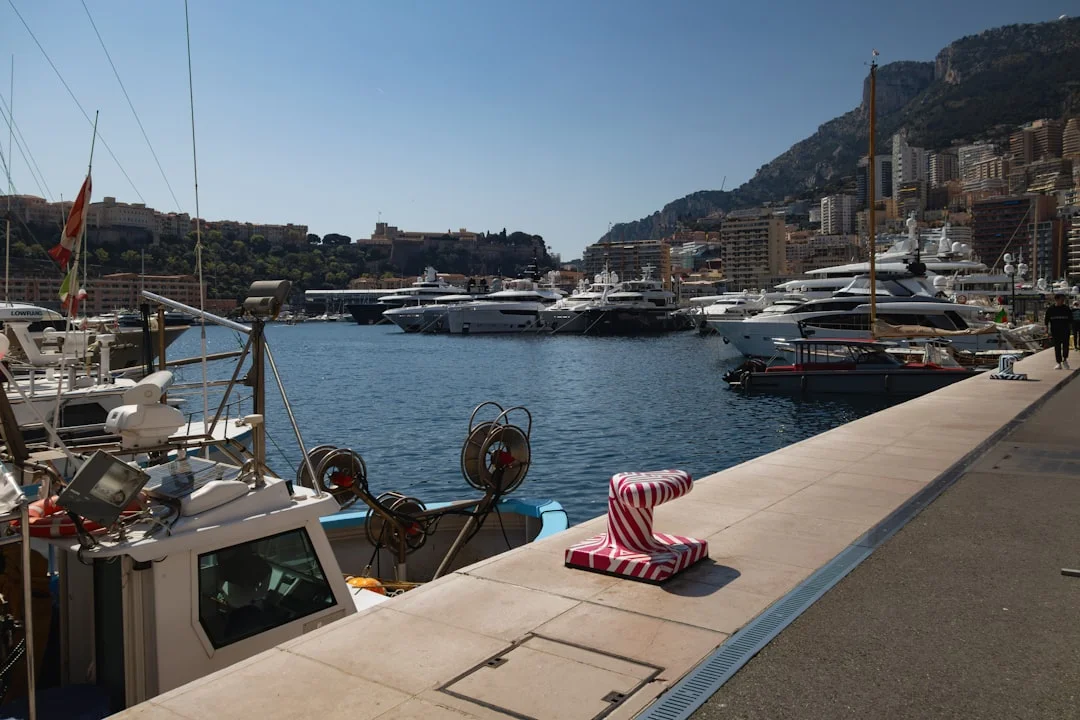
Photo by Snap Wander on Unsplash
Med mooring (Mediterranean mooring) is one of those skills that looks casual from the quay and feels very personal from the helm. You’re reversing between expensive neighbors, aiming at a concrete wall, and trying to keep a thin line from the seabed out of your prop. The good news is it’s repeatable if you treat it like a procedure, not a performance.
A note on planning: when you’re working out ETAs, daylight arrival, and fuel burn for the run to the next marina, plan your route using a sea distance calculator and sanity-check the miles before you commit. It helps you avoid rolling in at peak chaos o’clock, when the fairway feels like a supermarket parking lot with wakes.
What Med Mooring (Stern-To) Is and Why Marinas Use It
Terminology: quay, fairway, lazy line, laid mooring
Med mooring typically means backing stern-to a fingerless quay wall, then securing the bow with a lazy line (also called a laid mooring). That lazy line usually runs from a seabed anchor block or ground chain up to a pickup point on the dock. Your stern sits close enough for boarding, and your bow is held off by that line rather than your anchor.
The “fairway” is the lane you reverse down, and its width is often the limiting factor in how calm you need to be. In older Mediterranean basins you’ll see fairways around 20–40 m, while newer marinas may be more like 30–50 m (design context, not a promise). Those numbers matter because they define how much room you have to abort without becoming entertainment.
How stern-to differs from finger berths and bow-to quay
With finger berths, you can usually come alongside slowly, step off, and sort yourself out without blocking anyone. In stern-to docking, you’re committed in reverse, and your “parking space” is a slot between two boats that may or may not be centered. Bow-to quay is a different animal again: you’re boarding from the bow, and your prop is farther from the wall, but you often need an anchor for bow control.
Stern-to keeps the bows out of the fairway, which is the entire point. Packing boats against a straight quay is space-efficient and keeps a dense basin functional. Marinas like it because it maximizes berths per meter of quay, and sailors like it because the cockpit becomes the front door.
Risk profile: close-quarters, prop wash, surge, and people
The helm is managing momentum more than “steering,” because rudders don’t do much without water flow. In reverse you’re balancing short bursts for steerage against the ugly truth that kinetic energy rises with speed². Double your speed and you’ve got roughly four times the energy when you touch something hard.
Prop walk and prop wash add spice, especially on single-screw boats. Many yachts will translate sideways noticeably within the first 1–2 boat lengths of reverse, right when you’re trying to look smooth. Add people on a busy quay and you get the biggest rule of stern-to: nobody jumps—ever.
Pre-Docking Setup Checklist Before Turning Into the Fairway
Crew choreography: who does what at stern, bow, and helm
Med mooring goes well when everyone has one job and one vocabulary. I run three roles: helm, stern handler(s), and bow/lazy-line handler. Use short callouts like “stern line ready,” “lazy line in hand,” and “neutral,” because long sentences get chopped up by wind and stress.
Brief the “no jumping” rule before you turn in, not when you’re already too close. A controlled step happens when you’re stopped with the stern about 0.3–1.0 m off the quay. If someone can’t step off safely, you’re still maneuvering, not docking.
Rigging readiness: lines flaked, bitter ends, and anti-tangle rules
Pre-rig both stern lines so they can run free without crossing anything. Lead them outside stanchions and lifelines, through the correct stern chocks, and onto cleats or winches with the bitter ends ready. If your stern lines cross each other before you even enter, you’re not “prepared,” you’re just early to the disaster.
Have one extra-long line ready as a spring or rescue line. A line that’s 1.5–2.0× LOA saves the day when the bollard is farther than expected or you need to control fore-aft surge. If you’re on charter, check the supplied warps; some bases provide lines that are optimistic about distance.
Marina comms: what to confirm on VHF and visually on approach
Before you enter the fairway, confirm berth number and side-to on VHF. Ask specifically whether it’s lazy line or anchor, because many marinas prohibit dropping an anchor when laid moorings are provided. Also ask about crosswind or cross-current, because the staff has watched boats get pinned on the same corner all afternoon.
As you approach, visually identify the lazy line pickup point on the quay and any rings versus bollards. Rings can eat time if you didn’t pre-plan how you’ll pass the eye through and back. If you need help, ask early; “can someone take a stern line?” is more effective before you’re already sideways.
Safety baseline: gloves, pinch points, and step-ashore discipline
Wear gloves for lazy lines and ground-chain grime, but don’t let gloves make you brave. Keep fingers out of bights and off cleats during load-up, because a snatch load can take skin faster than pride. Keep a boat hook ready; a telescoping 1.8–3.0 m hook is the right tool, and it costs less than gelcoat repair.
Practical tip box — pre-fairway checklist (60 seconds):
- Stern lines rigged outside everything, ends ready, no tangles.
- Fenders out at quarters and midship, height set for quay edge.
- Boat hook staged (1.8–3.0 m), gloves on, knife accessible.
- VHF confirmed: berth, side-to, lazy line vs anchor, wind notes.
- Crew brief: step off only when stopped, stern 0.3–1.0 m off.
Line and Fender Sizing Guide With Real Measurements
Dock line diameters by LOA (and why nylon dominates)
For med mooring, nylon is still king because it stretches and absorbs shock loads from wake and surge. Polyester shows up as strops or specialty setups, but a stretchy stern line is what keeps hardware and tempers intact. If you’re buying lines, double-braid nylon handles well; three-strand is cheaper and stretches nicely, but it can kink when rushed.
Rule-of-thumb diameters for nylon dock lines are consistent across most rope makers’ charts. Think 10–12 mm for 30–35 ft, 12–14 mm for 35–45 ft, 14–16 mm for 45–55 ft, and 18–20 mm for 55–70 ft. Before upsizing, check your chocks and cleats; forcing a fat line through a narrow chock just creates chafe and jams when you need to ease.
Stern line and spring line length planning for Med berths
Stern lines should usually be 1.0–1.5× LOA each, because the quay bollards are not always where you want them. For a 35 ft boat, that’s roughly 11–16 m; for a 45 ft, about 14–21 m; for a 55 ft, about 17–25 m. Keep at least one line at 1.5–2.0× LOA (e.g., 21–27 m on a 45-footer) for springing or emergencies.
On many quays, you’ll want springs even in calm weather, because stern-to boats can “saw” along the dock when the basin surges. A spring doesn’t need to be perfect; it needs to be long enough to lead forward or aft without chafe and without pulling the stern into the wall. If you’re unsure, bring the extra-long line and thank yourself later.
Lazy line connection: chafe gear, snubbers, and fairlead fit
Lazy lines can load up hard when a wake hits or wind pushes your bow off. Add a snubber/softener of about 0.5–1.5 m (nylon section or rubber snubber sized for 12–16 mm line), and place chafe protection 0.3–1.0 m long at each lead point. The usual chafe points are bow rollers, fairleads, and anywhere the line saws under tension.
If your bow roller is designed for chain and your lazy line will ride on an edge, you’ll eat through fibers surprisingly fast. A fairlead may be kinder, but only if it aligns with the load and doesn’t pinch. If you have to choose on the spot, choose the lead that gives a straight pull and the least abrasion, then add chafe gear immediately.
Fender sizes, counts, and height-setting on variable quays
For 35–45 ft yachts, I consider 6–10 fenders a realistic baseline, typically 200×600 mm to 250×750 mm cylindrical. For 45–55 ft, plan 8–12 fenders, often 250×750 mm to 300×900 mm, and consider a 450–550 mm ball fender for the quarter where contact happens first. Fender covers ($15–$45 each) reduce scuffs, but they don’t replace correct placement.
Quay heights vary, commonly around 0.5–1.5 m above mean water, and that drives fender height. Set the midpoint of the fender near the quay edge, not near the waterline, because roll and wake will lift fenders. If your fenders are riding up, drop them a bit and add a ball fender low at the quarter.
Cost reality: a 12 mm × 10 m nylon line runs about $20–$60, while a 14–16 mm × 12–15 m line is often $45–$130. A pre-spliced set of stern lines and springs can be $150–$450, which is still cheaper than even a “small” gelcoat repair at $200–$1,000+.
Step-by-Step: Reverse In and Secure Stern Lines First
Approach geometry: lining up, angle control, and stopping plan
Line up early so you’re centered in the slot before you’re committed. Your goal is to reverse straight down the fairway, then make small corrections, not heroic ones. Always keep an abort lane: if the approach isn’t clean by the time you’re about a boat length outside the slot, go around and reset.
Aim to stop with the stern 0.3–1.0 m off the quay before anyone steps off. That stand-off gives you space to control the boat without pinning your rudder or bathing platform against concrete. If you can’t stop cleanly, you’re coming in too fast or staying in gear too long.
Speed discipline: maintaining steerage without momentum
Target about 0.3–1.0 knots at the moment a crew member can safely step ashore. That may feel painfully slow, but it’s the only speed where mistakes remain repairable. Remember the training rule that matters: 2× speed ≈ 4× energy, and the quay wall doesn’t care about your schedule.
Use short bursts in reverse to create rudder flow, then go to neutral to bleed momentum. If you stay in reverse continuously, you build speed and lose the ability to stop “right there.” The best med-mooring captains look slow because they are slow.
Managing prop walk and prop wash in tight fairways
Prop walk is strongest right as you engage reverse, and many single-screw boats will slide sideways within the first 1–2 boat lengths. Learn which way your stern walks in reverse before you’re in a tight marina; you can test it in open water with a quick reverse engagement at idle. Once you know it, you can anticipate it instead of arguing with it.
Counter prop walk with rudder and brief power, not with continuous throttle. A short burst gives you control, then neutral stops the boat accelerating into trouble. If wind and prop walk both push you leeward, abort early; trying to “power through” usually just powers you into your neighbor.
Stern line handling: bollards, rings, and quick stabilization
Get the loaded (windward/current) stern line on first, because it stops sideways drift. Once one stern line is made fast, you’ve bought time, and the boat becomes predictable. Then get the second stern line on, adjust both to center the stern, and only then worry about fine spacing.
For bollards, a round turn and two half hitches works well for quick security if you’re passing a line ashore. For rings, either pass the eye through and back to the boat or run the bitter end through and secure on your cleat, depending on what’s fastest and safest. Never wrap a line around your hand; if it loads, you’ll lose that argument.
Picking Up and Tensioning the Lazy Line at the Bow (No Prop Fouls)
How to pick up a lazy line safely with a boat hook
Once the stern lines are holding you roughly in place, send the bow handler forward with gloves and the boat hook. Use the hook to lift the lazy line or pickup pendant, then bring it aboard hand-over-hand without leaning out like you’re trying to catch a bus. If you can’t reach safely, ease stern lines to bring the bow closer rather than overreaching.
A telescoping hook in the 1.8–3.0 m range is ideal, and they cost roughly $30–$120. If the pickup is messy, a short messenger line can help you transfer the lazy line to a better lead without dropping it. Dropping it isn’t fatal, but it’s a great way to waste 10 minutes while drifting.
Keeping the lazy line forward: lead angles and “never under the boat” rules
The lazy line must stay forward and outside, period. Lead it outside stanchions, forward of the beam, and keep slack out of the water so it can’t stream aft. The only lazy line that belongs near your prop is one you want to cut free—which is a lousy way to start a holiday.
As you tension, watch that the line doesn’t cross your neighbor’s lazy line or ground chain. If things are crossed, don’t “win” with the windlass or brute force; you’ll only tighten the knot you didn’t mean to tie. Stop, ease, and re-lead until the geometry makes sense.
Tensioning and final trim: bow position, stern clearance, and chafe control
Tension the lazy line to set bow distance so the stern remains a safe step to the quay. If you’re too slack, your stern can kiss the wall in surge; if you’re too tight, you strain hardware and increase snatch loads. Add a snubber of 0.5–1.5 m, and fit chafe gear 0.3–1.0 m at the bow fairlead/roller where wear happens fastest.
If anchoring is permitted (some marinas require it, many prohibit it with laid moorings), typical chain sizes are 8 mm for 30–40 ft or 10 mm for 40–55 ft yachts. In that case you still need a plan to avoid entangling your chain with lazy lines and neighbors’ ground tackle. Verify the policy on VHF before you enter; guessing wrong is how you earn a crowd.
Crosswind Docking Techniques and Common Med-Moor Mistakes
Crosswind and windage: choosing the “loaded” line first
In crosswind, your hull’s underwater grip is modest while your topsides behave like a billboard. High-freeboard boats need earlier, smaller corrections because once you’re sideways in reverse, you run out of rudder authority fast. Decide which stern line will be loaded (usually windward) and make that one fast first.
Use bursts of reverse to keep steerage, then neutral to stop drift building into momentum. If you’re being blown down onto the leeward neighbor, a clean abort beats a late save. Back out, reset lines, and come in again with a better angle and more control.
Fender failures: wrong height, wrong spots, too few
Most dock rash in med mooring comes from fenders set to the waterline instead of the quay edge. With quay edges often 0.5–1.5 m above the water, your fender midpoint should be near that edge, then adjusted for roll and wake. If there’s wake-induced roll, add a lower fender or ball fender at the quarter to stop “under-riding.”
Counts matter: 6–10 fenders on a 35–45 ft yacht and 8–12 on a 45–55 ft yacht are realistic if you want coverage at both quarters and along the neighbor side. Put extra protection at the stern quarters because that’s where first contact happens during the reverse. If you only have four fenders out, you’re betting your gelcoat against a concrete wall and someone else’s skipper.
Line errors: crossed stern lines, lazy line under the boat, no spring plan
Crossed stern lines make it hard to adjust and easy to chafe, especially if they run over corners. Lazy line slack in the water is how props get fouled, and props don’t forgive. Not having a spring plan is the quiet mistake; the boat surges fore-aft, lines snatch, and fittings take a beating.
A common injury mistake is the “hero step.” The correct stand-off for stepping ashore is 0.3–1.0 m, with the boat stopped or controlled, not sliding sideways. If a crew member leaps with a line in hand, they can get pulled, pinned, or dropped between boat and quay, which is a bad place to be ambulatory.
Rapid recovery actions when you’re set up wrong
If you’re too fast, go neutral, then a short ahead burst to stop sternway, and abort before you touch. If prop walk is shoving you toward the leeward neighbor early (again, often within 1–2 boat lengths), don’t keep reversing and hoping rudder fixes it. Go ahead to regain control, clear the slot, and re-enter with a better angle and prepared crew.
If you’ve snagged a neighbor’s lazy line or ground chain, stop and communicate. A calm “we’re crossed, easing now” prevents escalation and broken gear. If you need a quay handler, ask; some marinas include assistance, others expect a tip, often $0–$50+ depending on the port and how desperate everyone looks.
When you’re doing passage prep, check the nautical miles for your planned route so you can pick an arrival window with better light and less wind. A 20-mile timing tweak can mean docking in 10 knots instead of 20, and that’s the difference between routine and memorable.
Departure Sequence and Simple Route Planning for Tight Basins
Departure order: lazy line release, stern lines, and spring control
Departure is stern-to in reverse order, but not “all at once.” Start with engine checks, then clear shore water and shore power before you touch lines. Most quays supply 230 V at 16 A or 32 A (about 3.7 kW or 7.4 kW), and you don’t want to discover you’re still plugged in when you engage reverse.
Typically, ease and control the lazy line first so the bow can move, but don’t let it drop slack under the boat. Then release one stern line while holding the boat on the other, using it like a temporary pivot. If you have a spring rigged, it can keep you off the quay while you bring the bow clear.
Leaving in a crosswind: using a spring to pivot and protect neighbors
In a crosswind, plan which line will hold the boat while you pivot away. Keeping one stern line fast for an extra 20 seconds can prevent your stern from blowing onto the neighbor. Use gentle ahead or astern bursts to control the pivot, and avoid high throttle; you’re close to swimmers, dinghies, and other people’s pride.
Remember prop walk is still strongest early in reverse, especially in the first 1–2 boat lengths. If your prop walk helps you move away from the danger side, use it; if it hurts, compensate by angling your initial movement and being ready to go ahead briefly. The goal is controlled separation, not dramatic acceleration.
Micro route planning: turning space, fairway widths, and exit timing
Before you cast off, look down the fairway and decide where you’ll turn and where you’ll stop if traffic appears. Fairway width context matters again: 20–40 m in many older basins can feel tight when beams are large and sterns are hanging out. In newer layouts 30–50 m is more forgiving, but it still fills quickly with tenders and late arrivals.
Pick a “commit point” where, if something changes, you’ll abort and hold rather than continue. If you’re planning the next leg, estimate your fuel needs based on the voyage distance and choose an exit time that avoids peak inbound chaos. Leave yourself daylight and patience; both are cheaper than fiberglass.
Marina Mooring Safety: Standards, CO Risk, and Shore Power
Strong points and load paths: cleats, chocks, backing plates
Stern-to loads go through cleats, chocks, and whatever backing plates the builder (or last yard) installed. ABYC H-40 and ISO 15084 are the relevant references for strong points and load paths, and the practical takeaway is simple: don’t overload one fitting and don’t trust loose hardware. If a cleat rocks, a line chafes through a sharp chock, or a backing plate is suspect, you’re one wake away from failure.
Line-to-hardware fit matters. As rough guidance, 12–14 mm line often suits 150–200 mm cleats, while 16 mm often pairs better with 200–250 mm cleats—verify your actual gear and chock width. Oversized line can jam in a narrow chock and become impossible to ease under load, which is a fun problem to have at 2 a.m.
CO/exhaust risk stern-to in calm basins
Stern-to puts cockpits close to other boats and the quay, where exhaust can linger in still conditions. ABYC H-41 (exhaust) and ABYC A-31 (CO detection) are worth mentioning because CO incidents often happen when people think they’re “just in the marina.” If you’re running an engine or generator, consider wind direction, neighbor proximity, and cabin ventilation.
Install and maintain CO detectors, and don’t ignore alarms because you “feel fine.” CO is boring until it isn’t, and stern-to layouts encourage it to pool in cockpits and cabins. If you smell exhaust strongly, change what you’re doing: shut down, ventilate, or reposition.
AC shore power best practice on busy quays
Shore power is convenient, but the quay is a tripping hazard factory. ABYC E-11 and ISO 13297 cover AC installations, and the practical habits are straightforward: use marine-grade connectors, add strain relief, keep connectors out of spray, and don’t run cords where they’ll be crushed. Never run a coiled extension under high load; it heats up, especially at 16–32 A.
If the pedestal is far, don’t “make it work” with undersized household cable. Use the correct shore lead and keep it tidy, because someone will walk through it at night. A little discipline here prevents overheated plugs, nuisance trips, and the classic quay argument about who stole whose adapter.
FAQ: Med Mooring (Stern-To) Questions Sailors Actually Ask
On a 45 ft monohull, what stern line diameter and minimum cleat length prevent cleat-jamming and chafe through narrow chocks?
Use 14–16 mm nylon for a typical 45-footer, but confirm it fits your chocks cleanly. As a rough hardware match, 16 mm line generally wants a cleat around 200–250 mm long, while 14 mm often suits 150–200 mm cleats. If your chocks are narrow, prioritize a line that runs freely without pinching, then add 0.3–1.0 m chafe gear at the lead.
How do you rig a lazy line snubber (0.5–1.5 m) so it reduces shock loads without letting the line fall slack and risk prop fouling?
Install the snubber inboard near the bow cleat so you can keep steady tension while the snubber stretches under load. Keep the lazy line led forward and outside, and trim it so there’s no “belly” of slack in the water. The snubber should stretch under wake loads, not create a drooping section that can stream aft.
What is the best stern-to abort procedure when prop walk pushes you toward the leeward neighbor within the first 1–2 boat lengths of reverse?
Abort early: go neutral, then a short ahead burst to stop sternway and regain rudder authority. Exit the slot straight if you can, or forward into the fairway where you have room, then circle and reset with a better entry angle. Trying to fix strong early prop walk with more reverse throttle usually makes the sideways set worse.
How do you set fender height when quay edge is ~1.2 m above water and there’s wake-induced roll—what reference point prevents fenders riding up?
Use the quay edge as your reference, not the waterline. Set the midpoint of cylindrical fenders near the quay edge at about 1.2 m above the water, then drop them slightly if roll makes them climb. Add a low ball fender at the quarter if the boat tends to “under-ride” during wake.
When a marina provides laid moorings, what checks on the bow lead (roller vs fairlead) reduce chafe, and where should 0.3–1.0 m chafe gear be installed?
Check for a straight lead that won’t saw across sharp metal. A bow roller may be fine if it’s smooth and aligned; a fairlead can be better if it doesn’t pinch and keeps the line centered. Install 0.3–1.0 m chafe gear at the primary contact points: bow roller/fairlead and any edge where the line changes direction under tension.
Conclusion: A Repeatable Stern-To Workflow That Actually Works
Med mooring is safest when it’s boring: confirm marina rules (lazy line vs anchor), rig correct line diameters and lengths, and set fenders to the quay edge before you enter. Reverse in at about 0.3–1.0 knots with an abort plan, secure the loaded stern line first, then the second, and only then pick up and tension the lazy line forward with proper chafe gear and a 0.5–1.5 m snubber.
Most damage and injuries come from preventable errors: excess speed, jumping ashore, crossed lines, slack lazy lines, and fenders set to the wrong height. Depart with the same discipline—shore power off, lazy line controlled, lines released in order—and you’ll look like you’ve done it a thousand times. If you haven’t, follow the procedure anyway; the marina doesn’t care about your experience, only your momentum.
About the Author
Related Articles
Diesel Heater Troubleshooting Boat: No-Start & Soot Fixes
Fix diesel heater no-start and sooting on your boat. Step-by-step checks for power, fuel, air/exhaust and maintenance—read the guide now.
By Breezada Team

Docking a Catamaran: Maneuvers, Springs & Crew
Master docking a catamaran with close-quarters maneuvers, spring lines, and crew roles. Learn the steps and dock with confidence—read now.
By Breezada Team

Best Stove for a Sailboat: Propane vs Diesel vs Induction
Compare propane, diesel, and induction stoves for cruising safety, cost, and power needs—use our guide to choose the best stove for your sailboat.
By Breezada Team

Single Handed Docking Sailboat: Line Methods & Drills
Learn single handed docking sailboat line-first methods, setup, and drills for crosswind/current. Practice safely—get the step-by-step plan now.
By Breezada Team