Best Dinghy for Cruising: Size, HP, Davits vs Tow (and the Checklist I Wish I’d Used)
A cruising dinghy is not a toy. It’s your car, your pickup truck, your dog-walker, and occasionally your lifeboat when the anchorage turns sour at 0200.
Most bad tender purchases come from two blind spots: lifted weight (what your davits and crew can actually handle) and storage geometry (what fits on your foredeck, between shrouds, or under a bimini without becoming a wind-catching nuisance). Start with mission, then size, then hull, then power—in that order—and you’ll end up with the best dinghy for cruising for your boat, not your neighbor’s.
Photo by Ludomił Sawicki on Unsplash
Define Your Cruising Dinghy Mission (Crew, Trips, Sea State)
If you want the best dinghy for cruising, stop thinking “What model?” and start thinking “What job?” Daily dock runs are different from surf landings, which are different from a 2.0 NM slog upwind with two adults and dripping groceries. Write down your real use-cases: 0.5–2.0 NM each way is common, and that distance can double fast in a spread-out mooring field.
A quick trick: measure your typical runs with charts or an app, then sanity-check with a tool to calculate the distance between ports before you commit to an underpowered setup. Route planning isn’t just for offshore passages; it’s how you decide if you need a 2.5 hp “putter motor” or something with actual authority in chop and current.
Now translate the mission into constraints you can’t negotiate with later. Payload (people + gear), stowage volume, launch/recovery method (tow, davits, deck), theft risk, and your personal tolerance for maintenance in salt and sun. Tube diameter is part of this too: 16–20 in (40–50 cm) tubes buy buoyancy and dryness, but add windage when towing and make the package bulkier on deck.
Use a simple range budget that forces honesty: distance (NM) ÷ expected speed (kt) = time. If your commute is 1.5 NM at 5 kt, that’s 18 minutes each way—before headwind and detours. Then plan fuel or battery capacity with margin, because “arrived” and “arrived with control” are different outcomes.
Finally, don’t ignore lifted weight and storage geometry, because that’s where purchases go to die. A dinghy that’s perfect on paper becomes a miserable daily chore if you can’t swing it onto davits or lash it on deck without blocking the anchor locker. I’ve watched more than one crew “solve” this by towing full-time… until the day the towline chafed through at dusk.
Practical tip: Before shopping, do one week of normal dinghy trips and log distances with this sea route distance planner. You’ll quickly learn whether you need more speed, range, or load-carrying, and you’ll stop guessing.
Dinghy Size & Load Capacity: Why 8–11 ft Matters
Length is the backbone decision for the best tender for a cruising sailboat. For most cruisers, 8–11 ft (2.4–3.4 m) covers the realistic spectrum, with 9'6"–10'6" being the frequent sweet spot for two adults plus light gear. Below that, capacity and trim get touchy; above that, weight, windage, and davit loads start arguing with your stern.
Length vs stability, payload, and “two adults + groceries” reality
An 8–9 ft tender works for calm anchorages and short hops, especially if you’re light and disciplined about gear. Add a second jerry can, a wet anchor chain, or a cooler, and the boat starts riding tube-deep with low freeboard—exactly when you want more reserve buoyancy. A 10–11 ft tender carries load with less squat and is more likely to plane, but it’s also more boat to store, tow, and lift.
Tube diameter matters as much as length for comfort and safety. 16 in (40 cm) tubes usually mean less windage and easier boarding from a low freeboard sailboat, but they can be wetter when the chop stacks. 20 in (50 cm) tubes buy dryness and reserve buoyancy, but they sit higher, catch more wind, and take up real estate on deck.
Lift-and-launch budget: dinghy + outboard + fuel + gear
Capacity labels are often optimistic because they’re based on a theoretical load, not your real freeboard and trim. What matters is what you can lift and handle without getting hurt or bending expensive stainless. Many cruisers aim to keep combined davit-lifted load (dinghy + outboard + fuel + gear) under 250–350 lb, because that’s where common cruising davits behave nicely and the stern doesn’t hobbyhorse.
Do the math with real weights. A 9–10 ft aluminum-hull RIB might be 90–130 lb (41–59 kg) bare hull, and a 6 hp outboard is often 55–70 lb. Add a 3-gal tank: gasoline is ~6.1 lb/US gal, so 3 gal ≈ 18 lb of fuel, plus the tank itself and your “small” bag of gear that somehow weighs 25 lb.
Stowage fit: foredeck, side deck, davits, and transom clearance
Storage geometry is where the “sweet spot” earns its name. A 9'6"–10'6" tender often fits a foredeck without blocking the windlass, and it’s short enough to clear backstays on davits with fewer gymnastics. Once you get into 10.5–11 ft, transom clearance and davit arm length matter, and the dinghy starts acting like an extra sail in crosswinds.
If you’re planning davits, measure your stern workflow. Will you still be able to steer with the dinghy up? Can you open the swim ladder? Can you reach the emergency tiller? These questions sound fussy until you’re trying to land a boat in reverse with a tender swinging like a pendulum.
Photo by Ludomił Sawicki on Unsplash
Material & Construction: PVC vs Hypalon/CSM in Cruising Sun
Material choice is not just “PVC bad, Hypalon good.” The truth is more annoying: UV and heat exposure usually decide lifespan, and build quality decides whether you hate the boat long before the fabric dies. PVC can be perfectly serviceable in temperate climates or covered storage, while CSM/Hypalon tends to hold up better when you live under a tropical sun that treats plastics like a hobby.
ISO 6185 is a useful credibility filter because it’s the benchmark standard for inflatable construction, chambers, and intended use categories. A tender built to ISO 6185 expectations usually shows it in details: better rubbing strakes, proper reinforcement at tow points, and valves that don’t feel like they came from a pool toy aisle.
Seams are where you learn what you paid for. Quality PVC boats often use welded seams, which can be very consistent when done right. Hypalon/CSM boats are typically glued, and the adhesive system and prep work matter more than the marketing label; a good build lasts, a bad one peels at the worst time.
UV mitigation is not optional if you cruise in open sun. Dinghy chaps (tube covers) cost roughly $600–$1,500, and they work—especially on dark tubes that heat-soak in the tropics. If you can’t stomach chaps, at least plan for shade, frequent rinsing, and realistic replacement timing instead of pretending your tender is “maintenance-free.”
Repairs at anchor are part of the cruising deal. Carry proper patches for your fabric type (PVC vs CSM), a valve wrench, and enough adhesive for a real job, not a hope-and-prayer dab. Most boats have 3–5 chambers, and that redundancy matters when you’re limping home on one soft tube with a headwind and a dinner reservation you’re about to miss.
Photo by Michael Henry on Unsplash
Hull & Floor Choices: Air-Floor vs Panel Floor vs RIB
Floor and hull style decide how the dinghy behaves when the water isn’t polite. Air-floor inflatables are light and compact, aluminum-panel floors add stiffness and durability, and RIBs (rigid inflatable boats) usually deliver the best handling and towing manners. The right answer depends on whether your “normal” day includes chop, wakes, and a loaded run back to the boat.
Performance and dryness: chop handling, spray, and trim
Air floors are comfortable underfoot and pack down well, but they flex. Flex steals efficiency, which shows up as extra spray, slower speeds, and more bow-up trim when you add weight. Panel floors help, but you still have a soft-ish hull shape compared to a rigid keel.
RIBs win when the water gets confused. A modest deep-V with lifting strakes tends to cut chop better and track straighter, and you feel it immediately with 6–15 hp on the transom. Aluminum-hull RIBs can be lighter for the same length, often 90–130 lb in the 9–10 ft range, but they can be noisier and easier to dent on rocky beaches.
Dryness is partly hull, partly tube diameter, and partly trim. Bigger tubes (16–20 in / 40–50 cm) help reserve buoyancy, but they can also increase windage and make the bow ride high if your weight is aft. If your dinghy sprays you like it’s offended, try fixing trim before blaming the design.
A practical, non-magical adjustment is changing transom trim by ~1–2 in using a trim wedge or shifting load. I’ve seen that small change turn a wet, miserable ride into a tolerable commute. Put the fuel tank forward, keep the heavier passenger near the console or thwart, and stop stacking anchors and scuba on the aft tube.
Towing drag and tracking: why some tenders snake or flip
Soft-bottom inflatables often yaw more under tow, especially with big tubes and a tall bow. That yaw is drag, and drag is the thing that makes your tender try to pass you on the quarter in a following sea. A rigid keel or RIB hull typically tracks better and tows with less drama.
If you’re a habitual tower, hull choice matters as much as the tow rig. A tender that tracks straight reduces snatch loads, chafe, and the odds of the dinghy surfing down a wave and doing something expensive. This is also where tube windage shows up again: bigger tubes tow like a bigger kite.
Beach landings: skegs, keel protection, and wheels
For beach work, look for real keel protection, skegs that can take abrasion, and tow points that aren’t just decorative. Beach wheels can be worth their weight if you routinely drag across sand, but remember they add complexity and snag points. If you land on rock or coral, carry chafe pads and accept that “pristine” is no longer a reasonable goal.
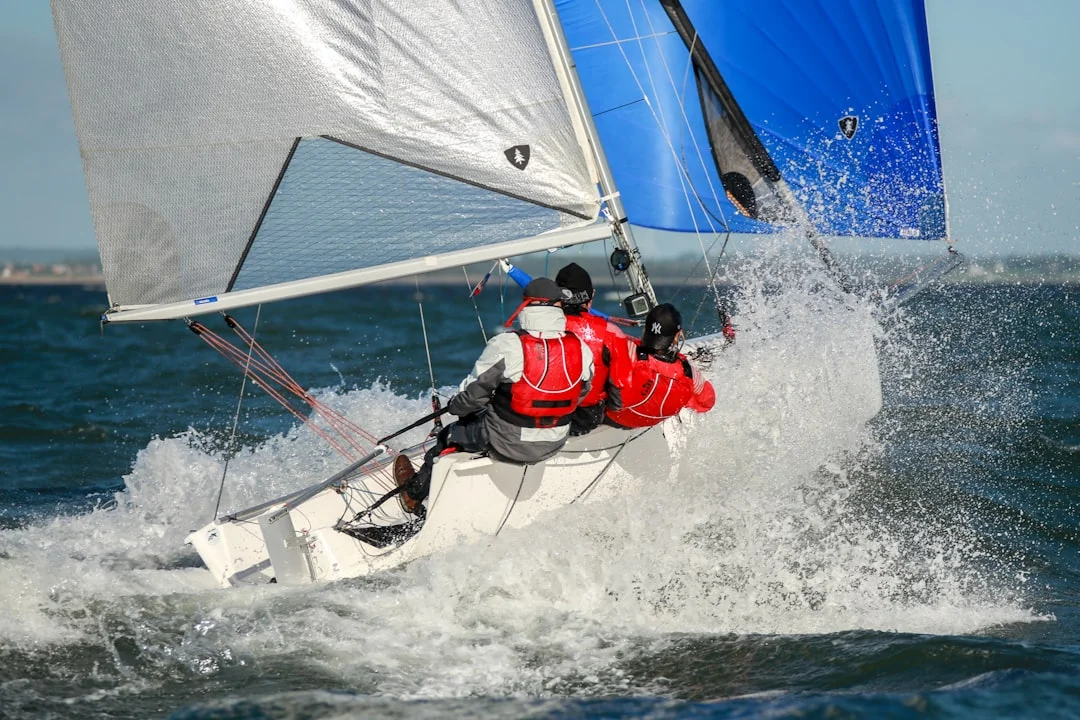
Photo by Daniel Stenholm on Unsplash
Outboard Selection: 2.5–15 hp, Shaft Length, and Prop Setup
Horsepower debates are usually proxy wars for three real issues: control in headwind, ability to carry load without wallowing, and how much weight you’re willing to lift and store. For the best outboard for a dinghy, match power to mission and accept that motors have mass—and mass lives on your stern.
HP bands: displacement vs occasional planing vs reliable planing
A 2–3.5 hp outboard is fine for displacement speeds and short hops in calm water, especially on an 8–9 ft tender with a light crew. Expect modest thrust and limited authority when the wind hits 20 knots and the chop stacks up. These motors often weigh ~28–40 lb, which is why people love them right up until they don’t.
A 6 hp is the tipping point for many cruisers because it adds real thrust without becoming unmanageable for most crews. At ~55–70 lb, it’s still liftable with decent technique, and it can occasionally plane a light two-person load on the right RIB. It will not magically plane every 10 ft inflatable with two adults and groceries, especially in sloppy water.
If you need reliable planing with load—two adults, ~40 lb of gear, and a headwind—9.9–15 hp becomes the practical answer on many 10–11 ft tenders. The cost is weight: ~80–115 lb is common for this class, and that changes your rail-mount viability and your crew’s back health. It also changes fuel burn and how much you care about theft.
Shaft length & transom height: avoiding ventilation in chop
Shaft length is not a preference; it’s geometry. Most inflatable/RIB transoms are designed around 15 in (short shaft) or 20 in (long shaft). A mismatch causes ventilation (prop sucking air) and poor thrust right when you need bite, like climbing a steep chop.
Measure from the inside bottom of the dinghy at the transom to the top of the mounting surface, and compare with the manufacturer’s spec. Then confirm on the water: the anti-ventilation plate should run close to the hull bottom line at speed, not riding an inch too high like a skipping stone. If you’re ventilating in small waves with correct trim, suspect shaft length or motor height before you blame the prop.
Weight, fuel, and handling: the hidden ‘stern load’ problem
Fuel weight adds up fast in small boats. Gasoline is ~6.1 lb/US gal (0.73 kg/L), so a “small” 3-gal portable tank adds ~18 lb of fuel alone, plus the tank and hose. Put that weight aft with a heavy outboard, and your dinghy’s trim goes bad, your bow rides high, and your commute gets wetter.
Prop setup matters more than most sailors admit. A lower-pitch prop often improves low-end thrust and helps a loaded tender climb onto plane, while a high-pitch prop can feel gutless off the line. If your motor is bogging or never reaches rated RPM under load, you don’t necessarily need more horsepower—you may need the right prop for your real payload.
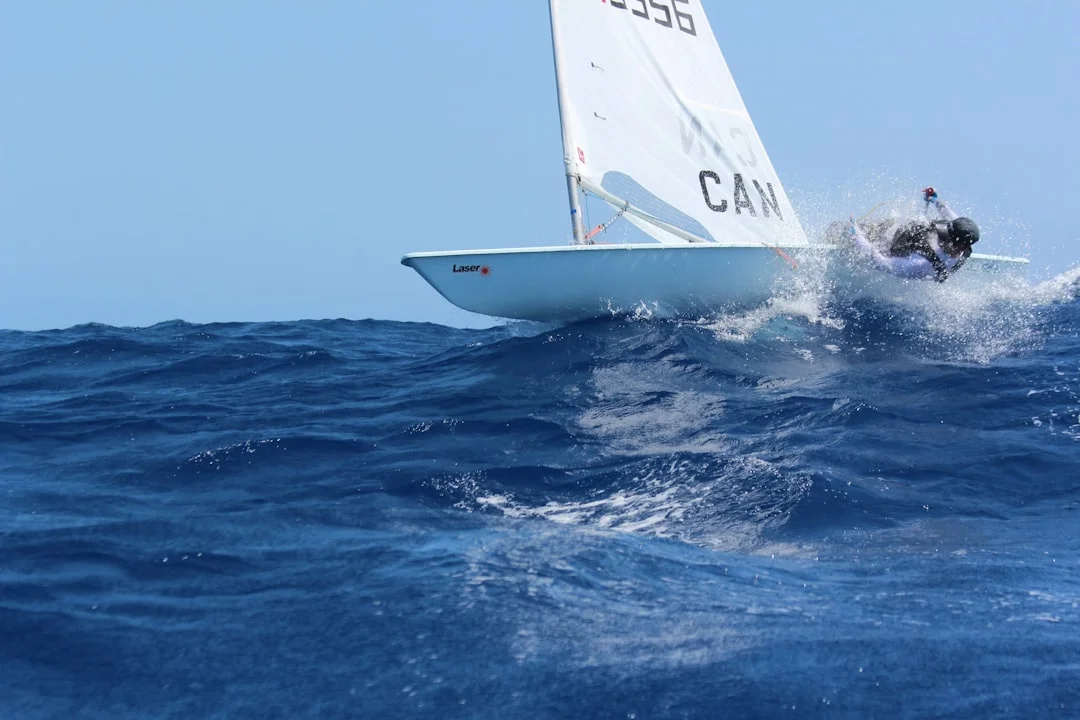
Photo by Norman Struthers on Unsplash
Dinghy Davits vs Towing vs Deck Stowage: Practical Tradeoffs
Carrying method is a safety decision disguised as a convenience decision. Davits, towing, and deck stowage each have failure modes, and the ocean is very good at finding the one you ignored. The best dinghy for cruising is the one you can launch and recover quickly without gambling the tender every time squalls roll through.
Failure modes and mitigation: what actually loses tenders
Towed tenders are commonly lost to chafe, bad attachment points, and surfing in following seas. Davit-carried tenders are commonly damaged by dynamic loads in swell, fatigue at mounting points, and sloppy retrieval that bangs the hull into the transom. Deck-stowed tenders rarely get lost, but they can block visibility, interfere with anchoring, and become a sailboat-handling penalty in strong wind.
Theft exposure changes with method too. A dinghy left in the water at night is easier to “borrow,” especially with a nice outboard hanging off the back. Davits reduce that risk but make your stern heavier and your boat’s pitching worse if you exceed your comfortable 250–350 lb lifted-load envelope.
Tow geometry basics: bridle, towline length, and chafe control
A proper tow setup needs a two-leg bridle to transom eyes, a floating towline, chafe gear, and a quick-release you can operate under load. Start towline testing around 20–40 ft, then adjust so the dinghy rides on the back of a wave rather than surfing down the face. If the dinghy is yawing, fix the bridle attachment symmetry and tow point height before you keep adding towline like it’s a superstition.
A useful rule of thumb is tuning so the bridle/tow setup approximates ~1.5–2.5× your boat’s waterline wave spacing at cruising speed. It’s not a perfect formula, but it pushes you toward the correct idea: you’re trying to reduce snatch loads and keep the tender in a stable, predictable spot. And yes, check your towline for chafe daily—because the one day you don’t is the day it fails.
Davit loads and stern handling: SWL vs real-world dynamics
Common davit ratings are ~250–500 lb, but real safe working load is often lower due to leverage, extensions, and dynamic loads in a swell. If your static load is 325 lb, a stern lift in chop can spike far beyond what your stainless and backing plates enjoy. Plan conservatively, and remember the real cost of “just a bit bigger” is often stern trim, pitching, and cracked gelcoat.
Costs aren’t subtle. A tow bridle/line/chafe kit is typically $80–$300, while installed davits run $2,500–$7,500, and a winch add-on can add $800–$3,000. Davits are wonderful when done right, but they’re not a free lunch.
| Carriage method | Typical cost | Time-to-deploy | Heavy-weather risk | Sailing drag | Theft exposure | Best-use scenarios |
|---|---|---|---|---|---|---|
| Davits | $2,500–$7,500 installed (+ $800–$3,000 winch optional) | Fast (minutes) | Moderate (dynamic loads, stern pitching) | Low-to-moderate (weight aft) | Low (dinghy up) | Daily use, frequent shore trips, secure storage |
| Towing | $80–$300 for bridle/line/chafe | Instant (already in water) | High (chafe, surfing, flip risk) | Moderate-to-high (drag) | High (in water) | Calm conditions, short moves, quick anchorage hops |
| Deck stowage | Minimal (straps/chafe pads) | Slow (manual handling) | Low (best in storms) | Low while sailing (if secured well) | Low | Offshore passages, heavy weather default, long transits |
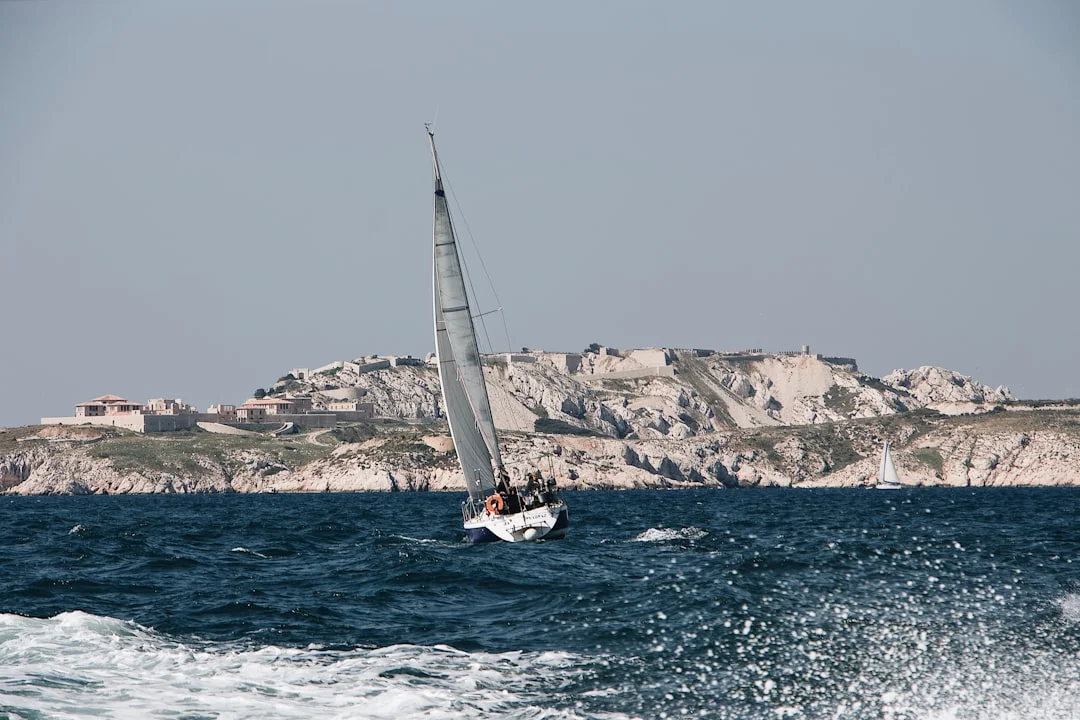
Photo by Maël BALLAND on Unsplash
Electric Outboards for Dinghy Cruising: Power System Reality Check
Electric outboards can be excellent—quiet, low maintenance, and no gasoline smell in your lazarette. They can also fail the mission if you treat them like a drop-in replacement for a 6 hp and ignore the system: motor, battery, charger, wiring, mounting, and charging schedule. For dinghy commuting, reality is measured in watt-hours and headwinds, not brochure “hp equivalent.”
Cost is the first wake-up call. A typical electric outboard in the ~3–6 hp thrust class plus battery often lands around $2,500–$6,500, before you add mounting hardware or a dedicated charging outlet. Also, batteries have weight; where you place that mass affects trim, spray, and whether the bow pounds or rides flat.
Range planning needs the same discipline you’d use offshore. If your commute is 1.5 NM each way, plan for at least 3.0 NM plus a reserve margin so you don’t arrive underpowered in a building headwind. Use a nautical-mile distance tool for timing your dinghy runs, then add detours, current, and “I’m tired and want to go straight home” margin.
Charging integration is where good boats stay safe. Follow ABYC E-11 for conductor sizing, overcurrent protection, and battery isolation, and pay attention to ignition protection where applicable around gasoline spaces. Dockside power matters too: most shore connections are 30 A or 50 A, and charger sizing should respect what else you run—water heater, air con, battery charger—without tripping breakers at the worst time.
Electric wins when your trips are predictable, your charging is reliable, and you value quiet. It struggles when you need long range in chop, fast runs with load, or you routinely fight wind and current. If you go electric, be conservative with range and treat reserve capacity like you treat anchor scope: not negotiable.
Recommended ‘Best Dinghy for Cruising’ Setups (Profiles + Brands)
There isn’t one best dinghy for cruising. There’s a best setup for your payload, your distances, your sea state, and how you carry the thing when the weather gets ugly. Below are four profiles that cover most real cruising boats without pretending one answer fits all.
Profile 1: Lightweight budget tender for calm anchorages
Think 8–9 ft PVC air-floor or slat-floor, 16–18 in tubes, and a 2.5–3.5 hp outboard. Dinghy cost usually lands around $900–$2,000, and the motor around $900–$1,600, which keeps the whole project sane. It’s ideal when your runs are short—say 0.5–1.0 NM—and you’re not hauling heavy water jugs daily.
Profile 2: All-around cruising couple setup (most common)
This is where the “sweet spot” earns its reputation: 9'6"–10'6" with CSM/Hypalon tubes and either a stiff floor inflatable or a light RIB. Pair it with a 6 hp (often 55–70 lb) and a correctly matched 15 in vs 20 in shaft. Budget roughly $2,200–$4,500 for the dinghy and $1,600–$2,400 for the motor, plus $600–$1,500 if you add chaps for real sun exposure.
Profile 3: Rough-anchorage / long-commute / planing priority
If you routinely run 1.5–2.0 NM in chop or current and want reliable planing with load, go 10.5–11 ft RIB and size power honestly at 9.9–15 hp. That motor is ~80–115 lb, so you’re also choosing davits (and structure) whether you like it or not. Aluminum-hull RIBs (a common strength in brands like Highfield) can help keep hull weight down, while fiberglass hulls can ride nicely but may be heavier and less forgiving of impacts.
Profile 4: Electric-first, dock-to-anchorage commuting
This works when your commute is predictable and charging is easy—marina life, frequent shore power, or serious onboard generation. Treat it as a system budget of $2,500–$6,500, plus ABYC E-11 compliant wiring and load management on 30 A / 50 A service. Keep the battery forward for trim, and plan your range with a reserve, using Breezada’s sea distance calculator to eliminate wishful thinking.
Brand notes without the fan club behavior: Highfield is often chosen for aluminum-hull RIB weight advantages and beach abuse tolerance, Walker Bay is known for hard dinghies and hybrid approaches that can row well and stow differently, and AB Inflatables is a common reference point for higher-end RIB finish and tube/hull integration. Dealer support matters more than badge prestige when you need a valve, a seam repair, or a replacement rubbing strake in a hurry.
| Setup profile | Dinghy type / length | Tube material | Est. hull weight band | Recommended HP / shaft | Carriage method | Total budget range |
|---|---|---|---|---|---|---|
| Lightweight budget | 8–9 ft air-floor/slat inflatable | PVC | Light (often <100 lb class) | 2.5–3.5 hp, usually 15 in | Deck stow or short tow | $1,800–$3,600 |
| All-around couple | 9'6"–10'6" inflatable or light RIB | CSM/Hypalon | Medium (RIB often 90–130 lb bare hull) | 6 hp, 15 in or 20 in to match transom | Davits or tow + occasional deck | $3,800–$7,800 |
| Planing priority | 10.5–11 ft RIB (deep-V, strakes) | CSM/Hypalon | Medium-heavy (plus bigger motor) | 9.9–15 hp, transom-matched shaft | Davits strongly preferred | $7,300–$14,300 |
| Electric-first commuter | 9–10.5 ft efficient hull | PVC or CSM/Hypalon | Light-medium | Electric (~3–6 hp thrust class) | Davits or deck (battery management) | $3,500–$9,000 |
Dealer spec checklist (bring this and act unimpressed): length (target 9'6"–10'6" for many couples), tube diameter (16–20 in), chambers (3–5), floor/hull type, tube material (PVC vs CSM/Hypalon), transom height (for 15 in vs 20 in shaft), motor weight, and your total lifted load target (250–350 lb if you want happy davits).
Frequently Asked Questions
How do I measure dinghy transom height to choose a 15 in short-shaft vs 20 in long-shaft outboard, and where should the anti-ventilation plate sit relative to the hull bottom line?
Measure from the dinghy’s inside bottom at the transom (where water would flow) up to the top of the motor mounting surface, then compare to the manufacturer’s stated transom spec for 15 in or 20 in. On the water at speed, the anti-ventilation plate should run very close to the hull bottom line; if it’s too high, you’ll ventilate in chop and lose thrust. If it’s too low, you’ll drag and throw extra spray, so don’t “solve” ventilation by just sinking the motor without checking the design.
For a 9'6"–10'6" tender carrying two adults plus ~40 lb of gear, what conditions typically prevent planing with 6 hp (trim, prop pitch, tube drag, sea state), and when does 9.9–15 hp become the more reliable fix?
Planing fails most often when the load is aft, the bow rides high, the prop is pitched for speed instead of thrust, and the water is sloppy enough to keep the hull from staying on top. Big tubes (18–20 in) add windage and drag, and a soft floor flexes, both of which steal the last bit of efficiency a 6 hp needs. If you regularly run into headwind/chop, carry heavy provisioning, or want dependable planing on a 10–11 ft tender, 9.9–15 hp is usually the reliable fix—at the cost of 80–115 lb hanging off the transom.
What tow bridle geometry (attachment points, bridle leg length, and towline length) most reduces yawing, and how do I tune towline length (starting 20–40 ft) to avoid snatch loads and surfing in following seas?
Use a symmetric two-leg bridle to proper transom eyes, with equal leg lengths and chafe protection where it bears. Start with 20–40 ft of towline, then adjust so the dinghy rides on the back of a wave instead of surfing down the face; you’re looking for steady tension, not elastic snatch loads. A good working heuristic is aiming around 1.5–2.5× the towing boat’s waterline wave spacing at your typical towing speed, then fine-tuning by observation.
How do I calculate a realistic davit load including dinghy + outboard + fuel (6.1 lb/gal) + gear, and what dynamic-load factors should I add before comparing to a 250–500 lb davit rating?
Add the real weights: dinghy hull (for a 9–10 ft aluminum RIB often 90–130 lb), outboard (55–70 lb for 6 hp or 80–115 lb for 9.9–15 hp), fuel (6.1 lb/gal, so 3 gal ≈ 18 lb plus tank), and your usual “always in the dinghy” kit. Then add a conservative dynamic margin because davits see shock loads in swell and leverage effects from arms/extensions; in practice, staying within a 250–350 lb combined lifted load is what keeps most cruising sterns happier even if the davit is “rated” higher.
When installing an electric outboard charger aboard, what ABYC E-11 practices should I apply for overcurrent protection, wire gauge, battery isolation, and shore-power load management on 30 A vs 50 A services?
Follow ABYC E-11 by sizing conductors for the continuous load and run length, installing appropriate overcurrent protection close to the source, and providing proper battery isolation/disconnect so the system can be made safe for service. Use marine-grade tinned wire, secure it against chafe, and keep terminations clean and supported so vibration doesn’t do its slow work. On shore power, manage charger sizing and simultaneous loads so you don’t exceed 30 A service (common) or mismanage 50 A service; nuisance trips are annoying, but overheated wiring is the expensive kind of exciting.
About the Author
Related Articles
Sailboat Bottom Paint Guide: Types, Costs & Prep
Learn sailboat bottom paint types, costs, and prep steps—plus how often to repaint. Get the right antifouling plan for your boat today.
By Breezada Team
Diesel Heater Troubleshooting Boat: No-Start & Soot Fixes
Fix diesel heater no-start and sooting on your boat. Step-by-step checks for power, fuel, air/exhaust and maintenance—read the guide now.
By Breezada Team

Docking a Catamaran: Maneuvers, Springs & Crew
Master docking a catamaran with close-quarters maneuvers, spring lines, and crew roles. Learn the steps and dock with confidence—read now.
By Breezada Team
Best Stove for a Sailboat: Propane vs Diesel vs Induction
Compare propane, diesel, and induction stoves for cruising safety, cost, and power needs—use our guide to choose the best stove for your sailboat.
By Breezada Team