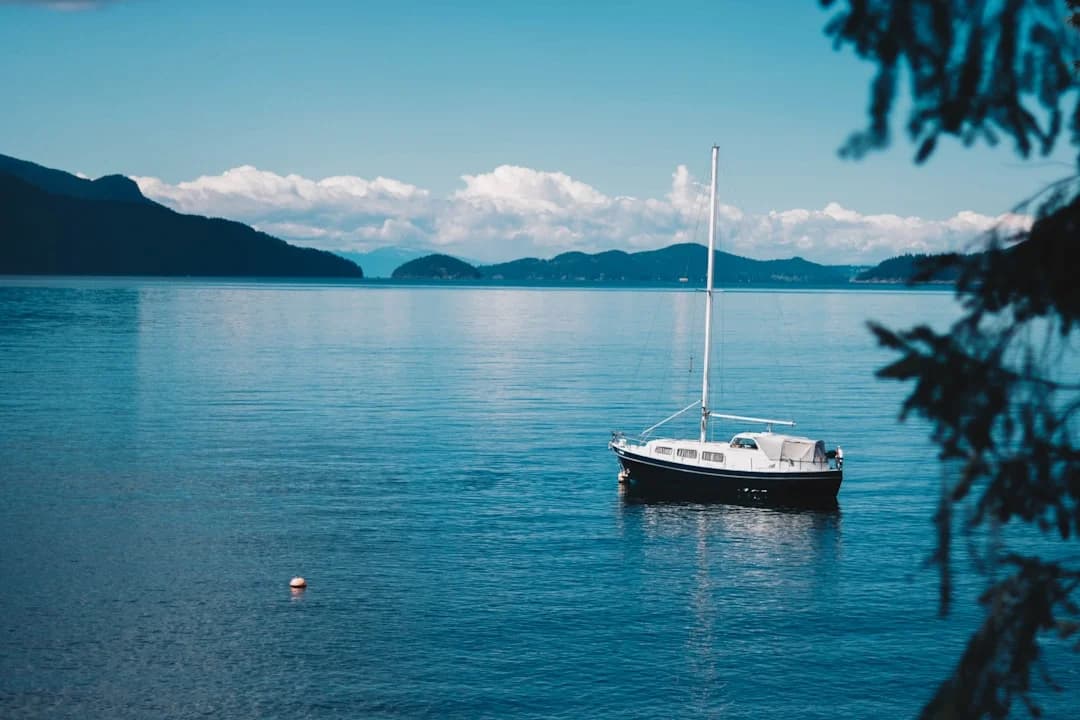
A capable cruising sailboat under $100,000 is not a fantasy — the used market is full of them, especially in the 35-to-42-foot range from builders like Hallberg-Rassy, Tayana, Pacific Seacraft, Island Packet, and Beneteau. The trick is knowing which models hold up offshore, which surveyors flags actually matter, and which "bargains" turn into money pits the moment the broker hands over the keys.
Photo by Rachel McDermott on Unsplash
I've watched friends spend $85,000 on a 1985 Tayana 37 and sail her to Panama with nothing more than new running rigging and a service to the engine. I've also seen someone pay $40,000 for a "ready-to-cruise" Hunter, then write another $35,000 in cheques before the boat could leave the dock. The boat market punishes hope and rewards homework. This guide is the homework — what to look for, what to avoid, and which boats actually deliver on the promise of bluewater cruising at a working-class budget.
What "Under $100K" Actually Buys in 2026
The dollar doesn't go as far as it did five years ago, but the used sailboat market has cooled meaningfully since the 2021-22 post-pandemic spike. Brokers in the US Northeast and Mediterranean are reporting inventory up roughly 30% versus 2023, and prices on 30-to-45-foot cruising monohulls are off 8-15% from their peak. That means real opportunity for a patient buyer.
Here's a rough breakdown of what $100K buys today in good condition (surveyed, sails under five years old, working engine, no major deferred maintenance):
| Budget Tier | Typical Boat | Vintage | Use Case |
|---|---|---|---|
| $30-50K | 32-37 ft production cruiser | 1980-1995 | Coastal cruising, weekending, light offshore |
| $50-75K | 36-40 ft mid-tier cruiser | 1990-2005 | Caribbean cruising, ICW, occasional offshore |
| $75-100K | 38-42 ft bluewater design | 1985-2000 | Offshore passages, liveaboard, world cruising |
That third tier is where the magic happens. A well-maintained 1992 Tayana 42, a 1988 Hallberg-Rassy 36, or a 1995 Pacific Seacraft 37 will give you a boat that can cross oceans — for less than the price of a new car loaded with options. The catch: condition variance is enormous. Two listings for the same model can differ by $40,000, and only a proper survey reveals why.
The Five Best Cruising Sailboats Under $100K
These aren't ranked — they each suit a different buyer. I've cruised on or surveyed examples of all five and watched dozens of owners over many seasons. None of them are perfect. All of them are honest boats.
1. Tayana 37 (1976-2007) — The Bluewater Bargain
The Tayana 37 is the archetype of the affordable offshore cruiser. Designed by Robert Perry as a development of the Baba 35, with a long fin keel, skeg-hung rudder, and a displacement of about 24,000 lbs, she's slow but unshakeable. Hundreds have crossed oceans. The hull layup is heavy hand-laid fiberglass — overbuilt by modern production standards.
Typical price range: $45,000-$95,000 depending on year, equipment, and condition.
What to watch for: Teak decks are the Achilles heel. Re-bedding or removal is a $15-25K job. Bronze through-hulls, original chainplates (1980s boats may need re-glassing or replacement — a serious project), and aluminum mast corrosion at the spreaders are the other big-ticket items. The Yanmar 3GM30F or original Perkins 4-108 engines are reliable if maintained, but rebuild costs run $8-12K when they finally let go.
2. Hallberg-Rassy 36 / 352 (1983-2002) — The Scandinavian Reliable
If you want a boat that just works — heated, dry, comfortable in 30 knots — the Hallberg-Rassy 36 (and her later sister, the 352) is hard to beat. Center cockpit, aft cabin, Volvo Penta diesel, and a build quality that has aged remarkably well. Owners typically spend less on refits than Tayana owners because Hallberg used better materials in the first place.
Typical price range: $65,000-$100,000.
The Volvo Penta engines are a mixed blessing: bulletproof, but parts cost more than Yanmar equivalents. Survey priorities: the original Volvo MD17/22 sail drives (saltwater corrosion of the leg housing is the killer), keel-to-hull joint smile cracks, and the hydraulic backstay if fitted.
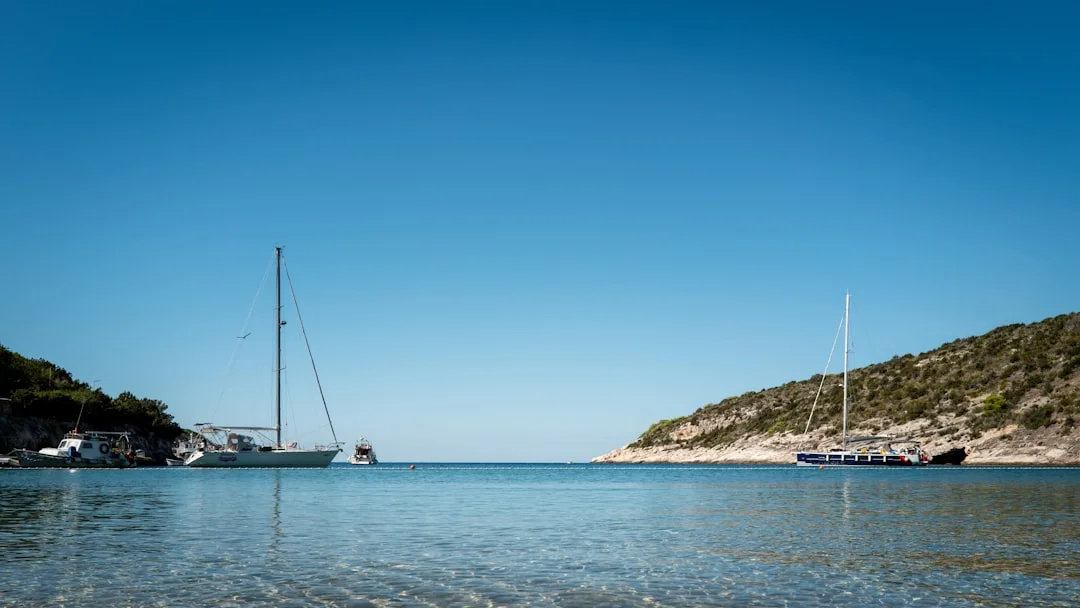
Photo by Ian Mackey on Unsplash
3. Pacific Seacraft 37 (1980-2007) — The American Cult Classic
Designed by Bill Crealock and built in Fullerton, California, the Pacific Seacraft 37 is a heavy-displacement cutter that punches well above her weight offshore. The hull is 1.25 inches of solid hand-laid glass below the waterline — that is not a typo. They've been sailed everywhere from Patagonia to Norway.
Typical price range: $55,000-$100,000. Hull number matters: post-1995 boats have improved interior layout and better electrical systems. Pre-1985 boats are bargains but often need rewiring.
Survey priorities: Rudder shaft (some had stainless quill failures), bronze opening ports (frequently seized), the cutter rig's running backstays and inner forestay tang, and any sign of moisture in the cored decks above the waterline.
4. Island Packet 35/350/380 (1988-2010) — The Comfortable Cruiser
Island Packets divide opinion. They sail like a brick on a beam reach, but they offer more interior volume per foot than almost any comparable boat, a full-keel/cutaway forefoot design that tracks well, and a polyester-resin/balsa-cored construction that holds up if water is kept out. The full keel and protected rudder are ideal for the Bahamas, the ICW, and shallow-draft Caribbean cruising.
Typical price range: $50,000-$95,000.
Survey priorities: Balsa core moisture. This is the single biggest risk on any Island Packet. A surveyor with a moisture meter and a percussion test must spend two hours minimum on decks and hull-to-deck joint. Also check the standing rigging — many remain on original wire from the late 1990s.
5. Beneteau Oceanis 393 / 411 (2002-2010) — The Modern Volume Cruiser
If you want a boat that sails well, points reasonably high, and has the volume and amenities of a much larger yacht, a well-cared-for Beneteau Oceanis 393 (or her cousin the 411) is the value play of the decade. They are production boats — lighter layups, encapsulated keels with iron ballast, and shoal-draft variants that limit pointing. But they are fast, easy to single-hand, and bargain priced because the cruising purists dismiss them.
Typical price range: $55,000-$95,000.
Survey priorities: The encapsulated iron keel can develop voids and rust streaks — get the boat hauled and inspect the keel sump carefully. Saildrive seals (Volvo Penta D2-40 typical), and the rudder bearings (a known weak point — quill bearing replacement is $3-5K). Also examine deck core around stanchion bases and chainplates.
What to Avoid (Even If the Price Looks Tempting)
Some boats are cheap because they sell for the price you can sail them away at — and then you spend three times that to make them safe. A few categories to walk away from:
1980s Hunter 33/34/37: nice interiors, but B&R rigs without backstays make them awkward to balance offshore, and the deck-stepped masts have a long history of compression-post issues at the bulkhead.
Early Catalina 30/34s without keel stub reinforcement: the keel bolts and stub are a known weakness on hard groundings — fine for inland and coastal, problematic for serious offshore use.
Any "project boat" with a price under $20K: that price reflects what the seller failed to spend, not what you'll save. Anything missing sails, an engine, or rigging is not a $20K boat — it's a $60K obligation in disguise.
Boats sold "as-is, where-is" by estates: not always bad, but the absence of an owner's maintenance history means every system is unknown. Add 30% to your refit estimate.

Photo by Ed Wingate on Unsplash
The Survey: Don't Skip This
A pre-purchase survey costs $25-35 per foot in the US ($30-40 in Europe) — call it $1,000-1,500 for a 40-foot boat. Then add a haul-out ($400-800), an engine survey ($300-500), and a sea trial. Total: maybe $2,500 on a $75,000 purchase. That is not optional.
A good surveyor will spend six to eight hours on the boat and produce a written report of 40-80 pages. Use it as a negotiating tool. Every cruising buyer I know has used a survey to knock $5,000-$15,000 off the asking price when the report reveals deferred maintenance. Some items (a tired engine, rotted decks, end-of-life standing rigging) justify walking away entirely.
Three things the survey must include:
- Moisture readings at 20+ points on deck and hull
- Engine compression test and oil analysis if possible
- Rigging inspection — visual, with magnification, looking for cracks in swages and chainplate stress fractures
If you're new to this, our sailboat rigging inspection guide covers what your surveyor should be checking and what the failure modes actually look like.
The Hidden Costs Nobody Mentions
The purchase price is roughly 60-70% of what the first year of ownership costs. Here's the realistic breakdown for a $75,000 boat in her first year:
| Cost Item | Realistic Range |
|---|---|
| Purchase price | $75,000 |
| Survey + sea trial | $2,500 |
| Sales tax (varies by state) | $0-$6,000 |
| Documentation/registration | $200-$500 |
| Insurance (year 1) | $1,500-$3,500 |
| First-year refit (sails, electronics, safety gear) | $8,000-$15,000 |
| Marina/storage | $3,000-$10,000 |
| Engine service + bottom paint | $1,500-$3,000 |
| Total first year | $92,000-$115,000 |
You'll see why "under $100K" is a useful price ceiling but a lousy total-cost figure. Plan for $90,000-$115,000 all-in if you buy at the top of your budget.
Once she's commissioned, ongoing annual costs settle around 8-12% of the boat's value — call it $6,000-$10,000 a year for a $75K boat. That covers haul-out, bottom paint every other year, sail maintenance, electronics replacement on a rolling schedule, and the inevitable "what is that noise?" repairs.
Where to Buy: Region Matters
Geography changes the deal. The US Northeast (Annapolis, Newport, Boston) has the deepest inventory of mid-1990s American-built cruisers, fall is the buyer's market (post-season urgency), and prices typically beat the Pacific Northwest by 10-15%. Florida and the Caribbean offer warmer climates but more sun-damaged boats — every Bahamas-veteran gelcoat tells a story. Europe (Mallorca, Greece, Portugal) has Hallberg-Rassys, Najads, and Bavarias at competitive prices, but factor in VAT status, import duties, and the logistics of getting a boat home.
A boat in Annapolis or Mallorca is not the same as a boat in Galveston or the Canaries. Climate, salinity, UV exposure, and storm history all matter. Ask the seller: Where has she wintered? Has she been hauled annually? Has she been north of 45° or south of 25°? The honest answer tells you more than any spec sheet.
If your shortlist is spread across regions, calculate the delivery distance between marinas to estimate fuel, time, and crew costs before flying in for a viewing. A 1,200-nautical-mile delivery is a real expense — typically $3,000-$8,000 with a delivery skipper and crew.
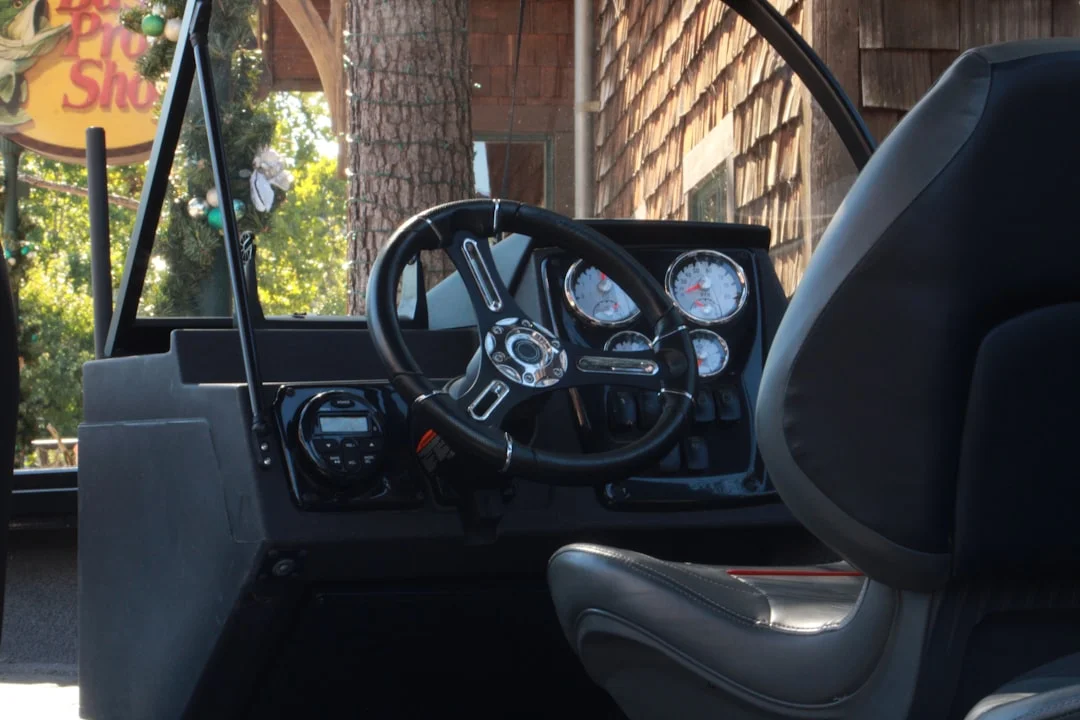
Photo by porter vest on Unsplash
Monohull vs Catamaran in the Under-$100K Bracket
Under $100,000 the choice effectively makes itself. Cruising catamarans of any pedigree (Lagoon, Leopard, Fountaine Pajot, even the older Privilege series) rarely dip below $120,000 unless they're 1990s charter-fleet boats with structural fatigue from a hard commercial life. You can find a 1990s Prout or Gemini under $100K, but they're niche designs with small interiors compared to modern cats.
A monohull under $100K gives you a real bluewater boat. A catamaran under $100K usually means a coastal cruiser with limits. The trade-offs (motion comfort, sailing angles, dock fees) deserve more thought than this paragraph allows — our honest monohull vs catamaran comparison walks through the real-world differences.
If you are bluewater-bound and your budget is hard-capped at $100K, the monohull is the choice. Almost without exception.
How to Negotiate Without Burning the Deal
A few rules I've watched succeed:
- Don't lowball before the survey. Make a reasonable offer to lock the boat, contingent on a satisfactory survey and sea trial. Negotiate hard after the report.
- Use the survey deficiencies, item by item, with realistic estimated costs. Sellers respect specifics. "Standing rigging is 22 years old, replacement quote $7,800, I'm reducing by $5,000" lands better than "the boat needs work."
- Be ready to walk. The boat market is large. There's another Tayana 37 listed every week. The buyer with the leverage is the one who doesn't need this particular hull.
- Pay attention to time-on-market. A listing aged 9+ months is a negotiation goldmine. The owner is usually carrying it through a winter they don't want to pay for.
A Realistic 90-Day Buying Timeline
This is roughly how a serious shortlist-to-keys process unfolds:
- Weeks 1-2: Define your cruising plan, set a real budget (purchase + first-year refit), shortlist 3-5 models.
- Weeks 3-6: Browse Yachtworld, Boats.com, Cruising World classifieds, broker listings. Walk five to eight boats in person. Don't make an offer on the first one — you'll learn what condition looks like by looking at more boats.
- Weeks 7-8: Make a contingent offer on the best candidate. Lock down a 10% deposit, written purchase agreement with survey/sea trial contingency, target survey within 14 days.
- Weeks 9-10: Survey, sea trial, haul-out. Get written estimates for the top three deficiencies before re-negotiating.
- Weeks 11-13: Negotiate the final price, secure financing or release funds, complete title transfer, update documentation, arrange insurance, and start commissioning.
Rushed buyers get stuck with someone else's deferred maintenance. Patient buyers get the same boat at $15,000 less in November than in April.
Once you've got a candidate hull and a delivery port in mind, check the distance between marinas one more time before you commit — a "quick delivery" of 600 nm at 5 knots is five days at sea, not a weekend trip, and your insurance premium will reflect that.
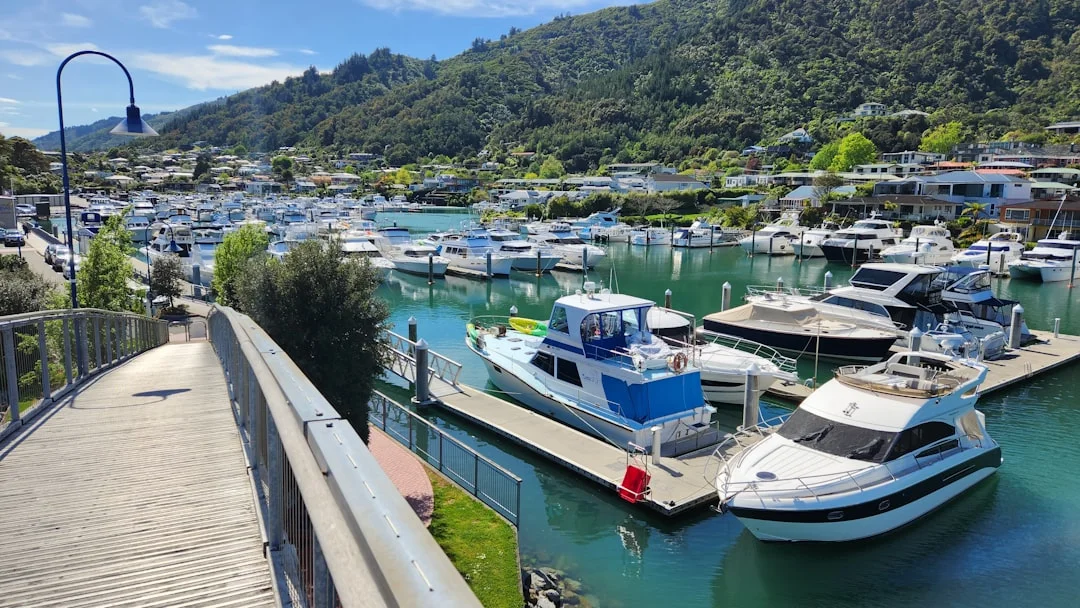
Photo by Nico Smit on Unsplash
After the Purchase: The First-Year Refit
Even a "ready to sail" boat needs work. My standard first-year list for a bluewater-bound used cruiser:
- Standing rigging if older than 15 years (non-negotiable for offshore use)
- Running rigging — sheets, halyards, reefing lines (cheap insurance)
- House batteries and charging system review (most older boats are underpowered for modern electronics)
- One full set of safety gear: EPIRB, life raft service, harnesses, jacklines, MOB equipment
- Engine service: raw water pump, impeller, belts, thermostat, oil and filter, fuel polishing
- Bottom paint and zincs at haul-out
- A full canvas inspection: dodger, bimini, sail covers replaced if more than 8 years old
Budget $8,000-$15,000 for this. More if you find issues. Less if the previous owner did a recent refit.
Don't forget the boring stuff: USCG documentation, hailing port painting, vessel name application, registration paperwork, and a marine survey copy for your insurer. The administrative tail of buying a boat takes longer than most expect.
Frequently Asked Questions
Can I really sail offshore in a boat that costs less than $100K?
Yes — and people do it constantly. The Tayana 37, Pacific Seacraft 37, Valiant 40, Hallberg-Rassy 36, and Westsail 32 have all crossed oceans hundreds of times under owners on similar budgets. What matters far more than purchase price is rig condition, deck-to-hull integrity, engine reliability, and the skills of the crew. A well-prepared $75,000 boat is safer than a poorly maintained $300,000 yacht.
How much should I budget annually after purchase?
Plan for 8-12% of the boat's value per year in ongoing maintenance and operating costs (not counting cruising fees, fuel, or food). On a $75,000 boat that's $6,000-$10,000 annually. This covers haul-out and bottom paint, sail maintenance, electronics replacement on a rolling schedule, engine service, insurance, and unexpected repairs. Coastal cruisers spend less, full-time liveaboards spend more.
What size sailboat is best for cruising on this budget?
Most experienced cruisers will tell you the sweet spot is 36-40 feet. Smaller than 35 feet and interior volume gets tight for two people for extended periods. Larger than 42 feet and the loads (anchor weight, sail area, dockage cost) climb fast and quickly outrun a $100K budget. A 38-foot bluewater monohull with a working diesel and recent rigging is the realistic target for most buyers.
Should I get a wooden boat to save money?
No — unless wooden boat maintenance is the hobby you want, not the cruise. Wooden hulls require annual recaulking, seasonal hauling, and an owner with carpentry skills (or a budget for a shipwright). The acquisition cost can be tiny but the ownership cost is high. For cruising under $100K, stick to fiberglass.
Is the survey really necessary if I trust the seller?
Yes. Trust does not detect rotten chainplates, balsa core moisture, or stress cracks in a swaged terminal. The seller may be honest and still wrong about the boat's condition — many owners have no idea what's hidden behind the headliner. A survey is the only objective assessment you get, and the cost is roughly 2-3% of the purchase price. Skip it only if you can comfortably afford to walk away from the entire boat.
Where can I find these used cruising sailboats for sale?
The best inventory is on YachtWorld, Boats.com, and SailboatListings. Owner-direct sales appear on Cruisers Forum, Sailing Anarchy classifieds, and local marina bulletin boards (often the best deals). Brokers know their inventory but earn 10% — owner sales avoid the commission but mean you handle every step yourself. Both paths work; the better deal is whichever boat happens to be the best-prepared example you can find.
What's the biggest mistake first-time buyers make?
Falling in love with a specific boat before the survey. Emotional buyers ignore deficiencies, accept "we'll fix that later" promises, and end up with deferred maintenance they paid full price for. Treat the first viewing as data collection. Treat the survey as the truth. Be willing to walk away from a boat you've already imagined yourself sailing — that discipline is what separates the cruisers who actually sail from those who spend three years rebuilding at the dock.
About the Author
Related Articles
Diesel Heater Troubleshooting Boat: No-Start & Soot Fixes
Fix diesel heater no-start and sooting on your boat. Step-by-step checks for power, fuel, air/exhaust and maintenance—read the guide now.
By Breezada Team

Docking a Catamaran: Maneuvers, Springs & Crew
Master docking a catamaran with close-quarters maneuvers, spring lines, and crew roles. Learn the steps and dock with confidence—read now.
By Breezada Team
Best Stove for a Sailboat: Propane vs Diesel vs Induction
Compare propane, diesel, and induction stoves for cruising safety, cost, and power needs—use our guide to choose the best stove for your sailboat.
By Breezada Team
Single Handed Docking Sailboat: Line Methods & Drills
Learn single handed docking sailboat line-first methods, setup, and drills for crosswind/current. Practice safely—get the step-by-step plan now.
By Breezada Team