Bareboat Charter Requirements by Country + Checklist (2026)
Bareboat charter requirements are a two-part game: what the country says you need, and what the charter company (and their insurer) will actually accept before they hand over the keys. If you only plan for the first part, you’ll eventually meet the second part at 1700 on changeover day—when the base is busy, the wind is up, and nobody has time for optimism.
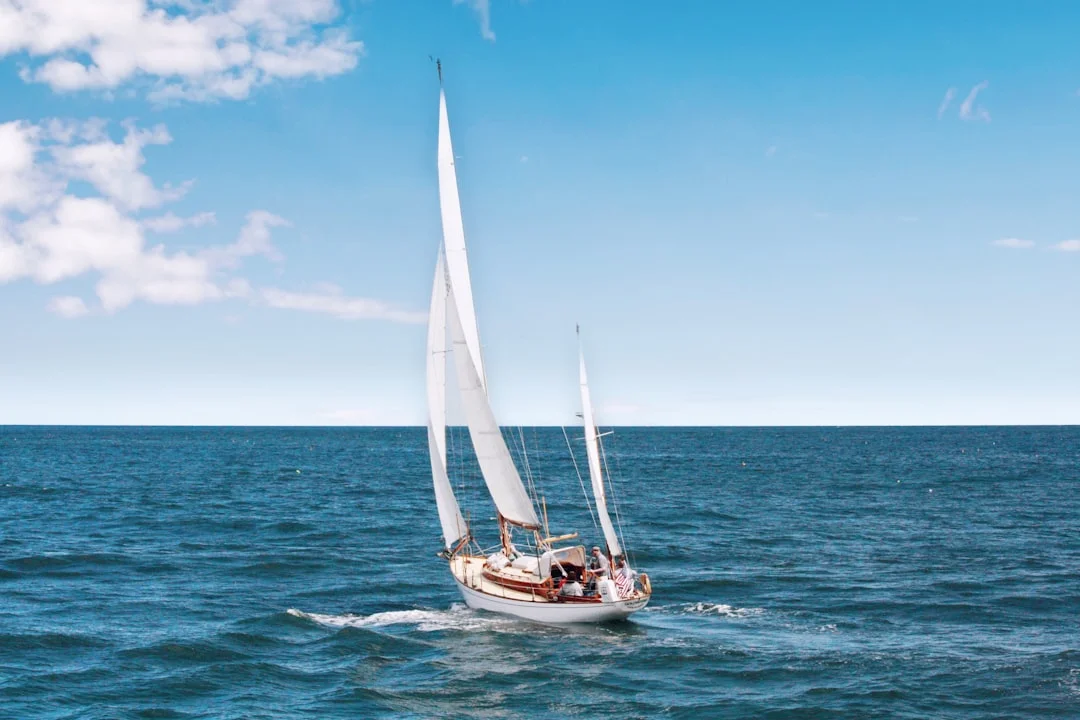
Photo by Kristel Hayes on Unsplash
Legal requirements vs charter company screening (the real gate)
What’s “required by law” vs “required to get the keys”
Most destinations have some form of legal framework around skipper competence, radio operation, and safe navigation. That’s the “papers” layer: certificates, IDs, and sometimes a mandated license. In practice, bareboat charter requirements are usually driven just as much by the operator’s insurer and internal risk policy as by national law.
The second layer is the real gate: the base manager deciding whether you can safely run their 12–15 m (39–49 ft) monohull or 12–14 m (40–46 ft) cat for a week. They’ll weigh your proof of competence (ICC/RYA/ASA), your sailing resume, and—most importantly—your recent time as skipper. A common screening threshold you’ll hear is 5–10 days as skipper and/or 200–500 nm, but it’s operator-dependent and tightens in peak weeks.
SOLAS Chapter V’s voyage planning principles are a good mental model here: appraisal, planning, execution, monitoring. Bases don’t cite SOLAS at the counter, but they absolutely judge whether you think that way. A skipper who can explain a Plan B anchorage and a no-go wind threshold gets more trust than someone waving a certificate like it’s a backstage pass.
How operators evaluate risk: insurer rules, boat size, season
Risk rises fast with size, layout, and conditions, and the base knows it. Jumping from a 40 ft monohull to a 45 ft cat isn’t “five more feet”—it’s more windage, more beam, more docking consequences, and usually a bigger deductible. Many operators use a rule-of-thumb: you should have recent skipper time within ~5–10 ft LOA of the boat you’re taking.
Season matters as much as the boat. A July/August Aegean week with Meltemi potential is not the same as a light-wind shoulder-season itinerary, even if both are “Greece.” The base is thinking about marina congestion, crosswinds, and how quickly a “minor docking kiss” becomes a claim that eats a €2,000–€6,000 monohull deposit.
They also care whether you can meet COLREGs basics under pressure—especially Rule 5 (proper lookout). A skipper who can’t talk clearly about watchkeeping, lights/shapes recognition, and VHF procedure is a skipper who will eventually create paperwork for somebody else.
The check-in decision tree: approve, check-out sail, skipper, or cancel
On changeover day, the base typically has 1–3 hours to brief you, inventory the boat, and decide your fate. Many companies pre-screen by email: scanned PDFs of certificates, a crew list, and a sailing resume. Then you get the in-person interview: “Where have you sailed?” “How do you anchor?” “You done Med-moor before?”
If they’re unsure, you’ll usually get one of four outcomes. Approve and go. Check-out sail (paid or included) where you demonstrate docking, anchoring, and MOB basics. Mandatory skipper (often €180–€350/day plus food and a cabin), sometimes for the first day only. Or, worst case, cancel/refuse—which is why honest pre-approval is worth more than bravado.
Scenario callouts (real-life common):
- You arrive without SRC: some bases won’t budge, even if you have an ICC.
- You’re “marginal” on paper: expect a check-out sail, especially on a 40–46 ft cat.
- You’re stepping up: a 40 ft mono skipper with no cat time may be asked to downsize or take a skipper for day one.
Practical tip: Email your documents and sailing resume at least 2–3 weeks before arrival and ask, in writing, “Is this sufficient for bareboat?” It’s the cheapest insurance policy you’ll ever buy.
ICC vs RYA vs ASA: what each certificate proves for bareboat
ICC (International Certificate of Competence): where it unlocks charters
The ICC is the closest thing sailing has to a widely recognized “paper” for European charters, even though it’s not universally mandated by every country in the same way. In many Mediterranean bareboat charter requirements conversations, the ICC is the document that stops the email chain. It tells the operator, “A national authority has assessed this person to a baseline standard.”
What the ICC does not do is guarantee the base will hand over a 46 ft cat in peak season to someone with no recent log. The ICC is a gate opener, not a competence replacement. You still need a sailing resume that shows recent skipper time, boat size, and conditions that resemble the trip you’re about to take.
If you’re chartering in Europe, expect ICC + radio paperwork to come up together. In many Med bases, ICC + VHF SRC is the practical combo that prevents delays. It’s not romance; it’s admin.
RYA Day Skipper vs ICC: recognition, practical focus, and why you may need both
RYA Day Skipper Practical is widely respected because it’s practical and skills-based. The course is commonly 5 days, and the typical RYA guidance references around 4+ days and ~100 nm minimum experience before assessment, though charter acceptance is always operator-dependent. Bases know what Day Skipper graduates have been tested on: close quarters, pilotage, passage planning, man overboard drills, and boat handling under supervision.
Here’s the catch: in some European destinations the base may still ask for an ICC specifically, even if your Day Skipper Practical is stronger evidence of hands-on competence. That’s not an insult to the RYA; it’s often bureaucracy and insurance underwriting. If you can obtain an ICC via your national authority (or via an RYA route where applicable), having both documents reduces friction.
Also, don’t overlook COLREGs knowledge. A base manager may casually ask about lights, sound signals, or right-of-way. They’re not playing trivia night; they’re testing whether you’ll keep the boat out of incident reports.
ASA 104 (and 101/103/105): acceptance patterns and how to reduce pushback
ASA 104 Bareboat Cruising (usually after ASA 101 + 103) is commonly accepted in the Caribbean and many other charter markets, and often accepted in Europe—but with more variability. Some Med operators are perfectly fine with ASA 104 plus a strong sailing resume; others will ask for an ICC anyway. That’s why “ASA 104 is accepted in Europe” is both true and not sufficiently precise to bet your vacation on.
If you’re presenting ASA 104 for Mediterranean bareboat charter requirements, reduce pushback with three items. First, add ASA 105 (Coastal Navigation) if your itinerary involves longer legs or night arrival risk, because it signals serious navigation training. Second, bring an SRC (or equivalent VHF operator certificate recognized locally). Third, provide a skipper CV with verifiable details: boat LOA, role, nights aboard, and nm.
A mini decision guide based on what I’ve seen at docks:
- Med peak season (Greece/Croatia/Italy/Spain/France): ICC often requested; SRC commonly enforced; strong resume essential.
- Caribbean trade-wind hops: ASA 104 is usually understood; they still want recent similar-size time and anchoring competence.
- US domestic: documentation is often lighter, but USCG carriage requirements and operator policies still apply.
Practical tip: Your certificate gets you into the conversation. Your sailing resume closes the deal. Write it like an incident report you never want to star in.
Bareboat charter requirements by country & region (2026 matrix)
The reality in 2026 is that “by country” is a starting point, not a guarantee. Two bases in the same country can have different insurer rules, especially for 12–15 m monohulls versus 40–46 ft cats. Use this matrix as your pre-screening checklist, then confirm with the operator in writing.
2026 quick matrix: legal vibe vs operator reality
Greece (Aegean/Ionian): Commonly requires 2 named competent persons on the contract (skipper + co-skipper). Operators often expect Med-moor competence, because a lot of berthing is stern-to with lazy lines and minimal space for learning. Peak winds and crowded quays mean they care about your last 6–12 months of “similar boat” handling more than a logbook from 2015.
Croatia (Adriatic): Operators frequently require an accepted skipper certificate plus a VHF license check at the base. Skipper age is typically 18+, with some companies setting 21–25 for larger yachts or cats. Croatia is organized and efficient, which is code for “they will ask for the paperwork and they will read it.”
Italy, Spain, France: Documentation patterns vary by operator, but commonly include proof of competence plus VHF credentials, especially for Med bases. Some areas have more tidal considerations and traffic complexity than people expect, and the base may probe your passage planning. Expect extra scrutiny if you request a newer boat, a 45+ ft platform, or you’re chartering during a busy holiday week.
Caribbean & US: The Caribbean often centers on operator screening rather than strict national licensing at the counter, but they still want competence you can demonstrate. The US is typically less “certificate driven,” yet USCG rules (carriage, nav lights, sound device, VDS where applicable) still matter, and operators can still require a checkout if your experience looks thin.
Greece: two competent crew, Med-moor reality, and base expectations
Greece is where many skippers learn that Med-mooring is not a theoretical skill. Expect quay approaches with crosswind and gusts, tight spacing, and a line handler on a neighboring boat offering advice you didn’t request. If you’re on a 12–15 m monohull drawing 1.8–2.3 m, your anchorage and harbor choices can shrink quickly compared with a 1.2–1.5 m draft cat.
Bases will often ask who your co-skipper is, and what they can do. If your “competent crew” can’t take a turn at the helm, handle a stern line, or run the windlass, you’re effectively short-handed. That matters when you’re catching a lazy line in 20–25 kt and trying not to repaint the quay.
Croatia: accepted certificates + VHF license checks and age thresholds
Croatian bases commonly verify VHF credentials in a very literal way: they look at the certificate, compare names, and note it on the paperwork. If you show up without it, you may be buying a check-out sail, hiring a skipper, or having a long afternoon discussing your options.
Croatia is also where I’ve seen size-matching enforced with a straight face. If your resume tops out at a 34 ft boat and you’ve booked a 46 ft cat, expect questions. Not rude questions—risk questions.
Italy, Spain, France: common documentation patterns and operator nuance
Across these countries, the “operator nuance” is often about conditions and maneuvering environment rather than the law itself. Some marinas are tight, some have significant crosswind funnels, and some areas have traffic that demands solid COLREGs instincts. If you can talk through Rule 5 lookout discipline and show you actually plan legs rather than “follow the coast,” you’ll feel the tone change at check-in.
Draft and itinerary planning also get real here. A 2.3 m draft monohull and a shallow anchorage are a poor match, and the base knows groundings are expensive even when the keel looks fine afterward.
Caribbean & US: typical acceptance, documentation, and enforcement differences
In the Caribbean, the base often cares most about anchoring, dinghy handling, and conservative decisions. You might sail only 15–35 nm per day, but you’ll anchor a lot, and you’ll do it close to other boats. Your ability to set an anchor properly is worth more than your ability to recite buoyage systems from memory.
In the US, bareboat charter requirements are commonly driven by company policy and USCG compliance rather than an ICC-style expectation. Still, the operator may insist on a check-out if you’re stepping up in size or if your resume doesn’t show recent skipper time.
VHF/SRC, paperwork, deposits & insurance at base check-in
Radio licensing: who needs SRC, what the base verifies, what’s legally at stake
VHF licensing is where good trips go to die quietly at the counter. Many Mediterranean bareboat charter requirements workflows assume you have an operator certificate such as the RYA SRC, which is commonly taught as a 1-day course. The base may verify the credential by checking the name, certificate number, and sometimes the issuing body.
Legally, it’s not just a “charter rule.” In many jurisdictions, operating marine VHF requires a qualified operator, and the charter company doesn’t want liability if you transmit incorrectly during an incident. As best practice, I like at least two people aboard who can operate the radio properly, including routine procedures and a clear distress call format.
Documents and data operators ask for: IDs, certificates, crew list, skipper resume
Show up with hard copies and PDFs, because batteries die at the worst times. Bring passports/IDs for all crew, your proof of competence (ICC/RYA/ASA), your VHF certificate, and your crew list. Many operators want the sailing resume in advance, so send it as a PDF and keep it consistent with what you say in person.
Your sailing resume should include dates (month/year), role (skipper or crew), boat type (mono/cat), LOA (in feet or meters), and distance (nm). If you’re claiming 200–500 nm, show where those miles happened and whether they included docking, anchoring, and night entries. References help, especially if you have a prior charter company contact who can confirm you returned the boat with the gelcoat still the same color.
Security deposits, damage waivers, and dispute-proofing your handover
Deposits are where friendships get tested. Typical security deposits for monohulls run €2,000–€6,000, and cats often sit at €3,000–€10,000, depending on value and age. It’s commonly a card pre-authorization, but sometimes it’s a charge, and the difference matters if your bank thinks “Greek marina office” looks suspicious.
Deposit reduction products (damage waivers) often cost €200–€600/week, and may still leave a residual deductible of €300–€1,500. Read the exclusions carefully: dinghy/outboard loss, clogged heads, and sail tears are frequent “not covered” surprises. If you add an outboard (€80–€200/week) or a SUP (€100–€250/week), ask whether it changes your deductible exposure.
For dispute-proofing, run a tight handover audit. Photograph fuel gauge, engine hours, existing gelcoat scratches, sail wear points, and the dinghy/transom area. For systems, reference best practices like ABYC H-27 (seacocks), ABYC H-33 (diesel fuel), and shore power expectations aligned with ISO 13297 and ABYC E-11.
Practical tip: Take a 3-minute continuous video walk-through at handover: bow-to-stern, then a close-up pass of the transom, hull sides, and cockpit. Add still photos of engine hours and fuel level.
Practical bareboat skills checklist (pass/fail standards)
This is the part charter marketing brochures skip, because it’s not romantic. The base isn’t asking whether you’re “comfortable.” They’re deciding if you can perform specific maneuvers without breaking their boat or your crew. Treat this like a check ride, because that’s what it is.
Close-quarters handling: docking, prop walk, spring lines, crosswind
A base-approved skipper can put the boat where it needs to go at walking speed, with a Plan B ready. Demonstrate that you understand prop walk (especially on a single-screw monohull), and that you can use a spring line to control the boat without shouting. If you can’t explain how you’ll stop 8–13 tonnes of monohull momentum in a tight marina, you’re not ready for a busy Saturday.
Your minimum standard should include: approach plan, fender placement, line order, and abort point. In 20–25 kt crosswind, the correct move is often to abort early rather than “try harder.” A skipper who can say “we’re going around” calmly is usually the one who doesn’t hit things.
Numbers that matter: plan docking speed under 2–3 kt, use 12–16 mm docklines where provided, and rig 6–10 fenders depending on berth tightness. If you’re on a cat, use twin engines to pivot, but remember windage makes you pay rent quickly.
Anchoring: setup, scope math, set/verify, and overnight watch routine
Anchoring is the most common skill gap I see on bareboats, and it’s also the easiest to test. Know your gear: a typical 40–45 ft charter monohull may carry a 20–25 kg anchor with 60–80 m of 8–10 mm chain. If you don’t know what you have, you can’t calculate what you can safely do.
Scope targets are simple: 5:1 in calm conditions, 7:1 when windy or overnight, adjusted for tidal range and bow height. Set the anchor by backing down firmly, then verify with bearings and/or plotter trend, and confirm swing room. If the base asks “how do you know you’re not dragging,” “I look at the anchor alarm” is not a complete answer.
An overnight routine should include checking forecast updates, setting an anchor alarm with a sensible radius, and doing a visual check after gusts or wind shifts. It’s not paranoia; it’s how you avoid a 0200 engine start that wakes up the whole bay.
Med-moor/stern-to: lazy lines, crew roles, and abort criteria
Med-mooring deserves its own checkbox because it’s a different skill set. You need a clear crew brief: who handles each stern line, who handles the bow pickup/lazy line, who fends (with hands off the dock—use fenders), and who communicates to the helm. If your crew turns into a committee, you’ll paint the quay.
Your approach should be slow, straight, and ready to abort. A good abort criterion is: if you’re not lined up by one boat length out, or if a gust hits at the wrong time and you lose control, go around. It’s better to do two clean approaches than one expensive one.
Lazy lines can foul props, especially if you drift sideways. Keep the stern under control, keep lines organized, and don’t let anyone wrap a line around a hand to “hold it.” That’s how vacations become paperwork.
Safety drills: MOB, reefing early, heavy-weather decision points
Bases don’t always ask you to physically perform a man-overboard drill, but they will judge whether you have a real method. You should be able to explain your immediate actions, your recovery approach under power or sail, and your VHF call plan if it’s serious. COLREGs Rule 5 (lookout) is not just exam material here—MOB prevention starts with disciplined eyes on deck.
Reefing is another silent screening point. If you say you reef at 30 kt, you’ve just told the base you enjoy unnecessary drama. Reef early, keep the boat balanced, and remember that most charter sail inventories are durable, not fast.
For heavy-weather decisions, talk in thresholds. “If forecast is 25–30 kt on the beam with short sea state, we shorten the route, pick protected anchorages, and plan earlier arrivals.” That’s a skipper answer.
Route planning, sea distances & matching itinerary to conditions
Daily-run planning with real constraints: daylight, crew fatigue, and base curfews
Your itinerary is part of your competence proof. Charter companies can spot fantasy plans quickly: too many miles, too many “must-arrive” stops, and no allowance for docking attempts or weather holds. Plan daily legs that fit daylight, crew energy, and the reality that you’ll spend time anchoring, swimming, shopping, fixing minor issues, and explaining the head to someone again.
As a practical constraint, many crews are happy with 15–35 nm days, with one longer leg if conditions are settled. If you’re averaging 6.0 kt SOG, a 28 nm leg is about 4 h 40 m, and that’s before adding time for traffic, sail changes, and marina maneuvers. Add a 20–40% buffer and you’ll arrive like a professional instead of a contestant.
This is where plan your route using a sea distance calculator earns its keep. Use it to compare direct legs versus coastal doglegs, then sanity-check your ETA with buffers and daylight. It also helps when the base asks, “How far is your first hop?” and you answer with a number rather than a shrug.
Calculating distance/time: SOG, leeway, and motoring allowances
Keep the math conservative. Under sail, leeway and sea state can shave your VMG, and under power you’ll still lose time entering and leaving harbors. For motoring, a typical 40–60 hp auxiliary diesel on a 40–45 ft mono often burns ~3–6 L/hr at cruising RPM, so fuel planning isn’t hard—but only if you actually do it.
A simple rule I use: estimate time using conservative SOG (say 5.5–6.5 kt), then add maneuvering time and a “bad surprise” buffer. When you check the distance, use a tool to check the nautical miles for your planned route so you avoid optimistic straight-line assumptions—and so your motoring-time math translates cleanly into fuel.
Reserve policy: arrive with ≥25% fuel where practical, especially in places where fuel docks are scarce or winds make docking there a rodeo. It’s also nice not to spend the last morning queueing for diesel with half the fleet.
Risk-based planning: CE category, forecast triggers, and Plan B anchorages
Confirm the yacht’s CE design category (ISO 12217) and match it to your intended conditions. Plenty of charter boats are Category A/B, but that doesn’t mean you should treat a forecast like a dare. In places like the Aegean, the boat may be capable, but your crew’s tolerance and the anchorage protection might not be.
Use SOLAS V voyage planning principles: appraisal (weather, charts, notices), planning (routes, alternates), execution (brief crew, set limits), monitoring (update forecasts, track progress). Build a day-by-day plan with at least one alternate anchorage and a bail-out harbor per leg. Put your “no-go” triggers in writing: wind above 25 kt, swell direction that makes your target rolly, or a late departure that pushes arrival into darkness.
Boat size, systems & risk: 40–45 ft mono vs 40–46 ft cat
Handling differences: windage, twin engines, and stopping distance
A 40–45 ft monohull (often 8–13 tonnes) and a 40–46 ft cat (often 10–15 tonnes, model-dependent) behave differently in close quarters. Cats have huge windage and tend to slide sideways when gusts hit; monos have more predictable pivot but less low-speed control if you only have one prop. Either way, bigger boats stop slower than your confidence does.
Twin engines on cats are an advantage if you know how to use them. You can pivot in place, crab, and control stern swing, but you can also over-control and create chaotic bursts of speed. If you’re used to a single-screw monohull, practice thinking in “differential thrust,” not “more throttle.”
Many charter incidents are low-speed docking events, not offshore drama. The base knows that, and it’s why stepping up from a 40 ft mono to a 45 ft cat triggers questions even if the LOA numbers look similar.
Systems you must understand: electrical, seacocks, heads, and fuel
Charter boats are reliable until they aren’t, and most failures are operator-induced. Shore power in Europe is typically 230 V / 50 Hz with 16 A inlets (sometimes 32 A), so you need to know what loads you can run without tripping breakers. Battery banks are commonly 200–600 Ah at 12 V, and an inverter (if fitted) is often 1–2 kW—enough for chargers and a coffee machine, not a floating house.
Know seacocks (ABYC H-27): locate them, exercise them, and make sure every crew member knows what “close the head intake” means. Know diesel basics (ABYC H-33): where the fuel shutoff is, where the primary filter/water separator sits, and how to spot a clogged filter before the engine coughs at the harbor entrance.
Heads and holding tanks are their own discipline. Teach the crew the exact procedure in 60 seconds, then verify they can repeat it. “It looked like it went down” is not a maintenance strategy.
Briefing-time checks that prevent 80% of deposit disputes
During the 1–3 hour handover, prioritize checks that prevent expensive claims: engine cooling water flow, belt condition, oil level, and any alarms. Photograph existing gelcoat chips at the bow and transom, because those are the favorite spots for “new damage” misunderstandings. Check the dinghy seams and the outboard mount, because tender issues are common and often excluded from waivers.
For AC safety, look for RCD/ELCI-style protection concepts consistent with ISO 13297 expectations, and keep the shore power cable out of puddles and prop-wash zones. For fire safety (ISO 9094), locate extinguishers (often 2–4 units on 40–45 ft), the engine compartment access, and any fire port. Confirm bilge pumps: electric and manual, and verify they actually move water.
Practical tip: Write down engine hours at handover and again at return. If there’s a dispute about “excess motoring,” you’ll have a clean number, not a debate.
Costs & contingency plan if you don’t qualify at the dock
Training and certification budget: ASA, RYA, ICC, SRC
If you’re building a charter-ready profile, plan the cost and timeline before you book the boat. An ASA 101/103/104 package often runs US$1,200–US$3,000 for instruction only, while liveaboard “learn-to-charter” weeks commonly land at US$3,000–US$6,500 per person. RYA Day Skipper Practical is often £700–£1,200, and RYA SRC typically £120–£250 plus £60–£75 exam/assessment.
ICC issuance/admin plus assessment commonly runs €150–€400, varying widely by country and issuing pathway. Budget for it like you would for insurance: it’s not exciting, but it prevents expensive problems. Also budget time—getting documents sorted the week before departure is how people end up paying for “emergency solutions.”
Charter-week cost drivers: seasonality, add-ons, deposits
The weekly charter rate is only the start. For a 40–45 ft monohull, expect roughly €2,500–€7,500/week depending on season and boat age; a 40–45 ft cat often runs €4,500–€12,000+/week. Then add end cleaning (€150–€350 mono / €200–€450 cat), outboard (€80–€200/week), and optional toys like a SUP (€100–€250/week).
Deposits and waiver products shape your stress level. Deposits often sit at €2,000–€6,000 for monos and €3,000–€10,000 for cats, while deposit reduction may cost €200–€600/week with residual deductibles of €300–€1,500. That deductible is why handover photos matter more than your memory.
Use estimate your fuel needs based on the voyage distance during budgeting too: more miles often means more motoring time, and at 3–6 L/hr, fuel adds up over a week. A route that looks “close” on a tourist map can be a different story when you count coastal bends and detours for shelter.
Plan B options: check-out sail, hired skipper, downsizing, rebooking
If the base says you’re not qualified, don’t argue; negotiate options. Ask for a formal check-out sail with a senior skipper, paid if required, and treat it like an assessment, not a sightseeing tour. If that’s not available or you’re clearly out of depth, hire a skipper at €180–€350/day (plus food and a cabin), possibly for the first 1–2 days to bridge the skill gap.
Downsizing is often the smartest fix. A 40 ft monohull is forgiving compared with a wide cat in a gusty marina, and it can open more anchorages with 1.8–2.3 m draft considerations planned properly. Rebooking to a less demanding region or season is also a valid move; peak-week pressure is real, and bases get conservative when everything is fully booked.
Practical tip: Before you pay the final balance, request written pre-approval of your documents and resume. If the operator won’t pre-approve, assume you may need a check-out sail or skipper.
FAQ: Bareboat charter requirements (2026)
For Croatia bareboat charters, which skipper certificates are typically accepted alongside a VHF license, and how do operators verify the radio credential at check-in?
Croatian operators typically want (1) a skipper competence certificate they recognize for bareboat and (2) a VHF operator credential. The accepted skipper certificates vary by operator list and flag-state practice, but commonly include national licenses and widely recognized training credentials (often ICC/RYA/ASA equivalencies) when the company is satisfied with your resume.
At check-in, the VHF credential is usually verified by physically inspecting the certificate (or a PDF), matching the name to the contract, and noting it in the handover paperwork. If you’re missing it, many bases will require a skipper, a check-out process, or a rework of the contract—especially in peak weeks.
If I hold RYA Day Skipper Practical but not an ICC, in which Mediterranean countries do charter companies most often still request an ICC, and what’s the fastest compliant pathway to obtain it?
In the Mediterranean, it’s common for operators in Greece, Croatia, Italy, Spain, and France to still request an ICC even when Day Skipper Practical is on your resume, because the ICC is an easy-to-file “paper” for compliance and insurer comfort. Not every operator will demand it, but enough do that it’s worth planning for.
Fastest compliant pathway is usually: obtain an ICC through the issuing route available to you (often via your national authority or an RYA-linked process where applicable), then pair it with an SRC for VHF. If time is tight, ask the operator in writing if Day Skipper Practical + strong resume + check-out sail will be accepted, and get the answer before flights are booked.
When presenting an ASA 104 certification for a Greece charter, what minimum logbook details (boat LOA, role, nights, nm, ports) should be included in a skipper resume to satisfy the common 5–10 skipper-day / 200–500 nm screening?
Include, for each trip: month/year, region (e.g., Cyclades/Ionian), boat type (mono/cat), LOA (ft or m), your role (skipper), number of days, number of nights aboard, estimated nautical miles, and key ports/anchorages. Add notes on conditions if relevant (e.g., “20–25 kt, Med-mooring daily”), and list at least one reference (school instructor or prior charter base) if you have it.
For screening targets like 5–10 skipper-days and 200–500 nm, show totals at the top, then back them up with entries. The goal is verifiability and relevance: recent trips, similar boat size (within ~5–10 ft LOA), and evidence you handled docking and anchoring, not just rode along.
On a 40–45 ft charter monohull with 60–80 m chain, how should I calculate anchor rode length for a 6 m anchorage with 1 m tidal range and ~1.5 m bow height to achieve 7:1 effective scope?
Use effective depth from bow roller to seabed: 6 m (chart depth) + 1 m (tidal range) + 1.5 m (bow height) = 8.5 m. For 7:1 scope, rode length ≈ 8.5 × 7 = 59.5 m, so call it 60 m of chain.
That fits inside a typical 60–80 m chain inventory, but you still need to confirm swing room and whether the anchorage bottom allows a solid set. If it’s crowded or gusty, you may need more scope (or a different anchorage), regardless of what the math says.
How do deposit reduction products change the deductible structure in practice (e.g., residual €300–€1,500), and what handover photos/measurements most effectively prevent disputed ‘new damage’ claims?
Deposit reduction typically lowers your exposure from the full deposit (say €3,000–€10,000 on a cat) to a smaller residual deductible, often €300–€1,500. It doesn’t make you immune: exclusions commonly include dinghy/outboard loss, clogged heads, and sometimes sails or rig damage if negligence is alleged.
To prevent disputes, capture: fuel gauge and/or refill receipt, engine hours at handover/return, close-ups of hull sides and transom corners, bow/anchor area and rollers, cockpit gelcoat near winches, and any pre-existing dings with a finger or ruler for scale. Photograph electronics powered on (plotter/radar if fitted), and record inventory/safety items in place. When in doubt, document it—because “it was like that already” is not evidence.
Conclusion: the country-by-country mindset (and the action list)
Bareboat charter requirements are never just one certificate. Bring the right documents (often ICC + SRC in the Med), prove competence with a clean sailing resume, and be ready to demonstrate real handling skills at check-in. Route planning—realistic sea distances, alternates, and weather triggers—signals competence and also protects your schedule, crew, and deposit.
Pre-departure action list (print this):
- Certificates: ICC/RYA/ASA copies + passports/IDs for crew
- Radio: SRC (and ideally a second trained operator onboard)
- Sailing resume: recent skipper time, boat sizes, 200–500 nm totals if applicable, references
- Skills practice: anchoring at 7:1, stern-to/Med-moor roles, crosswind docking aborts, MOB method
- Planning: use calculate the distance between ports for leg realism, fuel math (3–6 L/hr), and alternates
- Plan B: budget for check-out sail or a skipper (€180–€350/day) before you book a high-risk itinerary
About the Author
Related Articles

French Canals Boat Trip Guide Beyond Canal du Midi
Plan a french canals boat trip beyond the Midi with routes, costs, licenses & lock tips. Compare regions and map your itinerary—start now.
By Breezada Team

Marine Toilet Smells: Eliminate Odors in Hoses & Vents
Stop marine toilet smells fast—diagnose hoses, vents, joker valves, and cleaning routines. Follow this guide and fix odors for good today.
By Breezada Team

Anchor Light Rules for Sailboats & Best LED Options
Learn anchor light rules (COLREGS/USCG) and choose the best LED anchor light. Avoid common mistakes—use our quick checklist today.
By Breezada Team
Composting Toilet Sailboat: Manual vs Electric vs Composting
Compare marine head options—manual, electric, composting—costs, rules, and odor control. Choose the right setup for your boat. Read now.
By Breezada Team