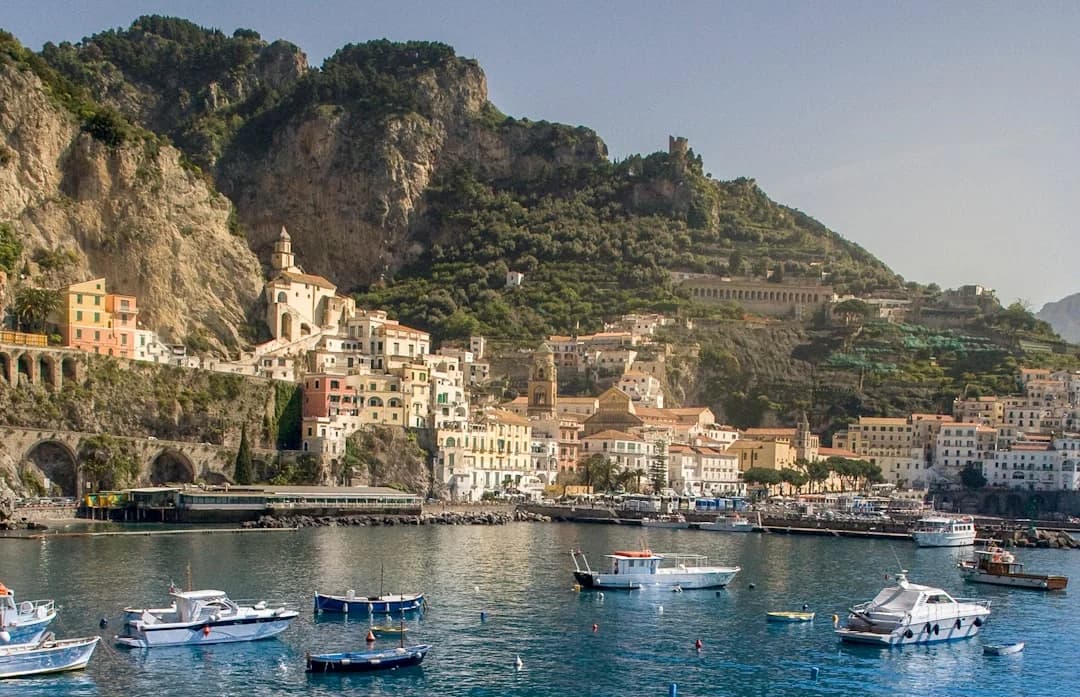
Sailing the Amalfi Coast: Ports, Anchorages & Rules
The Amalfi Coast is a short-hop cruising ground with big-city traffic habits. Distances are small—often 5–15 NM—but the variables are not: ferry wake, long-period Tyrrhenian Sea swell, steep depth contours that go from 10 m to 30 m in a few boat lengths, and summer berth scarcity that feels personal.
If you plan it like a numbers-first passage—distances, ETAs, depth/scope math, and a hard “arrive early” rule—you’ll have a good time. If you plan it like a postcard, you’ll end up doing anchor yoga at 2300 while a ferry rearranges your galley.
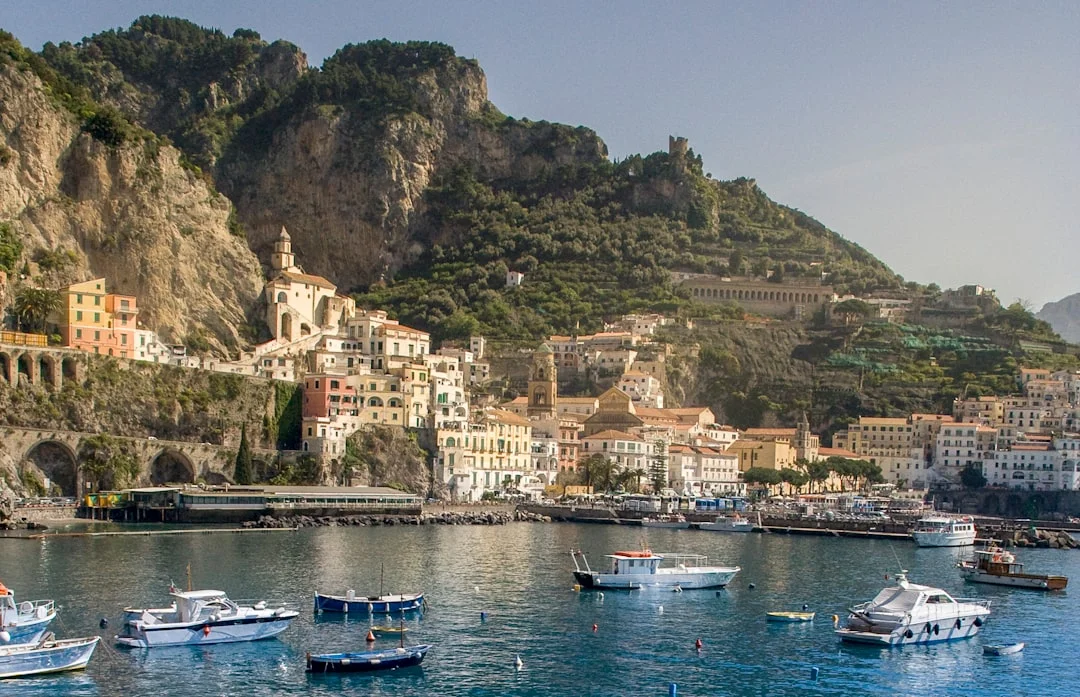
Photo by Sterling Lanier on Unsplash
Plan Your Amalfi Coast Itinerary (Bases, NM, Timing)
Choosing a home base: Naples vs Salerno vs Sorrento
Your base decides your first and last day more than the weather does. Naples (and nearby charter hubs like Castellammare di Stabia) wins for logistics: airport, rail, provisioning, technicians, and fuel docks that don’t treat a 12–14 m charter boat like a nuisance. Salerno is calmer for turnarounds and puts you closer to the coast for day one, but it can feel “downwind” of the postcard circuit if Capri is your priority.
Sorrento is seductive on the map, but it’s a smaller operational platform: fewer service options, and your first-night strategy must be deliberate. My rule: if the crew is arriving on mixed flights, base where late arrivals are painless and provisioning is fast; Naples usually pays for itself in reduced chaos.
Sea-distance planning: realistic day hops and ETAs
On this coast, “short legs” aren’t lazy—they’re tactical. The classic hops are: Sorrento → Capri ~9–10 NM, Capri → Positano ~12–14 NM, Positano → Amalfi ~5–7 NM, Amalfi → Salerno ~12–15 NM (all route-dependent). At 6 kn, 12 NM ≈ 2:00; at 7.5 kn, ≈ 1:36, which is the difference between arriving before the tender circus or joining it.
Use a sea-distance tool to calculate the distance between ports before you book anything non-refundable. It’s the quickest way to sanity-check real NM (not “map vibes”), then back into ETAs that avoid peak ferry windows and keep you anchoring in daylight.
Traffic, daylight, and the “arrive early” rule
The best seamanship move on the Amalfi Coast is embarrassingly simple: arrive early. In July and August, many hotspots effectively sell out 2–8 weeks ahead, and same-day availability can be fantasy. Even if you don’t reserve, showing up by 1100–1300 gives you options; after 1600, you’re mostly negotiating.
Give yourself an “offing” so you’re not trapped close to a lee shore while you argue on the phone. On this steep coast I like 0.2–0.5 NM off unless I’m entering a harbor or committing to an anchorage. And for every leg, pre-pick a Plan B port with a clear cutoff—wind direction, swell period, or simply “if we don’t have a confirmed spot by 1400, we divert.”
Practical tip: Write your cutoffs on the nav desk: ETA target, latest-arrival time, Plan B, and the exact VHF/phone contact. Decision-making gets worse at sunset; don’t wait for it.
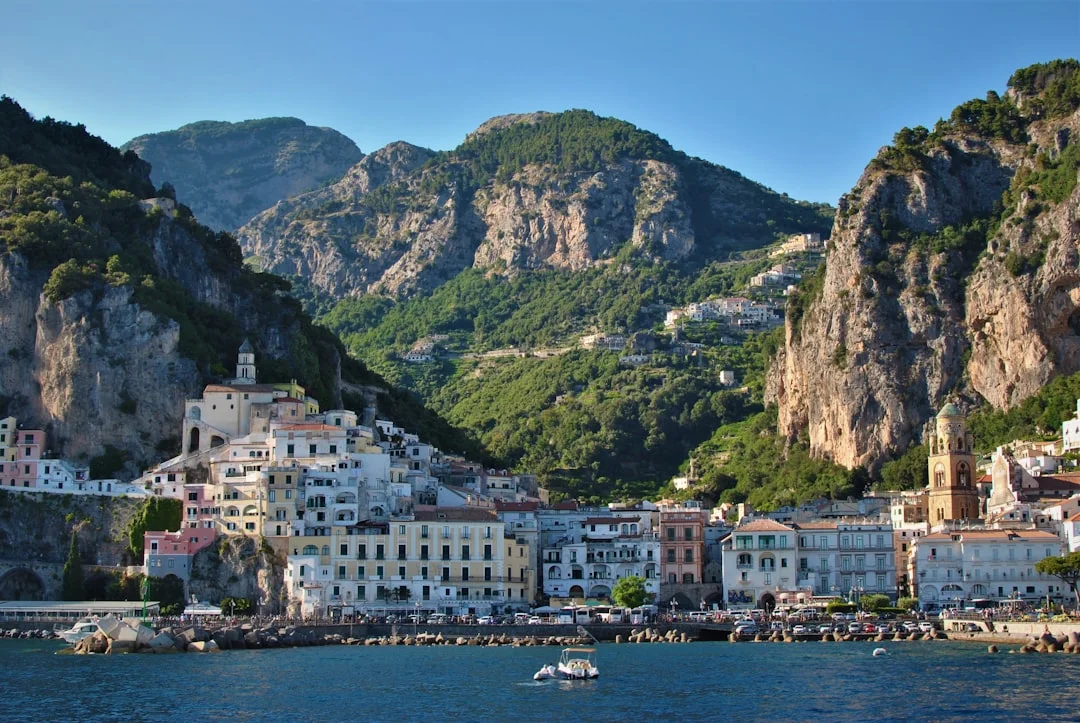
Photo by Ken Shono on Unsplash
Capri by Yacht: Approaches, Waiting Areas, Landing & Fees
Approach strategy: swell, traffic lanes, and where to loiter safely
Treat Capri as a high-control node, not a casual stop. The island concentrates fast ferries, day boats, and yachts doing last-minute docking ballet, often all within 0.5–1.0 NM of the entrance. Add wraparound swell on certain days and you’ll understand why I brief crew early: fenders ready, lines flaked, boat hook out, and someone assigned to watch traffic, not Instagram.
If you need to loiter, do it with room to maneuver and the engine already warm. I aim to hold outside the immediate harbor funnel, keeping clear of approach tracks and giving myself space to turn upwind. The goal is to avoid stopping dead in a place where a ferry wake hits you beam-on while you’re distracted on the radio.
Capri Marina Grande: calling, landing constraints, and fees
For Capri’s Marina Grande, assume the process has three phases: offshore wait/hold, in-harbor maneuver, and shore access. Hail on VHF Ch 16 if you don’t have the local working channel; you’ll be directed to a working channel or told to stand by. Italian ports follow ITU Region 1 channeling, and the working channel is commonly posted locally by the Capitaneria di Porto or harbor office—confirm it on arrival rather than guessing.
Build Capri Marina Grande landing fees into your budget, because even a “quick stop” can become a paid operation. Charges vary by season and operator, but typically include a mix of berth/landing, assistance/line handling, and sometimes tender service. Don’t argue about it on the radio; ask for the total and the constraints, then decide if Capri is today’s hill to die on.
Blue Grotto (Grotta Azzurra): operating rules and tender practicality
The Blue Grotto is not a “swing by for ten minutes” destination in peak season. The practical rule is timing: show up early, expect queues, and expect local small-boat operators to control access close-in. Even when conditions look gentle, surge at the entrance can be real, and the area gets crowded with boats hovering without a plan.
From a yacht, the cleanest method is to treat the visit as a scheduled tender run, not an improvisation. Your typical charter tender—2.3–3.0 m inflatable with 2.5–10 hp—is fine for short shuttles in settled weather, but it’s not a magic carpet in chop and wake. If your crew is tired, the sun is dropping, or swell is wrapping, skip it and enjoy Capri from somewhere you’re not playing bumper boats.
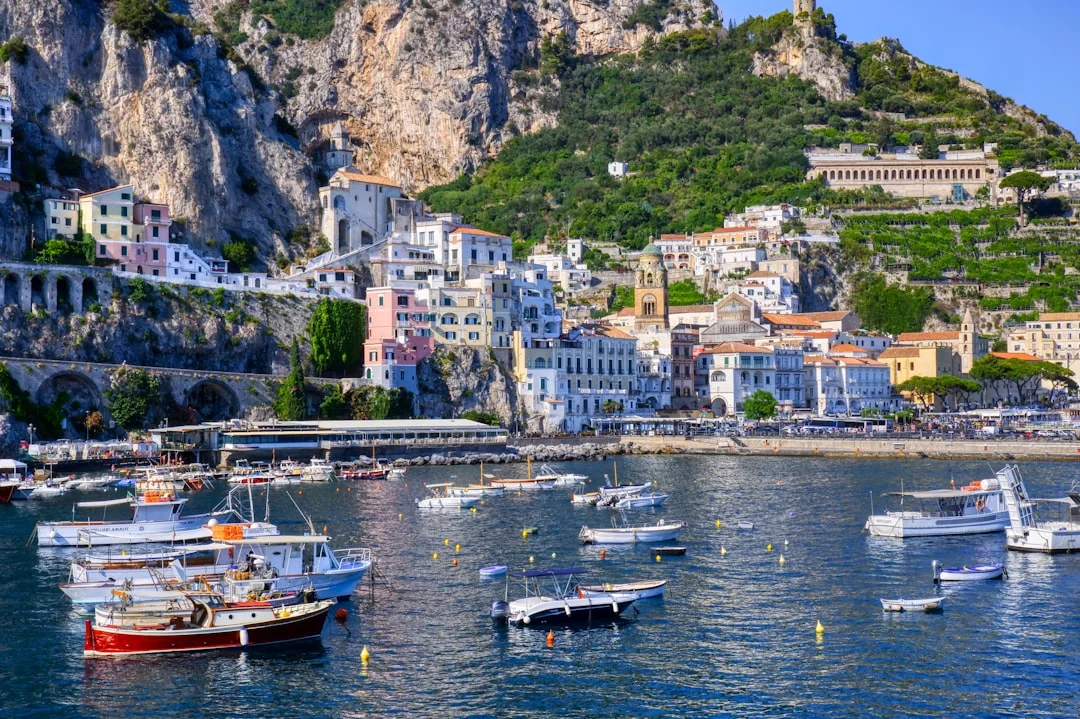
Photo by Antonio Sessa on Unsplash
Positano: Mooring Buoys vs Anchoring in an Exposed Roadstead
Why Positano gets rolly: Tyrrhenian swell + ferry wake
Positano is gorgeous, and it can also be a washing machine that charges admission. Even in “light wind,” long-period Tyrrhenian Sea swell can wrap into the roadstead, and the ferry wake schedule adds frequent, steep-sided rollers during operating hours. The result is a place where your crew says, “It’s fine,” until they try to sleep.
The key is separating forecast wind from sea state. A calm-looking afternoon can still deliver a miserable night if the swell angle lines up. If you’re planning to stay, think in terms of comfort windows: afternoon naps are easy; overnight comfort is earned.
Anchoring technique on steep bathymetry (scope + holding)
Positano’s underwater topography is the first reality check. Depth can go from 10 m to 30 m within a few boat lengths of shore, which makes last-minute anchoring stressful and expensive in chain. Use depth sounder trends, not a single number, and don’t be tempted to “sneak in” because the water looks friendly.
Scope is your lever, but room is your limiter. Typical Med practice here is 4:1–7:1 depending on conditions and swing room; at 20 m depth, 5:1 = ~100 m of rode, and 7:1 = ~140 m. That math should be done before you drop, not after your anchor skips while 20 boats watch.
Chafe and shock load are the second reality check. Use a snubber, set it early, and protect any stern line with chafe gear if you run one (where allowed/appropriate). For anchor alarms, set a radius that matches your scope and depth rather than optimism; if your rode is 100 m in 20 m with some bow height, your swing circle is large even in light air.
When to choose a buoy or divert to a marina
A paid buoy can be worth it in Positano because it reduces swing radius and simplifies the chaos. Typical Positano mooring buoys price ranges roughly €80–€250 per night depending on season and operator, and you’re paying for more than hardware—you’re buying reduced drama. But buoys don’t cancel swell; they just keep you from wandering into your neighbor.
My decision framework is blunt: if the swell period/angle suggests rolling, I either take a buoy for a short stay, or I divert. Diverting doesn’t mean defeat; it means you chose sleep and safe boarding over stubbornness. Run the numbers with a quick nautical-mile check for your Plan B harbor to see what your Plan B actually costs in time—often it’s 5–15 NM and less aggravation than a night of anchor watch.
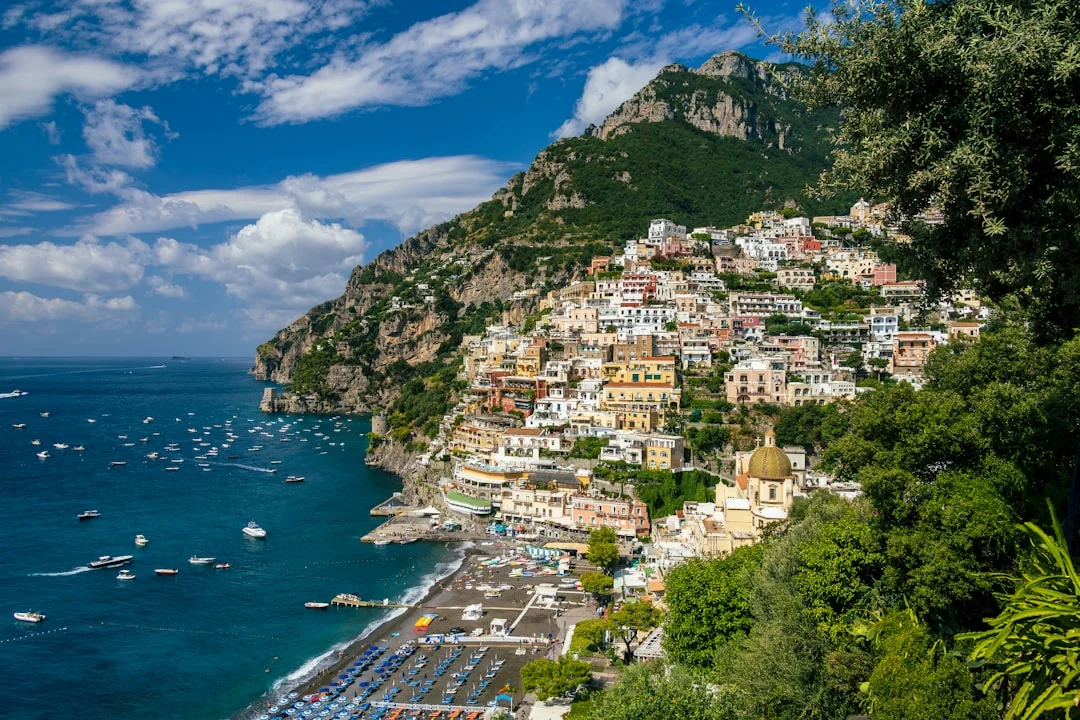
Photo by Thomas Bormans on Unsplash
Amalfi (and Nearby Alternatives): Harbor Options, Services, Day Stops
Amalfi harbor: entry considerations and what to expect
Amalfi is a practical stop when you want shore access and services, but it’s not a big, forgiving marina. Approach with paperwork ready, fenders hung, and lines prepped for crosswind surprises that show up between buildings. The harbor can be busy with tour traffic, and maneuvering space can feel smaller than the brochure implied.
Distance-wise it’s a short tactical hop from Positano: Positano → Amalfi ~5–7 NM, which is often less than an hour under power at 6–7.5 kn. That short leg is useful because it lets you depart after morning chaos and still arrive early enough to get an answer before the day boats pile in.
Alternatives for the night: Salerno and other capacity relievers
When Amalfi is full, don’t waste hours pleading on the radio. Your best pressure-relief valve is usually Salerno, about 12–15 NM from Amalfi depending on your track, and it’s a sensible place for fuel, repairs, and a calmer night. The point isn’t that Salerno is prettier; it’s that it’s reliable when the coast is saturated.
If your crew is set on “Amalfi-town-after-dinner,” then you need a reservation, not hope. In July/August the lead time reality is 2–8 weeks in the hotspots, and that’s not the marina being mean—it’s physics and demand.
Day-anchor and swim-stop etiquette on a crowded coast
Day stops are where reputations are made. Keep a conservative offing, watch your swing, and don’t drop in a spot that forces other boats to change plans at the last second. In crowded water, I treat 0.2–0.5 NM off as my default while scouting, then commit cleanly when I’ve confirmed depth and exit options.
Services matter too. Shore power is typically 230 V / 50 Hz, with 16 A common and occasional 32 A or 63 A pedestals for bigger berths. Water is often metered/charged in peak; a 40–45 ft monohull commonly carries 300–500 L, while a 50–55 ft cat might carry 700–1,000+ L, so plan fills like you plan fuel—by numbers, not by vibes.
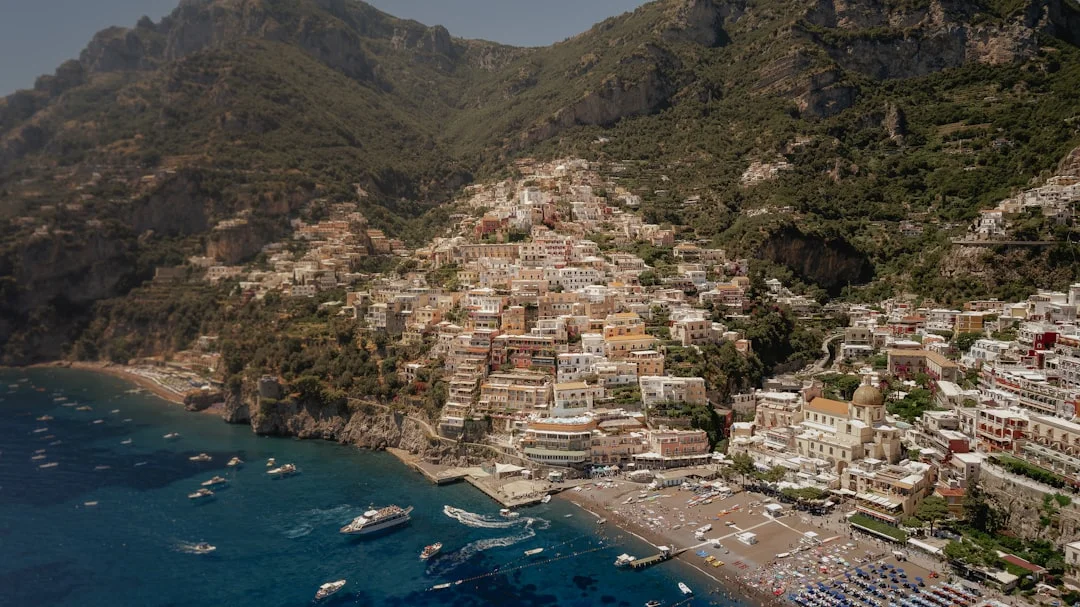
Photo by Daniel Perez on Unsplash
Rules & Comms: Capitaneria, VHF, Speed Zones, No-Discharge
Calling in: VHF procedure and what marinas request
Italian port ops are usually efficient if you sound prepared. Start on VHF Ch 16 for calling if you don’t know the working channel; identify your vessel, position, and request. You’ll be assigned a working channel or told to wait; don’t clog 16 with a full autobiography.
Have your basic vessel data ready because it affects berth allocation: LOA, beam, draft, and sometimes displacement. Marinas commonly request boat papers/registration, insurance, crew IDs, and a crew list; standards like ISO 8666 / ISO 10087 exist for principal craft data, and you’ll feel why when someone asks, “Draft?” while you’re drifting toward a breakwater.
ZTL/no-wake zones, traffic separation, and on-water etiquette
Local ordinances can establish speed limits and controlled areas—often described as a ZTL sea zone / no-wake zone—and the enforcement vibe varies by place and season. Even when enforcement is relaxed, best practice isn’t: in congested water, a “small” wake becomes a big problem when it hits tenders alongside or boats Med-moored stern-to.
The COLREGS still apply, of course (US readers will recognize the language via USCG 33 CFR 83), but the bigger safety factor here is operational: ferries move fast, turn late, and assume you’ll keep clear. Maintain a proper lookout, avoid loitering in approach lanes, and don’t test whose schedule matters more—it’s not yours.
Environmental compliance: sanitation, garbage, and protected areas
Plan for a no-discharge mindset. Across many European coastal areas, discharging untreated sewage is prohibited, and the practical reality on this coast is that pump-out can be scarce. Typical holding tanks are roughly 60–200+ L, which can disappear in a day with a full crew if you don’t manage water use.
Use your holding tank proactively, not as a last resort, and treat pump-out as a bonus rather than a promise. ABYC A-16 is a good conceptual reference for sanitation thinking—secure systems, minimize discharge risk, keep it simple—even though local Italian/EU rules govern what’s legal. Garbage is similar: bag it, retain it, and don’t assume there’s dockside disposal exactly when you want it.
Photo by Kyle Cesmat on Unsplash
Costs & Reservations: Berths, Buoys, Fuel, Landing, Budget
How pricing scales by LOA and why availability drives decisions
On the Amalfi Coast, length overall is a pricing multiplier and a berth-access multiplier. In high season, a 12–14 m boat often has more “maybe” options, while 15–17 m and 18 m boats get forced into fewer slots and more expensive docks. Availability drives cost as much as the published tariff, especially in Capri/Positano/Amalfi.
A realistic Capri–Positano–Amalfi 2–3 day spend model
Below are typical high-season ranges you should budget for, with the usual caveat: the exact number depends on operator, dates, and how desperately you want that particular sunset. This is where “free anchoring” can be the expensive choice if it costs you sleep, dinghy fees, or a weather diversion.
| Item (high season) | 12–14 m (40–45 ft) | 15–17 m (50–55 ft) | 18 m+ |
|---|---|---|---|
| Transient marina berth (hotspots) | €180–€450 / night | €350–€900+ / night | €450–€1,200+ / night |
| Paid mooring buoy | €80–€250 / night | €120–€300 / night | €150–€400 / night |
| Tender/landing fees | €10–€40 per landing | €10–€40 per landing | €10–€40 per landing |
| Tender service (all day) | €30–€80 / day | €30–€80 / day | €30–€80 / day |
| Diesel (marina fuel dock) | €1.70–€2.40 / L | €1.70–€2.40 / L | €1.70–€2.40 / L |
| Pump-out (where offered) | €20–€80 | €20–€80 | €20–€80 |
| Water (if charged) | €5–€20 small fill or €0.50–€2.00/m³ | same | same |
Booking workflow: when to reserve and what details matter
In July/August, reserve 2–8 weeks ahead for Capri/Positano/Amalfi if you want certainty. When you ask, lead with dates, ETA window, LOA/beam/draft, and whether you need power (16 A vs 32 A); vague requests get vague answers. If you can accept an alternate (buoy instead of berth, or Salerno instead of Amalfi), say it up front—it increases your hit rate.
Fueling is where tight docks punish sloppy habits. ABYC H-33 is the conceptual gold standard for diesel safety: prevent spills, control ignition sources, and keep absorbent pads ready. On this coast, the “extra” cost is often a deckhand assist or a second line handler—cheap compared to a gelcoat scrape and an argument with the harbor office.
Technical & Safety Checklist for Charter Yachts on the Coast
Ground tackle for deep anchorages: chain length, snubbers, alarms
Before leaving the dock, confirm you have enough rode for 15–25 m reality, not brochure anchoring. For many charter boats, 60–100 m of chain/rode is common, and it disappears fast when 20 m × 5:1 = 100 m. Check the bitter end is secured, the windlass breaker works, and the remote/foot switches aren’t held together by wishful thinking.
Carry at least 2 stern lines of 30–60 m if your charter base provides them, and bring chafe gear or improvise with hose and tape. Set an anchor alarm that reflects your swing radius, not your courage, and allow for the boat sailing back under gusts and ferry wash. If you can’t anchor with room for your full circle, that’s not “cozy”—it’s a warning.
Shore power (230V/50Hz): adapters, amperage limits, galvanic basics
Italian shore power is typically 230 V / 50 Hz, and the current limit is what bites crews. 16 A ≈ 3.7 kW, 32 A ≈ 7.4 kW, 63 A ≈ 14.5 kW, and that math determines whether you can run air-con plus water heater plus battery charger without tripping. ABYC E-11 is a solid reference mindset: proper connectors, load management, and avoiding sketchy adapter stacks.
Common Italy pitfalls: overheated adapters, loose-fit plugs, and “one more appliance” tipping a 16 A breaker. If you smell warm plastic, you’re already late. Run high loads one at a time, and keep cable connections dry and strain-relieved.
Systems checks before departure: bilge, seacocks, fire, sanitation
Do a 30–45 minute systems walk-through that focuses on what fails in tight quarters. Check bilge pumps, float switches, and alarms; then locate and exercise key seacocks—ABYC H-27 is the conceptual reference here, and it exists because thru-hull failures are not theoretical. Verify VHF works, the handheld is charged, and the nav lights and horn function before you need them near a harbor entrance at dusk.
For fire readiness, think ISO 9094 concepts: accessible extinguishers and a clear plan. Confirm each person has a PFD (baseline 1 per person) and know where flares/VDS live; USCG carriage rules are a decent reference for what “complete” looks like, even though Italy/EU requirements apply locally. For sanitation, assume pump-out may be unavailable and operate the holding tank accordingly—ABYC A-16 thinking keeps you honest.
When to Go: Weather Windows, Swell Patterns, and Contingency Ports
Seasonal planning: comfort vs crowds vs cost
You’re balancing three knobs: comfort, crowds, and cost. Peak season delivers long days and warm water, but it also delivers 2–8 week booking lead times in the hotspots and a lot of wake-driven fatigue. Shoulder season can be calmer operationally and cheaper, but you need to respect changing weather patterns and reduced services.
Here’s the planning reality I’ve seen hold up year after year:
| Season window | Crowding | Berth availability | Typical booking lead time | Anchorage comfort probability |
|---|---|---|---|---|
| May–Jun (shoulder) | Medium | Better | 0–3 weeks | Medium–High |
| Jul–Aug (peak) | Very High | Limited | 2–8 weeks | Low–Medium (wake-heavy) |
| Sep (late shoulder) | Medium | Improving | 1–4 weeks | Medium–High |
Swell and wind: why ‘light wind’ can still mean a rough night
The Amalfi Coast teaches this lesson fast: wind speed isn’t the whole story. A light local breeze can coexist with a long-period swell that wraps into roadsteads like Positano, making the boat roll even when the anemometer looks friendly. If the swell direction lines up with an open roadstead, your night can be rough without any “bad weather” in the forecast.
Plan with sea state in mind and keep your bailout options short. The good news is the legs are small; 5–15 NM can move you from misery to a protected harbor quickly if you decide early enough.
Contingency planning: decision triggers and alternate stops
Set simple triggers you’ll actually follow. Examples: “If we don’t have a confirmed Capri plan by 1100, we continue,” or “If swell is building and we’re still hunting at 1600, we divert to Salerno.” With average 6–7.5 kn speeds, a 12–15 NM diversion is usually 2:00 to 1:36—in other words, cheaper than pretending you can force Positano to be comfortable.
Use the voyage-distance figure to estimate fuel needs and arrival timing to keep those contingencies honest, especially when you’re tired and tempted to round down the miles. If your Plan B is only 12 NM away, deciding early is the difference between a controlled arrival and a late-night squeeze into unfamiliar water.
Frequently Asked Questions
For a 12–14 m monohull anchoring in 20 m off Positano, what rode length do you need at 5:1 vs 7:1, and how should you set your anchor-alarm radius to match?
At 20 m depth, 5:1 scope is about 100 m of rode, and 7:1 scope is about 140 m of rode (before you add a little for bow height). For anchor-alarm radius, use a practical swing-circle number rather than a tiny “drag alert”: a common approach is setting roughly the rode paid out minus a small allowance for bow-to-anchor geometry, then adding a safety buffer. If you laid 100 m, an alarm radius in the 70–90 m ballpark is often more realistic than 30 m, assuming adequate clearance.
What is the recommended VHF calling sequence to contact an Italian marina/harbor office (initial call on Ch 16, switch to working channel), and what vessel data (LOA/beam/draft) is typically requested for berth allocation?
Call on VHF Ch 16: “Marina/Port of __, Marina/Port of __, this is sailing vessel __, over.” They’ll either answer and assign a working channel or ask you to stand by; then immediately switch and repeat your request briefly. Be ready with LOA, beam, draft, ETA, number of persons onboard, and whether you need shore power (16 A vs 32 A); marinas also commonly request papers/insurance and crew IDs at check-in.
How do 230 V / 50 Hz shore-power limits at 16 A vs 32 A pedestals change what you can run onboard (air-con, water heater, battery charger), and what adapter/connector pitfalls are common in Italy?
At 230 V, 16 A ≈ 3.7 kW and 32 A ≈ 7.4 kW, so 16 A often can’t support simultaneous high loads like air-con plus water heater plus cooking appliances without tripping. With 32 A you can run more concurrently, but you still need to manage peaks. Common pitfalls are loose adapters, overheated connectors, and stacking adapters that create resistance; if a plug feels hot, reduce load and fix the connection before it fails.
In Capri Marina Grande, what tender-landing constraints should you plan for during peak day-trip hours, and how do per-landing fees typically compare with an all-day tender service?
Plan for restricted tender tie-up during peak day-trip hours, with authorized docks and controlled access that can change day to day. Fees commonly run €10–€40 per landing, while an all-day service may be €30–€80/day, depending on operator and season. If you’ll go ashore more than once, the day rate can be cheaper and less hassle than paying per touch.
What sanitation plan is realistic on the Amalfi Coast if pump-out is limited—given 60–200+ L holding tanks—and what are best-practice steps to minimize discharge risk while still staying comfortable?
Assume pump-out may be unavailable for days and manage your 60–200+ L holding tank accordingly: use shore toilets when docked, limit unnecessary flushing, and keep freshwater use disciplined to reduce tank fill rate. Keep the system configured to retain waste (and secure any discharge options), monitor tank level daily, and plan a marina stop where pump-out is known to exist rather than “maybe offered.” Comfort comes from routine: brief the crew once, keep it simple, and you’ll avoid both overflows and bad decisions.
About the Author
Related Articles
Dry Tortugas Sailing: Routes, Anchoring & Permits
Plan Dry Tortugas sailing from Key West with routes, weather windows, anchoring/moorings, and permits. Read the guide and plan your trip.
By Breezada Team
Sailing Galapagos Islands: Permits, Costs & Rules
Understand sailing Galapagos Islands permits, costs, and rules—plus clear-in steps, routes, and biosecurity. Plan your yacht trip now.
By Breezada Team
La Maddalena Sailing Itinerary: Quiet 7-Day Sardinia
Plan a La Maddalena sailing itinerary for a quiet 7-day Sardinia escape—routes, anchorages, rules and costs. Get the full day-by-day plan.
By Breezada Team
Amalfi Coast Sailing Itinerary: Naples to Salerno Guide
Plan an Amalfi Coast sailing itinerary from Naples to Salerno with 7–10 day routes, anchorages, moorings & costs. Get the full plan now.
By Breezada Team