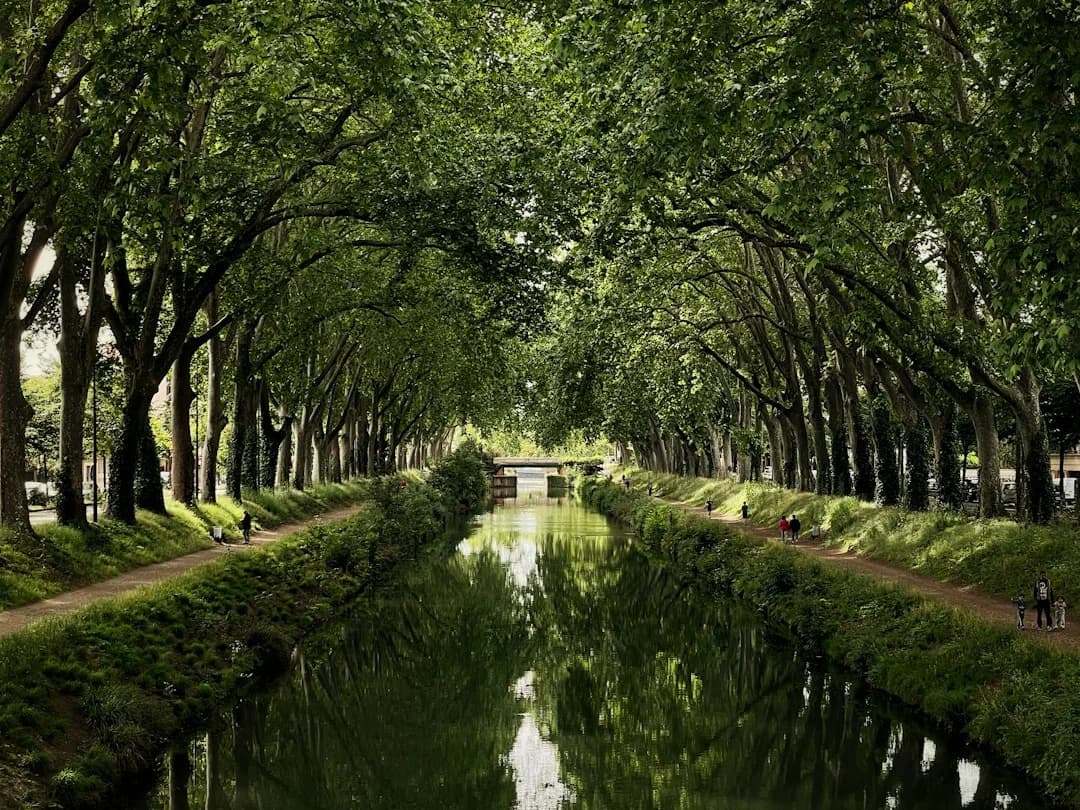
French Canals Boat Trip Guide Beyond Canal du Midi
Meta description: Plan a French canals boat trip with clear costs, routes, licenses, and lock skills. Compare top Canal du Midi alternatives and build your itinerary—start now.
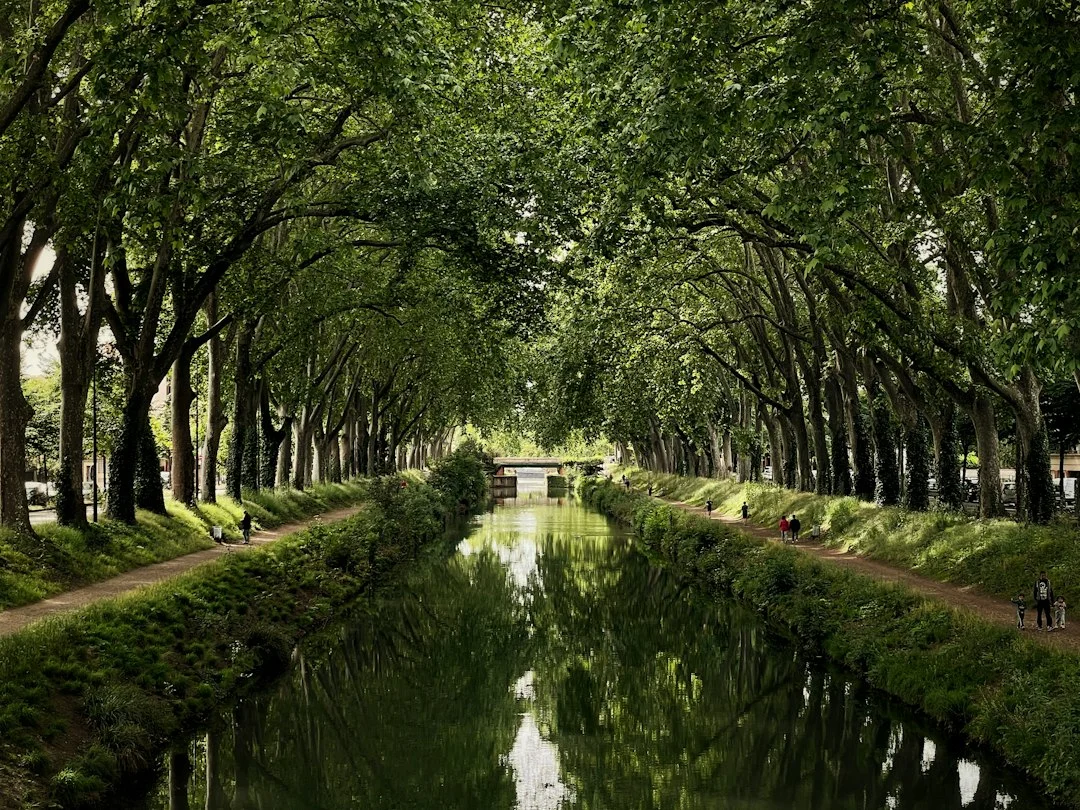
Photo by Nicolas Gaborit on Unsplash
French canal cruising: why look beyond the Midi
A french canals boat trip isn’t a “how far can we go today?” kind of holiday. It’s a “how many locks, what hours, and where do we sleep?” kind of holiday. With posted speeds commonly around 6 km/h (sometimes up to 8 km/h on certain reaches), your day is shaped more by lock cycles than by distance.
The Canal du Midi feels “busy” because it is busy, especially in peak summer changeover weeks. You’ll see lock queues, competition for town moorings, and that slightly desperate late-afternoon docking ballet where everyone suddenly becomes a professional parallel parker. Add Midi’s smaller lock length—often cited around 30 m × 5.2 m—and you get tighter chambers, tighter maneuvering margins, and fewer “we’ll just squeeze one more boat in” solutions.
France, however, isn’t “the Midi plus a few side canals.” The national inland network is commonly cited at roughly 8,500 km of navigable waterways: purpose-built canals plus canalized rivers that behave like rivers when they feel like it. Much of that network follows the historic Freycinet standard: barges around 38.5 m × 5.05 m, with many lock chambers about 39 m × 5.2 m. That extra lock length compared with the Midi often means easier rafting-up, less drama in the chamber, and more hire-boat options.
You’ll also want the local vocabulary because it’s the difference between looking competent and staring at a sign like it’s modern art. VNF (Voies Navigables de France) is the authority you’ll check for notices and restrictions; a halte fluviale is a mooring stop (sometimes free, sometimes €10–€30/night in towns); a péniche is a barge-style boat; and PK markers (point kilométrique) are the shared reference for “we’re here” when reporting an issue or finding a stop. A typical day feels like: 4–6 hours underway, 6–15 locks depending on the stretch, one serious provisioning stop every 2–3 days, and a daily decision about whether you want quiet countryside or a quay wall beside an excellent bakery.
Licenses, VNF rules, and what “sans permis” means
VNF: notices, restrictions, and right-of-way on canals
Most holiday hire boats in France are designed for “sans permis” operation, but that doesn’t mean “no rules” or “no responsibility.” VNF publishes official navigation notices called Avis à la Batellerie, which cover lock operating hours, temporary closures, drought restrictions, and maintenance stoppages. Before you commit to a route, check notices for your canal and date range, because a single closure at PK X can turn your neat loop into an expensive backtrack.
Right-of-way inland is more structured than at sea, and local signage matters. Bridges, narrow cuts, and lock approaches often have posted priorities, and VNF (plus local prefectural rules in some areas) sets the operating framework. The practical takeaway: you don’t “wing it” based on what the last boat did, especially on busy lock flights where etiquette keeps fiberglass intact.
Charter briefings, skipper liability, and required onboard documents
“Sana permis” really means the operator will train you to their satisfaction at handover, and then you’re on the hook for what you hit. Expect a security deposit typically around €1,500–€3,500, and many companies offer an excess reduction/damage waiver in the €100–€250/week range. Bring government ID, the contract paperwork, and a credit card that can actually handle a large preauthorization—more trips die at the check-in counter than at the locks.
Onboard documents vary by operator, but you’ll generally have a boat manual, emergency numbers, and local navigation notes. If you’re the one steering, treat the briefing like a practical exam: slow-speed handling, stopping distance, reverse control, and how the boat behaves in prop wash. Inland hire craft are optimized for sheltered waters, and you’ll see CE/RCD context in the paperwork; as a quality framing reference (not legal advice), standards like ISO 12217 (stability) explain why these boats are stable platforms at 6 km/h but not meant for rough open water improvisation.
Navigation basics for first-timers: speed, wash, and close-quarters handling
Speed limits—often ~6 km/h—are about wash and bank erosion, not about spoiling your fun. If your stern is digging a trench and the bow wave is slapping moored boats, you’re too fast even if the GPS says you’re within limits. Handling in canals is a close-quarters game: you’ll meet boats in narrow reaches, you’ll pass fishermen with lines that appear from nowhere, and you’ll approach lock mouths where wind funnels and eddies can shove you sideways at exactly the wrong moment.
Learn to use PK markers early. They’re how VNF, the charter base, and other crews reference closures, moorings, water points, and incidents without guessing which village you meant. When in doubt, slow down, get a line ready, and remember: nobody awards trophies for docking fast.
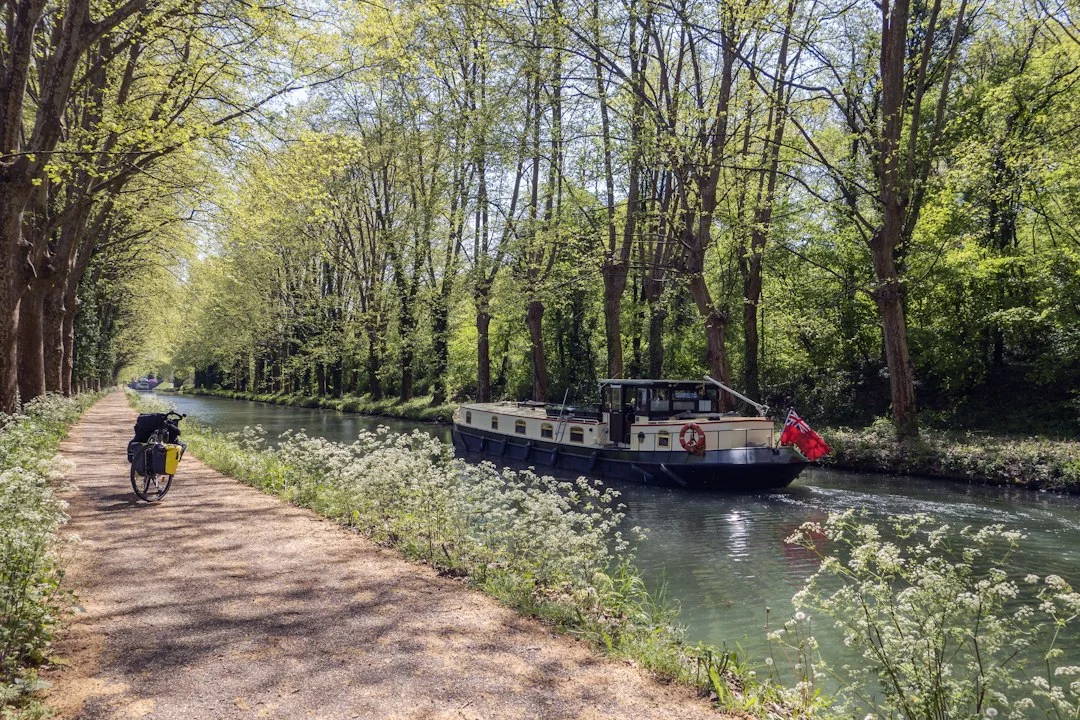
Photo by snap wander on Unsplash
France canal boat rental cost: real budgets for 3–14 nights
Hire price ranges by boat size and season
France canal boat rental cost starts with the hire fee, and weekly pricing dominates even if you cruise fewer days. That’s not greed so much as logistics: cleaning, maintenance, and changeover schedules are built around 7-night blocks. Typical ranges: €1,200–€3,000/week for 2–4 berths in shoulder vs peak weeks, and €2,500–€6,500+/week for 6–10 berths, especially in school-holiday periods.
If you’re looking at 3–4 nights, do the math carefully. Some operators offer short breaks, but the nightly rate is often higher than a pro-rated week, and availability can be limited. For 14 nights, you’ll sometimes see better value per night, but you’ll spend more on moorings, bikes, and restaurant “research.”
Operating costs: fuel, moorings, power/water, bikes, provisioning
Fuel surprises people because it’s driven by engine hours, not kilometers. A displacement hire boat typically burns around 3–8 L/hour, and budgeting €1.70–€2.20/L keeps you in the safe zone. To get from “rough guess” to a number you can budget, check the nautical miles for your planned route (or the equivalent route length between key stops) and then translate that into expected engine hours at canal speeds, adding a margin for lock waiting and maneuvering. A typical week might land around €150–€500 in fuel depending on boat size, idling time at locks, and how aggressively you chase “just one more village.”
Moorings can be free in rural spots, but in popular towns a halte fluviale for a 9–12 m boat is often €10–€30/night, sometimes including water and shore power. Where it’s not included, expect add-ons around €0–€10/night. Bikes are the quiet budget creeper: €35–€70/week per bike, and you’ll want at least two if you plan to enjoy towpaths properly.
Deposits, insurance waivers, and common extras that change the total
Your deposit is refundable, but it affects your cashflow and your stress level. Excess reduction at €100–€250/week can be worth it if you’re new to locks, because gelcoat repairs are priced like jewelry. One-way cruises, when offered, often carry a relocation surcharge of €150–€600, and they change your itinerary math because you’re not retracing the same lock-heavy day twice.
Here’s a realistic all-in budget model for 7 nights, with assumptions you can tweak. I’ve split 2–4 berths and 6–10 berths, because “large boat” is where costs climb fast.
| Budget level (7 nights) | Boat size | Hire fee | Fuel (typical week) | Moorings (mix of free + paid) | Bikes | Provisioning (2 adults) | Waiver | One-way surcharge (if used) | Estimated all-in total |
|---|---|---|---|---|---|---|---|---|---|
| Low | 2–4 berths | €1,200 | €150 | €50 | €70 | €120 | €0 | €0 | €1,590 |
| Medium | 2–4 berths | €2,200 | €250 | €120 | €140 | €180 | €150 | €0 | €3,040 |
| High | 2–4 berths | €3,000 | €400 | €210 | €280 | €250 | €250 | €300 | €4,690 |
| Low | 6–10 berths | €2,500 | €250 | €80 | €140 | €200 | €0 | €0 | €3,170 |
| Medium | 6–10 berths | €4,200 | €350 | €180 | €280 | €350 | €200 | €300 | €5,860 |
| High | 6–10 berths | €6,500 | €500 | €300 | €420 | €500 | €250 | €600 | €9,070 |
Practical tip: If you want the biggest savings without “roughing it,” target shoulder season, plan 4–6 hours/day underway, and choose routes with fewer paid city nights. Your wallet hates panic-mooring.
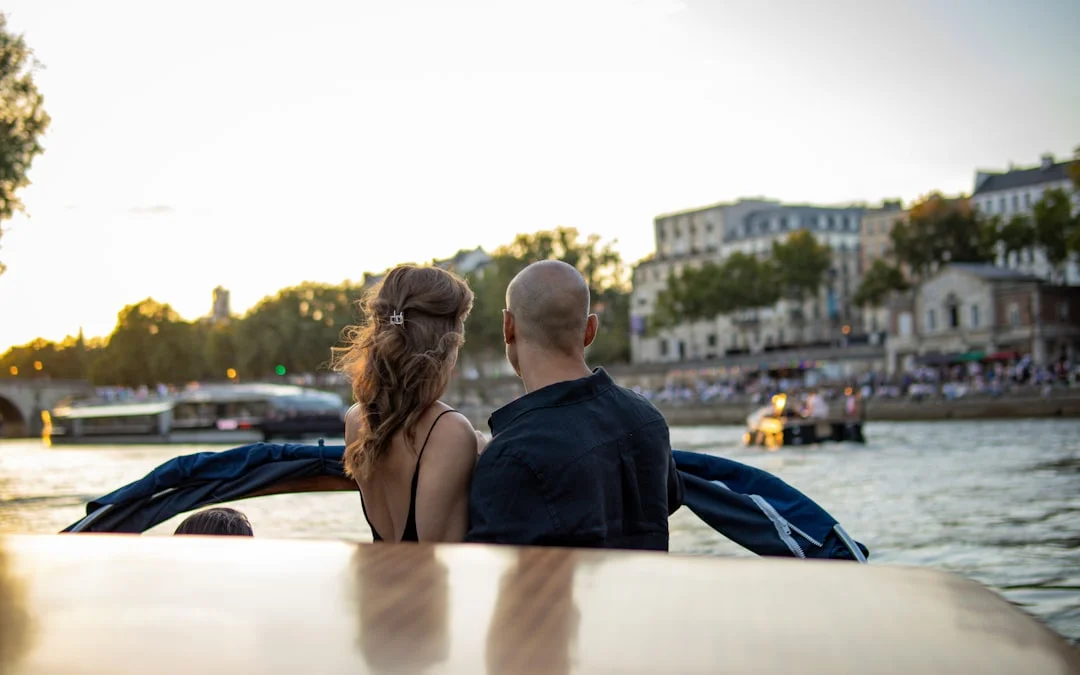
Photo by Bruno Ngarukiye on Unsplash
Route planning with numbers: km/day, locks/day, and timing
The ‘route math’ method: speed limits + hours + lock cycle time
If you take only one skill into French waterways route planning, make it this: build days from time, not distance. Start with a realistic cruise block of 4–6 hours/day at 6–8 km/h, which gives a raw range of roughly 25–45 km/day before locks. Then subtract lock time: on keeper-operated canals, budget 15–25 minutes per lock, and add more for self-service learning curves or queues.
A quick planning formula that works in the real world:
Daily time = cruising time + (locks × 0.25–0.4 hr) + buffer (0.5–1 hr).
That buffer is what keeps you from arriving at a full quay at 19:30, hot, hungry, and suddenly very interested in marital counseling.
Lock-driven days in Burgundy/Nivernais vs longer river reaches
On lock-heavy stretches like Burgundy/Nivernais, 6–15 locks/day is common depending on the reach and whether you hit flights. That’s why 25 km can be harder than 45 km on a river reach with long pounds and fewer stops. Also, lock queues are lumpy: you can lose 45 minutes at one popular flight and then run clear for two hours.
Two sample day-plans to calibrate expectations:
- Plan A: 32 km + 6 locks. Cruising at 6.5 km/h for
5 hours plus 6 × 20 minutes (2 hours) gives ~7 hours total with a buffer, so you’ll want an early start and a mooring target by mid-afternoon. - Plan B: 18 km + 14 locks. Cruising
3 hours plus 14 × 20 minutes (4.5 hours) is still a full day, and it feels busier because the crew is constantly working lines and fenders.
Tools and data: French waterways route planner, PKs, and VNF updates
Use digital tools, but don’t worship them. A French waterways route planner (or a chart app with PK references) is excellent for estimating kilometers and identifying haltes, tunnels, and service points. Then verify the operational reality with VNF Avis à la Batellerie, because closures and reduced hours can change week to week.
For “distance thinking,” plan your route using a distance-between-ports tool can still help when you’re stitching a trip together—especially if you’re comparing travel legs by car/train to different bases, or estimating repositioning mileage for a one-way charter. I also use Breezada’s sea distance calculator mindset for fuel planning: translate “distance” into “time under power,” then add a delay margin for chokepoints like lock flights and city bridges.
The conservative itinerary trick is simple: pick a firm turnaround point for each day by 15:30–16:30, and treat anything beyond that as “bonus miles.” You’ll enjoy the trip more, and you’ll stop scraping gelcoat off lock walls like parmesan.
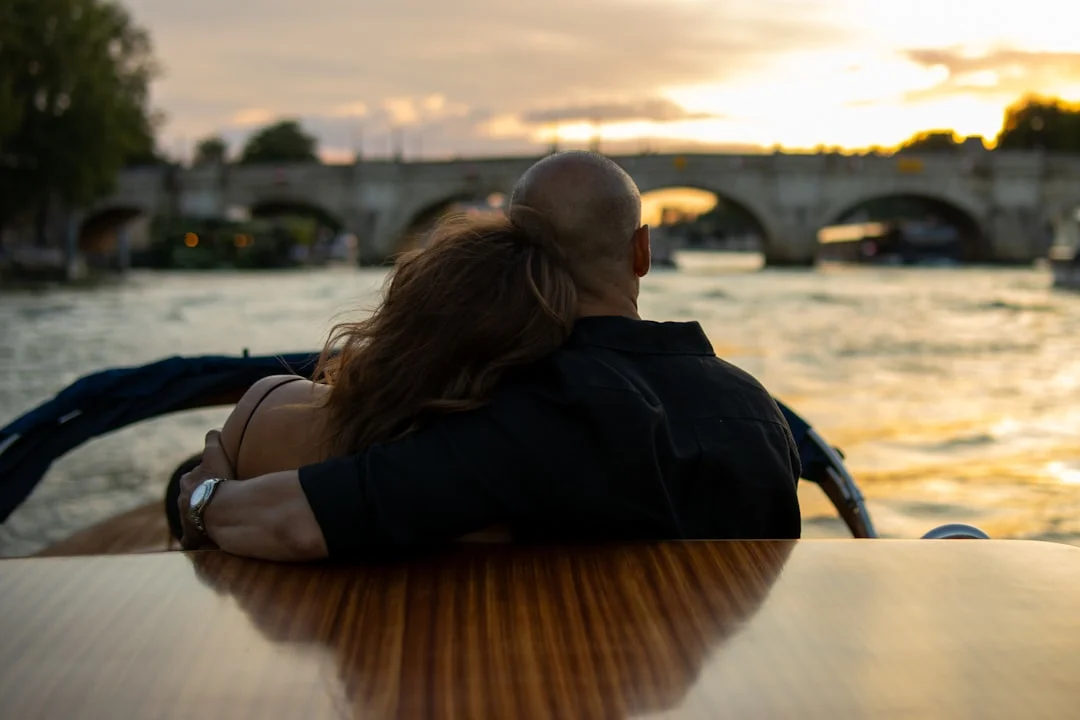
Photo by Bruno Ngarukiye on Unsplash
Best Canal du Midi alternatives: Burgundy, Nivernais, Alsace
Canal de Bourgogne boating: classic villages, lock flights, wine stops
If you want the postcard France you imagined—stone villages, vineyards, and towpaths built for cycling—Canal de Bourgogne boating delivers. The trade is lock workload: flights can stack your day quickly, and 6–15 locks/day isn’t unusual on certain stretches. Lock chambers on many routes align with Freycinet dimensions of about 39 m × 5.2 m, which makes life easier for 9–15 m hire boats, especially when rafting.
Operational hotspot: popular flights can bunch traffic late morning and mid-afternoon. If you want quiet, stop at a village halte fluviale rather than pushing for the “big name” town where moorings fill early. Plan provisioning every 2–3 days, because small villages can be charming and still have exactly one shop that closes when you arrive.
Canal du Nivernais itinerary: dramatic cuttings, tunnels, and quieter moorings
A Canal du Nivernais itinerary is my go-to suggestion for crews who want scenery without the Midi crowds. You get dramatic rock cuttings, tidy lock cottages, and long peaceful reaches where the only queue is a line of ducks judging your boat-handling. You’ll still work for it: lock days can be intensive, and self-service stretches demand a crew that can step ashore confidently.
This is where “distance” lies to you. A day with 18–25 km can feel bigger than 40 km elsewhere because you’re constantly approaching, securing, rising, exiting, and resetting lines. The upside is mooring: you’ll often find quieter stops, and paid town haltes at €10–€30/night feel like good value when the alternative is an empty bank and a mosquito committee meeting.
Canal de la Marne au Rhin cruise: engineering, cities, and long cruising days
A Canal de la Marne au Rhin cruise suits crews who like making miles and mixing countryside with proper cities. Compared with lock-staircase routes, you’ll often get longer pounds and more consistent cruising blocks at 6–8 km/h. That can translate into those satisfying 35–45 km days—assuming bridges, locks, and operating hours cooperate.
City moorings are the choke point here. Strasbourg-region and larger towns can fill early in peak weeks, so arrive before 16:00 if you want a clean landing and shore power. If you must arrive late, have a Plan B halte in your pocket, and know the PK for it so the crew isn’t debating options while the helm is trying not to hit someone’s transom.
Alsace canal boat holiday: Strasbourg region logistics and cultural highlights
An Alsace canal boat holiday is logistically easy: good transport links, strong provisioning options, and plenty of “non-boat” attractions when someone wants a day ashore. It’s also a region where air draft planning matters, because bridges and canopies have ended many bimini careers. Typical hire boats have canopy-down air draft around 2.2–2.8 m, but antennas and folded screens can push you over the wrong side of a clearance board.
Alsace is also a good choice for mixed crews. Cyclists get excellent paths, food-focused crews get very few bad meals, and cautious helms get generally straightforward water—provided they respect low-speed control near lock mouths. If you’re planning base-to-base logistics, calculate the distance between ports is handy for comparing transfer distances between airports/train stations and hire bases, which affects your first and last day more than people admit.
Here’s a practical comparison to choose a Canal du Midi alternative without hand-waving.
| Region / canal | Typical lock intensity | Best trip length | Provisioning frequency | Crowd level notes |
|---|---|---|---|---|
| Canal de Bourgogne | High on flight days (often 6–15 locks/day) | 7–14 nights | Every 2–3 days | Town moorings can fill early in summer; flights create queues |
| Canal du Nivernais | Medium–high (lock work is steady) | 7–14 nights | Every 2–3 days | Generally quieter than Midi; more “space to breathe” at haltes |
| Marne au Rhin | Medium (often longer cruising reaches) | 3–7–14 nights | Every 1–2 days near towns | City stops can be busy; countryside reaches feel open |
| Alsace (Strasbourg area routes) | Low–medium | 3–7 nights | Often daily if desired | Popular around Strasbourg; arrive early for serviced moorings |
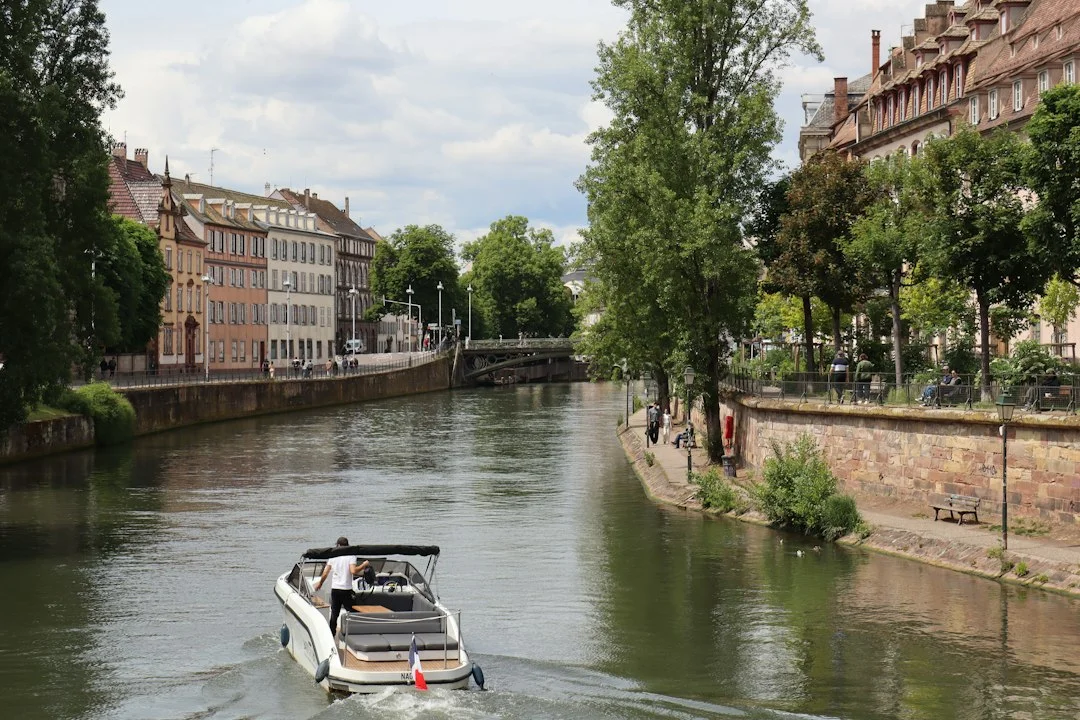
Photo by Christos Paraforos on Unsplash
French canal locks: how they work and how to pass safely
Keeper-operated vs self-service locks (éclusier vs automated)
French canal locks are straightforward once you accept that they run on procedure, not improvisation. On many canals you’ll deal with a lock keeper—éclusier—who controls the cycle and will signal where to wait and when to enter. Budget 15–25 minutes/lock on keeper-operated sections, then add queue time in peak weeks, because ten boats arriving together do not make the lock go faster.
Self-service or automated locks vary by region and can add time while you learn the controls and choreography. The risk isn’t complexity; it’s complacency. A gentle nudge at 6 km/h still leaves a mark when concrete is involved.
Step-by-step locking: approach, lines, fenders, and exit
Approach at dead slow, with the boat set up early: fenders down, lines ready, crew briefed. In Freycinet-sized chambers around 39 m × 5.2 m, hire boats often raft or share the chamber, so be prepared to come alongside another boat and pass a line if asked. On the Midi’s tighter ~30 m lock length, the “fit” can feel more precise, so keep your speed minimal and your bow centered.
Inside the lock, use multiple fenders low, especially at likely contact points where the wall isn’t kind. Assign roles: helm maintains position with small throttle and neutral, bow and stern crew handle lines, and one person watches for snags. Exit only when signaled, and don’t power out like you’re late for a ferry; prop wash is a great way to make enemies and erode banks.
Etiquette and common errors that cause damage or delays
The big three mistakes: entering too fast, leaving lines tied hard, and ignoring instructions. Lines should be tended, not belayed like you’re alongside a dock for the night, because water level changes create snatch loads. If you’re on floating bollards, you generally tend the line with minimal adjustment; on fixed bollards or ladders, you may need to ease and take in as the boat rises or falls.
Queues are managed with patience and preparation. Have fenders down before you arrive, keep the boat controlled in wind gusts near the mouth, and don’t crowd the gate where maneuvering space is limited. If you do bump something, be honest and note the PK; everyone will ask anyway, and it’s faster to handle cleanly.
Practical tip: In locks, “slow is pro.” At idle + brief bursts, you’ll keep control without building momentum that you can’t stop in 10 meters.
Photo by Xuan Nguyen on Unsplash
Boat choice and technical constraints on French waterways
Dimensions that matter: LOA, beam, draft, and air draft
Pick the route first, then the boat, not the other way around. Typical hire boats fall around 9–15 m LOA and 2.8–4.1 m beam, which works well on much of the Freycinet network with chambers around 39 m × 5.2 m. But length still matters in practice: lock landings, swing bridges, and marina fairways can make a “fits on paper” boat feel oversized.
Draft is usually forgiving on canals, but don’t assume it’s irrelevant. Many hire models sit around 0.7–1.1 m draft depending on design and load, and shallow edges punish wandering helms. Air draft is the quiet trip-killer: many boats are around 2.2–2.8 m canopy-down, but antennas, folded canopies, and anything mounted “temporarily” can exceed clearance boards.
Systems that affect your itinerary: water, black water, and shore power
Water and waste systems change where you can overnight comfortably. Freshwater tanks on hire boats are often a few hundred liters, which sounds like plenty until everyone discovers the joy of long showers after lock days. Pump-out / black water station availability varies a lot by region, so plan around known stations rather than hoping the next town will have one.
Shore power is usually 230V AC in France, but pedestal amperage varies. A low-amperage hookup will not run every appliance at once, and it certainly won’t reward you for trying. Bring or confirm proper cables and adapters, and treat the dockside power like a limited resource, not a dare.
Verifying documentation and safety fit-out (CE/ISO context)
When you board, confirm what’s actually onboard: lifejackets, boat hook, mooring lines, windlass handle (if relevant), first-aid kit, and fire extinguishers. Many hire boats are CE-marked under the EU RCD framework; as quality signals, standards like ISO 9094 (fire protection) and ISO 10133/13297 (DC/AC electrical) are useful context for what “good practice” looks like. If you’re used to ABYC-style thinking, ABYC E-11 concepts help you sanity-check shore power habits, even though it’s not French law.
Ask the base specific questions: canopy-down air draft in meters, prop type (some handle reverse better than others), and whether bow thrusters are fitted. Thrusters help in crosswinds, but they don’t fix poor planning or high-speed approaches, and they certainly don’t impress lock walls.
Mooring, services, and safety: operating like a local
Where you can stop: halte fluviale, quay walls, and rural moorings
Most evenings come down to three options: a town halte fluviale, a marina berth, or a rural bank. Rural moorings are often free and quiet, but you’ll trade away shore power and easy provisioning. Town haltes typically run €10–€30/night for a 9–12 m boat, sometimes including water and electric; where they’re separate, expect €0–€10/night add-ons.
Arrive early in popular places. By 16:00 in peak season, the best spots can be gone, and you’ll end up stern-to in a tight corner or rafting with someone who runs a diesel generator like it’s a hobby. If you want quiet sleep, choose one “destination town” every few nights and spend the other nights in villages or countryside.
Heat, storms, and seasonal water restrictions
Summer heat is real on canals because there’s little wind relief and a lot of reflected sun. Plan lock work for earlier hours, carry more drinking water than you think you need, and don’t treat midday as the time for heroic distances. Shoulder seasons can be brilliant, but closures and reduced hours become more common, so check VNF lock operating hours and notices daily when you’re close to the margins.
Drought restrictions can change operations fast: limited lockages, reduced hours, or temporary stoppages to conserve water. Your best defense is flexibility—shorter daily goals and an itinerary that doesn’t collapse if you lose half a day. Again, PK-based planning helps, because restrictions are often described by reach and PK.
Crew safety and onboard best practices for hire boats
The most common injuries aren’t dramatic; they’re slips, finger pinches, and line burns. Wear shoes with grip, keep hands away from pinch points, and don’t jump ashore like you’re stepping onto a stable dock at sea. Onboard, treat carbon monoxide and fire risk seriously: keep ventilation sensible, know where extinguishers are, and be cautious with engine spaces, aligning your habits with the intent behind standards like ISO 9094.
For shore power, think like an electrician even if you aren’t one. Keep connectors dry, avoid overloaded adapters, and don’t run high-load appliances on unknown low-amperage pedestals. ABYC E-11-style best practice is a good mindset: proper circuit protection, clean connections, and no improvisation with household power strips in damp cockpits.
Practical tip: Your safest docking tool is patience. Come in slow enough that you can stop with reverse, not with a crew member’s shoulders.
Frequently Asked Questions
On a Freycinet-gauge canal (≈39 m × ≈5.2 m lock chamber), what maximum LOA and beam should you assume for a hire boat once you account for rafting-up and fender clearance?
For typical leisure cruising, assume a hire boat in the ~9–15 m LOA and ~2.8–4.1 m beam range will work comfortably in most Freycinet-sized chambers (~39 m × ~5.2 m). In practice, rafting-up and fenders mean you want margin, not theoretical maximums, so avoid pushing toward the longest models if your route has tight landings, busy flights, or frequent shared lockages.
How do VNF lock operating hours change on specific canal sections, and where in Avis à la Batellerie can you confirm reduced hours, stoppages, or drought-related closures by PK?
Operating hours can change by canal, by season, and temporarily due to maintenance or drought measures, including reduced daily lockage windows or full stoppages. Confirm the latest details on VNF’s Avis à la Batellerie for your waterway, where notices typically specify the affected reach using PK (point kilométrique) ranges, dates, and operational instructions.
For a 7-night cruise, how do you calculate fuel budget from engine hours using ≈3–8 L/hour and €1.70–€2.20/L, and what itinerary choices most change total liters burned?
Estimate engine hours first, usually 4–6 hours/day for 6–7 days of movement, then multiply by 3–8 L/hour, then by €1.70–€2.20/L. The biggest drivers are lock intensity (more stop-start and idling), queues at popular flights, and choosing long cruising days versus relaxed afternoons; “same kilometers” can burn different liters depending on how much time you spend maneuvering and waiting.
What is the correct line-handling setup in a rising lock with floating bollards vs fixed bollards, and how should bow/stern lines be led to avoid snatching as the level changes?
With floating bollards, you generally keep bow and stern lines led to the bollards and tended, because the attachment point rises with you, reducing the need for constant adjustment. With fixed bollards (or ladders), you must actively ease and take in to match the water level change, keeping turns ready to slip and avoiding hard tie-offs that can snatch lines or hang the boat as the level rises.
When planning an Alsace/Marne–Rhine itinerary, how do you verify air draft (≈2.2–2.8 m canopy-down typical) against bridge clearances, and what components (bimini, antennas) commonly break the plan?
Get the boat’s canopy-down air draft in meters from the hire base, then compare it against published bridge clearances and on-site clearance boards, building in a safety margin for squatting and measurement uncertainty. The usual culprits are partially folded biminis/canopies, antennas, deck lights, and anything “temporarily mounted” that sits above the manufacturer’s stated air draft—those items tend to discover the underside of bridges first.
About the Author
Related Articles

Marine Toilet Smells: Eliminate Odors in Hoses & Vents
Stop marine toilet smells fast—diagnose hoses, vents, joker valves, and cleaning routines. Follow this guide and fix odors for good today.
By Breezada Team
Anchor Light Rules for Sailboats & Best LED Options
Learn anchor light rules (COLREGS/USCG) and choose the best LED anchor light. Avoid common mistakes—use our quick checklist today.
By Breezada Team
Composting Toilet Sailboat: Manual vs Electric vs Composting
Compare marine head options—manual, electric, composting—costs, rules, and odor control. Choose the right setup for your boat. Read now.
By Breezada Team
How to Fuel a Boat: Fuel Dock Etiquette & Safety
Learn how to fuel a boat safely with fuel dock etiquette, diesel vs gas tips, and spill prevention. Follow our step-by-step checklist before you pump.
By Breezada Team