Sailboat Anchor Light Rules & Best LED Options
A good anchor light does two things: it keeps you legal under the rules, and it keeps you off someone else’s bow at 0200. The surprise is how often “the light is on” still equals “not compliant,” usually because the arc isn’t truly 360°, the range isn’t 2 NM / 3 NM, or the rig throws shadow sectors. If you’re in the U.S., the legal hooks you’ll cite are 33 CFR 83.30 (Rule 30) and the technical specs in 33 CFR Part 84 (Annex I), which largely mirror COLREGS Rule 30 and COLREGS Annex I.
Photo by Erwan Hesry on Unsplash
Anchor light rules: COLREGS Rule 30 & 33 CFR 83.30
When a sailboat is legally “at anchor” vs underway
Under COLREGS Rule 30 and the U.S. Inland equivalent 33 CFR 83.30, the rule doesn’t care if you’re a sailboat, trawler, or a retired ferryboat turned liveaboard. It cares about your status: at anchor versus underway (including drifting, or “not making way” but not anchored). If the hook is down and you’re riding to it, you’re an anchored vessel and Rule 30 applies.
In practice, the most common gray area is when crews “pause” under no sail and no engine, thinking they’re anchored because they’re not moving much. If you’re not made fast to shore, not aground, and not anchored, you’re underway and need the underway lights for your condition (Rules 23/25). That mistake shows up in incident reports more than anyone admits at the bar.
What “all-round white light” means in practice
Rule 30’s baseline requirement is simple: an anchored vessel shall exhibit an all-round white light “where it can best be seen.” “All-round” is defined in the COLREGS as a 360° arc of visibility, not “mostly around” and not “bright from the cockpit.” The moment your spreaders, furled headsail, or a radar reflector blanks a sector, you’ve slipped from “all-round” into “partly-round,” which is not the same thing.
U.S. readers can map the wording directly: the rules live in 33 CFR Part 83 (the Rules), while the technical details and placement intent are in 33 CFR Part 84 (Annex I) and extra definitions/shapes are in 33 CFR Part 85 (Annex II). If you ever have to explain yourself to an insurer or an investigator, those citations matter more than “it looked bright.”
Special cases: vessels ≥50 m and small boats <7 m
For vessels under 50 m (164 ft), Rule 30 requires one all-round white anchor light. For vessels ≥50 m (164 ft), Rule 30 requires two all-round white lights: one forward and one aft, with the aft light lower than the forward light. On large yachts, “forward higher, aft lower” is interpreted literally in vertical separation, and it’s intended to communicate length and orientation to others at night.
For very small craft, Rule 30(d) includes an allowance: a vessel under 7 m (23.0 ft) at anchor, outside a narrow channel or fairway, may show an all-round white light or one ball. The sea will still happily run you down either way, and many harbors (and plenty of insurers) expect a proper anchor light regardless. Operationally, failing to show correct lights is a collision-risk multiplier—and a frequent post-incident finding that turns a near-miss into an ugly liability argument.
Captain’s tip: Treat Rule 30 as “status-based,” not “boat-type-based.” If you’re anchored at night, show a true 360° all-round white light, mounted where it’s actually best seen.
Photo by milan degraeve on Unsplash
Required visibility range: 2 NM vs 3 NM (Annex I)
Nominal range by vessel length and what it’s testing
The part most articles skip is the technical backbone: COLREGS Annex I (and in the U.S., 33 CFR Part 84, Annex I) specifies minimum nominal range based on vessel length. For an all-round white anchor light, the key thresholds are straightforward: vessels under 12 m (39.4 ft) need 2 nautical miles (NM) nominal range, and vessels 12 m to under 50 m need 3 NM.
“Nominal range” isn’t the same as “what I can see on a clear night from the beach.” It’s tied to photometric performance—effectively, the light’s intensity distribution and visibility under standardized assumptions. That’s why reputable manufacturers state “2 NM” or “3 NM” on the datasheet, often alongside COLREGS/USCG compliance language.
Why “bright” isn’t the same as compliant photometrics
I’ve seen plenty of “utility LEDs” that are painfully bright from one angle and nearly invisible 30° off-axis. That’s not compliance; that’s a flashlight pretending to be navigation lighting. Annex I cares about the distribution of luminous intensity around the horizon, not just peak brightness straight at your eyeballs.
This is where terms like photometric intensity (candela) matter, even if you never want to read a lab report again. A compliant navigation light isn’t just powerful; it’s controlled—meeting minimums over required arcs, with proper cutoffs and chromaticity. Many reputable marine fixtures align with ISO 19009 (navigation lights performance requirements), which is a solid industry benchmark when you’re comparing like-for-like products.
Dockside reality: haze, background lighting, and glare
Even a perfectly compliant 2 NM light can disappear in real-world clutter: marina floodlights, waterfront restaurants, and that guy’s cockpit LEDs set to “airport runway.” Add haze and drizzle, and your effective detection range shrinks quickly, especially in a crowded anchorage with dozens of masthead points of light at slightly different heights.
Practical selection rule: buy a fixture that explicitly states COLREGS/USCG 2 NM or 3 NM compliance (matching your boat length), then verify it produces a uniform 360° output with no hot spots or dead sectors. If you’re planning a night arrival, run the numbers early—check the nautical miles for your planned route and decide whether you’ll be anchoring in daylight or showing lights in the dark.
Photo by maks_d on Unsplash
Anchor light height & 360° visibility on a sailboat rig
Masthead placement: why “best be seen” usually means higher
Rule 30 says the anchor light must be shown “where it can best be seen,” and on most sailboats that translates to near the masthead. Height buys you line-of-sight over chop, dinghies, and the visual clutter of a busy anchorage. It also reduces glare into neighboring cockpits compared with a low, deck-level light shining straight into everyone’s faces.
There’s no single legal “anchor light height” number in Rule 30 for typical yachts under 50 m, but Annex I’s intent is clear: don’t mount lights where structures block them. On a sloop, a masthead all-round usually has the cleanest shot at a true 360° arc of visibility—assuming you don’t surround it with antennas and gear like a Christmas tree with a radar dome.
Shadow sectors: spreaders, furlers, backstay, and wind gear
Shadowing is the silent failure mode. Your anchor light can be on and still be invisible over a meaningful sector, which breaks the “all-round” requirement. Common sailboat offenders include a furled genoa on a foil, spreaders, backstay hardware, radar reflector, VHF antenna, wind transducer, and even a masthead windex that’s been “temporarily” zip-tied into permanence.
A simple evaluation method is part geometry, part humility. In daylight, stand off the boat at dock level and sight up to see what blocks the fixture. At night, do a slow walk-around from the dinghy or dock in a full circle at roughly 30–50 m distance, watching for any “blink out” sectors as you change bearing. If you can’t safely do the dinghy loop, recruit a neighbor and do a two-person radio check from multiple bearings.
Deck-level and rail options: when they help and when they hurt
Deck-level all-round lights on a pole or rail can be tempting because you can service them without a mast climb. They can also be a liability in crowded anchorages: people, biminis, solar panels, and even a raised dodger can create shadow sectors, and the light can glare straight into your own cockpit. Also, a lower light’s effective sightline is shorter when you’re surrounded by boats and docks, even if it’s rated at 2 NM.
Where a lower light can help is redundancy and close-range conspicuity—particularly if your masthead light is often shadowed by a furled headsail and you’re stuck with a suboptimal rig layout. If you do add a secondary light, make sure you’re not creating confusion with other required lights, and keep the “one correct signal” mindset.
Anchoring is also seamanship, not just wiring. When planning a night arrival, plan your route using a sea distance calculator to time your approach so you’re not threading into a packed anchorage after dark. More spacing and a sensible swing radius reduce the close-quarters encounters where light recognition matters most, especially within 100–200 m of your neighbors.
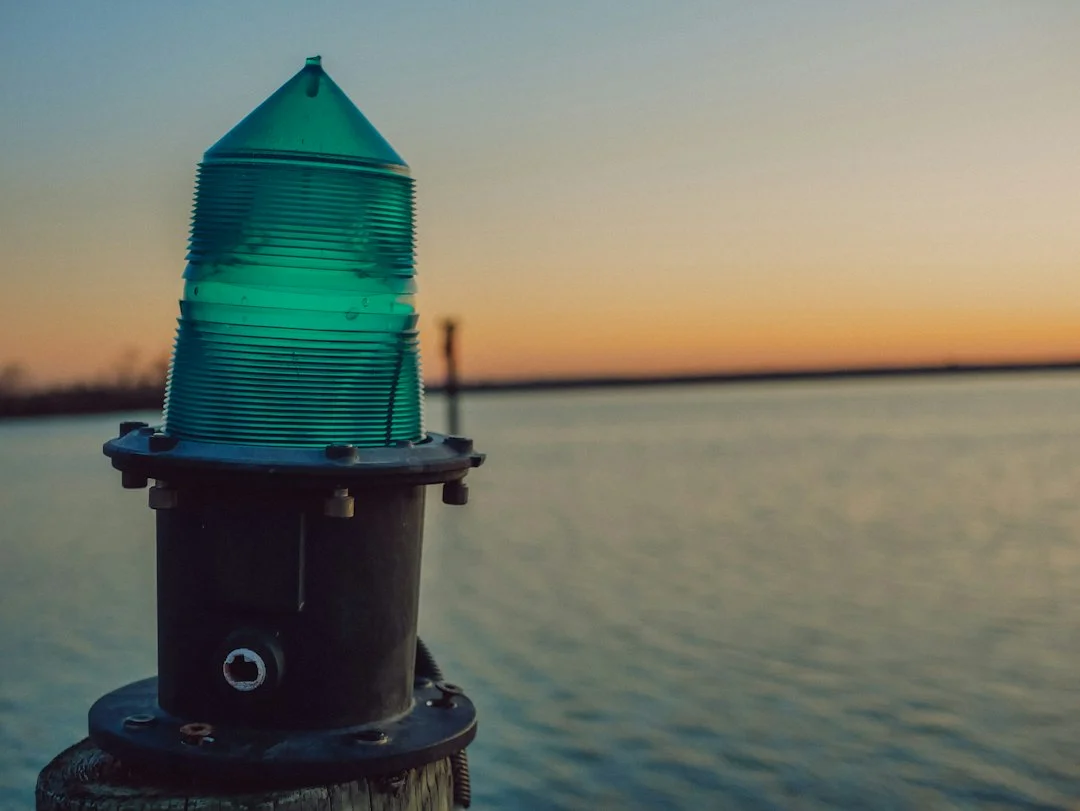
Photo by Michael Eufemia on Unsplash
Common anchor light mistakes: tri-color, steaming light, shadowing
Mistaking tri-color for an anchor light (Rule 25 vs Rule 30)
A masthead tri-color is an underway sailing light under COLREGS Rule 25, not an anchor light under Rule 30. By design it shows red/green/white sectors, not an all-round 360° white. If you anchor and leave the tri-color on, you’re broadcasting “sailing vessel underway” when you’re actually stationary, which is exactly the kind of message mismatch that causes night confusion.
The usual cause is human, not technical: someone motors in, flips a switch, and later flips the wrong one because the panel label says “mast” and the crew’s tired. Dry reality: fatigue turns even smart sailors into button-pushers. Your electrical panel should make the correct choice obvious, especially for combo units.
Steaming light confusion: 225° is not all-round
The masthead/steaming light (Rule 23 context) is a 225° forward-facing white light for a power-driven vessel underway. It is not a Rule 30 anchor light. Yes, it can look impressively bright from ahead; that’s the problem—someone approaching from your bow thinks you’re moving, while someone on your quarter sees nothing at all.
If you’re showing only a 225° light at anchor, the 135° aft sector is unlit. That’s not a minor technicality; it’s a big black hole behind you where traffic often passes in tight anchorages. If you want one light that covers anchor duty, it must be all-round 360°, properly rated 2 NM or 3 NM per your length.
Electrical and operational failures that mimic compliance
Here are six real-world failure patterns I’ve seen repeatedly, often on otherwise well-run boats: (1) tri-color left on at anchor, (2) steaming light used at anchor, (3) anchor light blocked by furled genoa, (4) light blocked by radar reflector or wind gear, (5) corroded socket or splice causing dim output, and (6) “anchor” switch powering a cockpit/deck light instead of the masthead fixture.
LED bulb retrofits add their own traps: polarity sensitivity (especially on older fixtures), poor optic alignment inside legacy lenses, and driver-generated EMC/RFI that trashes VHF/AIS reception. The quick diagnostic flow I use is boring but effective: confirm correct fixture type (all-round), confirm 360° visibility, confirm rated nominal range (2/3 NM), then confirm wiring integrity and switching logic. It’s amazing how many “mystery problems” die at step one.
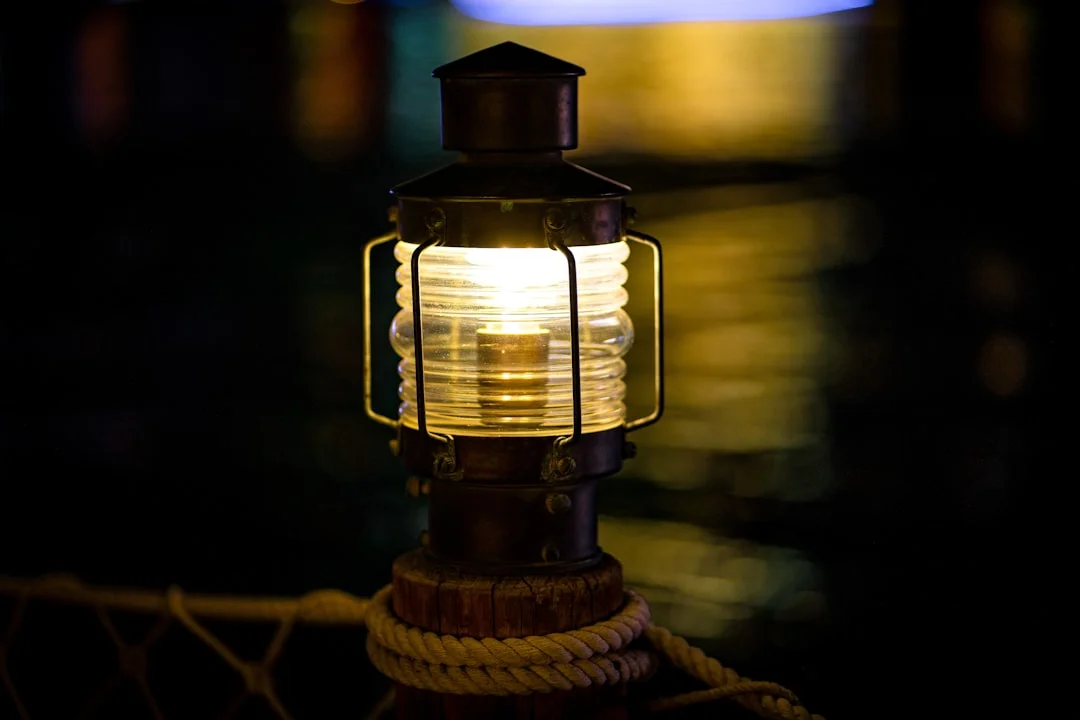
Photo by Usman Yousaf on Unsplash
Best LED anchor lights: compliance specs & selection checklist
What ‘USCG/COLREGS rated 2 NM/3 NM’ should look like
Ignore “super bright” marketing and look for compliance language you can defend. On the datasheet or packaging, you want to see COLREGS/USCG referenced and an explicit nominal range: “2 NM” for boats under 12 m, “3 NM” for boats 12–<50 m. Many quality manufacturers also reference ISO 19009, which is a credible performance benchmark for navigation lights.
If a listing only says “marine LED” or “anchor light style,” assume it’s decorative until proven otherwise. Navigation lights are safety equipment, and the difference between a tested optic and a generic LED puck is often invisible at the dock, then obvious when visibility drops.
Durability markers: IP rating, materials, corrosion control
A masthead light lives in UV, salt, and vibration. I look for IP66–IP67 rating stated by the manufacturer, a UV-stabilized polycarbonate lens, a robust polymer or anodized aluminum body, and 316 stainless fasteners. You also want a sealed cable entry and strain relief because a masthead wire that flexes will eventually fail, usually on the night you decide not to carry a spare flashlight.
Form factors: bulb replacement vs new fixture vs combo units
There are three common upgrade paths, and each has a failure mode. Bulb swaps are cheap ($15–$60) but can miss optical performance in older housings. Dedicated all-round LED fixtures cost more ($120–$350) but are usually the cleanest compliance move. Combo anchor/tri-color units ($250–$700) can simplify masthead clutter, but they demand good switching logic so you don’t show the wrong light at the wrong time.
Here’s the practical comparison sailors actually need:
| Upgrade path | Compliance risk | Serviceability | Typical price (USD) | Best use case |
|---|---|---|---|---|
| LED replacement bulb in existing housing | Medium–High (optics, alignment, polarity, legacy lens) | High (easy swap, no drilling) | $15–$60 | Budget upgrade when the existing fixture is known good and truly all-round |
| Dedicated masthead all-round LED fixture | Low (if rated 2 NM/3 NM on datasheet) | Medium (mast work required) | $120–$350 | Most boats wanting the simplest path to Rule 30 + Annex I compliance |
| Combo anchor + tri-color unit | Medium (switching errors; install must be clean) | Medium–Low (mast work + wiring complexity) | $250–$700 | Reducing masthead clutter and windage while keeping certified lighting |
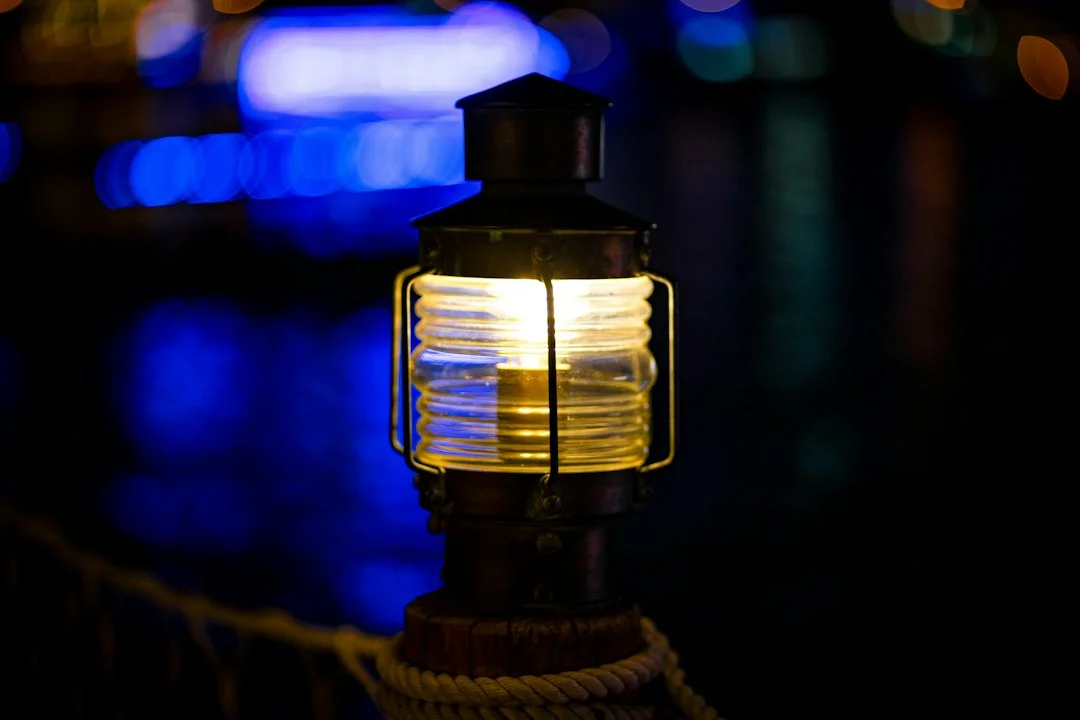
Photo by Usman Yousaf on Unsplash
LED battery math, costs, and service logistics (mast work)
Amps and amp-hours: what overnight anchoring really costs
LEDs aren’t just about brightness; they’re about energy budget when you’re on the hook for 10 hours with refrigeration cycling and phones charging. Use the basic relationship P = V × I. On a 12 V DC system, a 2 W LED draws about 0.17 A (2 ÷ 12), and over 10 h that’s about 1.7 Ah.
Compare that to an incandescent anchor bulb at 20 W, which draws about 1.67 A and burns roughly 16.7 Ah over the same 10 h. Typical incandescent anchor lamps run 10–25 W, while LEDs commonly land around 1–3 W, which is an 80–95% reduction depending on your starting point. On a modest 100 Ah house bank, that difference is the line between comfortable and cranky.
Realistic upgrade budgets: parts + mast access
The fixture cost is often the cheap part; getting to it is the expensive part. Name-brand masthead all-round LED fixtures typically run $120–$350, premium combo units $250–$700, and a basic LED bulb replacement $15–$60. Then add access: a mast climb service is often $150–$500 labor, while unstepping can run $400–$1,500 depending on boat size, yard, and local rates.
If you’re planning longer hops, do the math early. Estimate your fuel needs based on the voyage distance and realistic motoring hours so you can prioritize electrical and lighting upgrades before a cruise.
When to combine the job with other masthead maintenance
If you’re paying for height, don’t waste it. Bundle the anchor light job with a VHF antenna inspection, wind transducer check, windex replacement, and a look at masthead sheaves. Replacing a crusty two-conductor wire while you’re already aloft is cheaper than paying for a second climb because the old cable fails two months later.
Cheap non-rated lights are false economy. Saving $80–$150 on a non-compliant fixture disappears fast if you replace it later for compliance, or if it dies mid-season and you pay another $300 climb to fix a “bargain.”
| Scenario | Parts | Labor | Incidentals (wire/terminals/sealant) | Realistic total (USD) |
|---|---|---|---|---|
| DIY bulb swap (no mast climb needed) | $15–$60 | $0 | $10–$25 | $25–$85 |
| DIY fixture swap + hire mast climb | $120–$350 | $150–$500 | $20–$60 | $290–$910 |
| Yard job with unstep + wiring refresh | $120–$700 | $400–$1,500 | $50–$150 | $570–$2,350 |
Installation best practices (ABYC E-11/A-16 informed)
Wiring, terminations, and corrosion control aloft
ABYC isn’t law, but it’s the yardstick many competent yards use, particularly ABYC E-11 for electrical practices and ABYC A-16 for navigation lights. Aloft, corrosion is your main enemy, followed closely by vibration and poor strain relief. Use tinned copper conductors and make terminations with adhesive-lined heat-shrink crimp terminals, not household connectors and hope.
For typical lighting circuits, 16–14 AWG tinned copper is common depending on run length and voltage drop goals. Keep splices out of the masthead if you can; if you can’t, make them watertight and mechanically supported. Add chafe protection where the cable exits the mast and ensure the wire can’t saw itself to death on an edge during a season of rolling at anchor.
Circuit protection and voltage drop considerations
Anchor lights don’t draw much current, but they still deserve proper circuit protection and labeling. A common fuse size for an anchor light circuit is 2–5 A, but verify the fixture draw and follow ABYC principles for conductor protection. Oversized fuses don’t prevent nuisance trips; they prevent the fuse from doing its job when the wire chafes.
Voltage drop matters more than many sailors think. LEDs can appear “on” even when fed marginal voltage through corroded wire, but their driver may underperform, reducing effective range below 2 NM or 3 NM. If your mast wiring is original and your boat is old enough to have opinions about disco music, consider pulling new cable while you’re at it.
Commissioning tests: verify arc, flicker, and RFI
Commissioning is where you catch the mistakes that become midnight problems. At the panel, confirm the correct switch powers the correct light, and that combo units don’t allow illegal combinations. Then do a 360° walk-around test from the dock or dinghy to confirm there are no dead sectors caused by spreaders, the furled genoa, or masthead gear.
Check for flicker artifacts; some LED drivers can strobe subtly on certain PWM dimmers or poor connections, which is distracting and may affect perception at distance. Finally, do an RFI/EMI check: turn on the anchor light and verify your VHF reception, AIS, and GPS performance remain normal. If your radio suddenly sounds like bacon frying, the “great deal” LED is about to cost you more than money.
Troubleshooting cues I trust: intermittent operation usually points to corrosion or a broken conductor at the masthead. Dim output often indicates voltage drop or a failing driver. Water inside the lens means seals are compromised, and that failure accelerates quickly once UV and salt get involved.
Captain’s tip: Before you put tools away, test the anchor light with VHF on a weak-weather-channel station. If the noise floor jumps when the light is energized, fix it now—not after you’ve anchored in fog.
Quick reference: requirements by boat length + pre-nightfall checks
What to display at anchor: the rule distilled
Rule 30 is the legal “what,” Annex I is the technical “how well.” Under 33 CFR 83.30 / COLREGS Rule 30, show an all-round white anchor light where it can best be seen. Under 33 CFR Part 84 (Annex I), match your boat length to the minimum nominal range: 2 NM if you’re under 12 m, 3 NM if you’re 12–<50 m.
Use this table as a cockpit-side sanity check:
| Boat length | Required anchor light(s) (Rule 30 / 33 CFR 83.30) | Minimum nominal range (Annex I / 33 CFR Part 84) |
|---|---|---|
| < 7 m (23.0 ft)* | All-round white light (or one ball outside narrow channel/fairway) | Typically 2 NM for all-round white on small craft |
| < 12 m (39.4 ft) | 1 × all-round white | 2 NM |
| 12 m to < 50 m | 1 × all-round white | 3 NM |
| ≥ 50 m (164 ft) | 2 × all-round white (forward higher, aft lower) | 3 NM class equipment typically used for both |
*Rule 30(d) allowance exists, but showing a proper anchor light is still the smart, expected move in most harbors.
Five-minute dusk checklist for compliance and safety
Run this at dusk, not after full dark when your night vision is already gone. (1) Confirm the correct mode: ANCHOR, not tri-color and not steaming. (2) Clean the lens—salt film can knock down effective visibility more than you’d expect over 2–3 NM.
(3) Verify 360° visibility: step onto the dock or dinghy and check from multiple bearings, including behind the furled genoa and behind spreaders. (4) Confirm the fixture is rated for your length (2 NM under 12 m, 3 NM for 12–<50 m) using the datasheet or model spec. (5) Confirm circuit/fuse integrity and that the voltage at the panel doesn’t sag under load, even if the LED only draws 0.17–0.25 A.
(6) Do a quick RFI check: VHF and AIS/GPS normal with the light on. If you’re planning a night arrival, calculate your remaining miles and ETA before dark; Breezada’s sea distance calculator helps you make the call early, when you still have options.
Frequently Asked Questions
Under 33 CFR 84 (Annex I), what is the minimum nominal range for an all-round white anchor light on a 10.5 m sailboat, and what datasheet wording should confirm compliance?
A 10.5 m sailboat is under 12 m, so Annex I (U.S.: 33 CFR Part 84, Annex I) calls for a minimum nominal range of 2 NM for an all-round white anchor light. On the datasheet, look for wording like “COLREGS/USCG 2 NM” or “2 nautical mile rated” for an all-round white navigation/anchor light, ideally with reference to ISO 19009 performance testing.
How can I verify my masthead all-round LED truly maintains a 360° arc when blocked by a furled genoa on a foil and spreaders—what field test procedure is defensible?
Do a two-part check. First in daylight, sight up from multiple bearings and identify physical blockers (furled genoa, spreaders, radar reflector), noting likely shadow sectors. Then at night, perform a slow 360° walk-around from dock or dinghy at about 30–50 m distance, stopping every 30–45° of bearing to confirm the light never “winks out.” If you find a dead sector, relocate the fixture or remove/relocate the obstruction; “close enough” isn’t all-round.
If my sailboat has a combined anchor/tri-color unit, what switch logic and labeling prevents accidentally showing the tri-color at anchor, and how should the circuits be fused?
Best practice is positive mode selection: either a dedicated multi-position switch (e.g., OFF / ANCHOR / TRICOLOR) or clearly separated, labeled switches with an interlock (mechanical or procedural) so both can’t be energized together. Label the panel ANCHOR (360° WHITE) and TRICOLOR (UNDERWAY SAIL) in plain language, not “mast.” Fuse per ABYC-style practice and fixture specs—often 2–5 A for lighting circuits—ensuring each circuit is protected for its conductor size and routing (per ABYC E-11 principles).
Why does a 225° masthead (steaming) light fail Rule 30 at anchor even if it appears bright from ahead, and what bearings will be unlit?
Because Rule 30 requires an all-round (360°) white light at anchor, and a steaming light is a 225° forward-facing masthead light intended for a power-driven vessel underway (Rule 23 context). If you show only 225°, you leave an unlit sector of 135° astern, meaning vessels approaching from your quarters or directly behind may see no white anchor light at all.
When retrofitting an LED bulb into an older all-round housing, what optical and electrical issues (polarity, lens focal position, driver RFI) most often cause it to miss its 2 NM/3 NM performance?
Three common failures show up. Optically, the LED emitter may not sit at the lens’s designed focal point, creating hot spots and weak sectors that fail uniform 360° distribution and reduce effective range below 2/3 NM. Electrically, polarity sensitivity can prevent proper operation or force a poor ground path through corrosion, causing dim output. And RFI/EMI from cheap drivers can interfere with VHF/AIS/GPS, which is why a real commissioning test includes radios powered up with the light energized.
If you only take one action from all of this, make it a boring one: choose a rated 2 NM / 3 NM all-round white LED (per your length), mount it to preserve a real 360° arc (usually masthead on sailboats), wire it with ABYC-style discipline, and run a dusk walk-around test. That’s how you stay legal under Rule 30 + Annex I, and how you avoid the kind of nighttime “who was that?” stories nobody enjoys retelling.
About the Author
Related Articles
Composting Toilet Sailboat: Manual vs Electric vs Composting
Compare marine head options—manual, electric, composting—costs, rules, and odor control. Choose the right setup for your boat. Read now.
By Breezada Team
How to Fuel a Boat: Fuel Dock Etiquette & Safety
Learn how to fuel a boat safely with fuel dock etiquette, diesel vs gas tips, and spill prevention. Follow our step-by-step checklist before you pump.
By Breezada Team

Float Plan Template: What to Include & Update
Use this float plan template with examples, check-ins, and shore contact tips. Copy the form and update it before every trip—stay SAR-ready.
By Breezada Team
Used Sailboat Survey Checklist: Sea Trial Red Flags
Use this used sailboat survey checklist to spot sea trial red flags, estimate survey costs, and negotiate smarter. Download the checklist now.
By Breezada Team