Code Zero vs Genoa vs Jib vs Spinnaker Guide
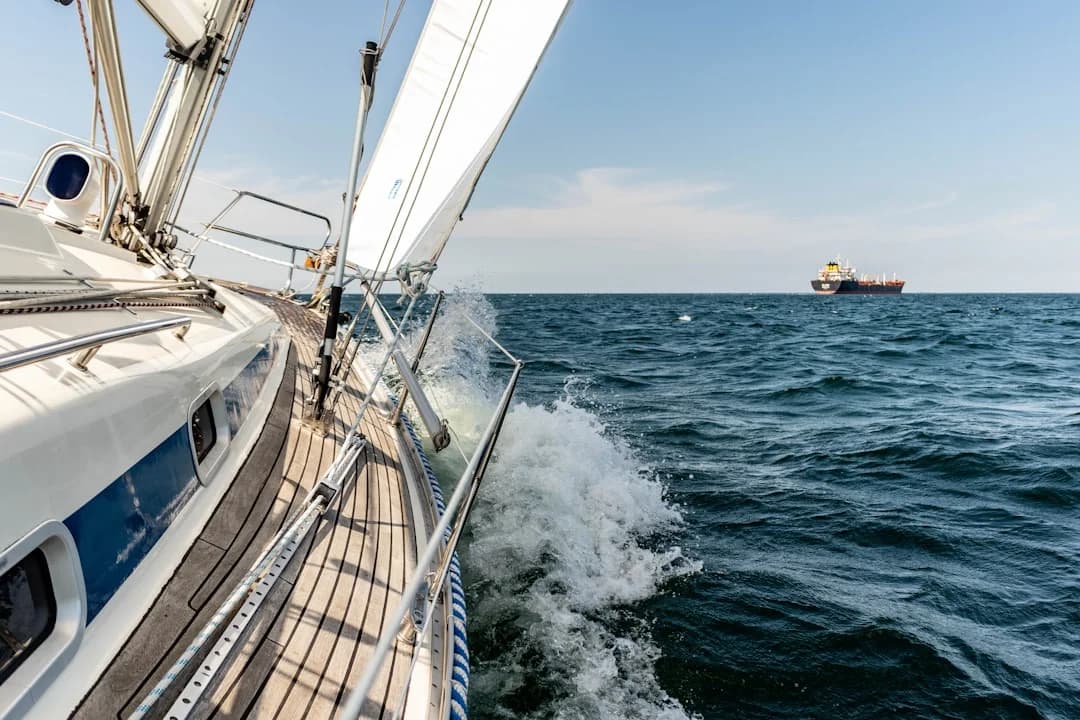
Choosing between Code Zero vs genoa, a working jib, or a spinnaker isn’t about what looks powerful on the foredeck. It’s about apparent wind angle (AWA), true wind speed (TWS), and whether your rig and deck hardware can take the loads without turning your bow fitting into modern art. Get those three right and the “best headsail for light air” question mostly answers itself.
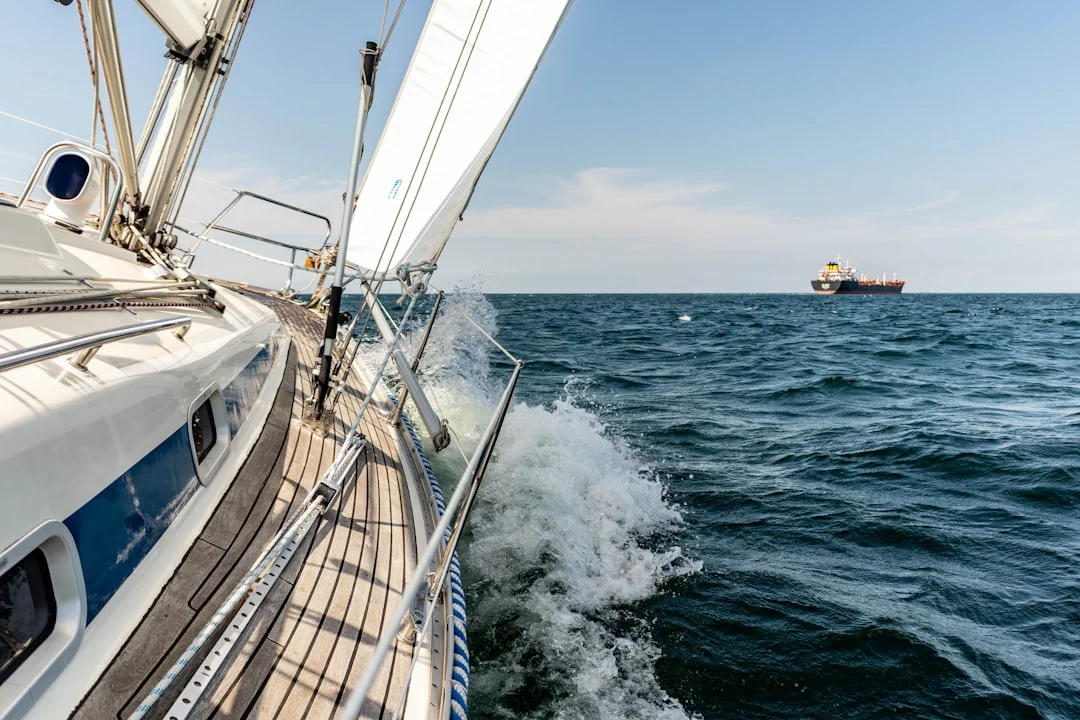
Photo by Michael Held on Unsplash
Quick definitions: what each headsail is (and isn’t)
Jib vs genoa: defined by LP% overlap
A jib vs genoa argument is usually solved with one number: LP%, the luff perpendicular as a percentage of J (the foretriangle base). The common formula is LP% = (LP ÷ J) × 100, and it’s how many inventories and rating rules separate “jib” from “genoa.” It also predicts how much sail you’ll be dragging across the shrouds every tack.
A 100% jib means LP = 1.00 × J, so it ends roughly at the mast line, gives good visibility, and tends to tack without a winch grinder having a spiritual crisis. Typical modern cruising working jibs sit around 95–110% LP because they behave on roller furlers and don’t require a football field of genoa track. Most of the time they’re trimmed in the ~30–60° AWA neighborhood depending on boat and sea state.
A 135% genoa (LP = 1.35 × J) or 150% genoa (LP = 1.50 × J) overlaps the mast, adds area, and adds workload. The payoff is real in <8–10 kt TWS, but the penalties show up when you’re short-tacking a channel or sailing with a small crew. Cruising inventories that still carry a big overlapping headsail usually land in the 130–155% range for light air.
What is a Code Zero sail: a cable-luffed close reacher
If you’re searching “what is a Code Zero sail,” here’s the plain version: it’s a close-reaching sail built to be sheeted tighter than an asymmetric spinnaker without the luff turning into a wet noodle. The defining feature isn’t the marketing label—it’s the high-modulus anti-torsion luff cable that lets it furl and holds the entry shape under real luff tension.
A Code Zero typically lives around ~45–90° AWA and generally hates being forced deep downwind. It’s usually built in low-stretch laminate/structured cloth, commonly around ~2.5–5.0 oz/yd² equivalent, because it needs to resist stretch when you’re trimming like an upwind sail. Think “reach fast in light air,” not “float downwind like nylon.”
Spinnaker family: asymmetric vs symmetric (and “gennaker”)
Spinnakers are downwind power tools, and they come in two main flavors: asymmetric and symmetric. An asymmetric spinnaker (often loosely called a “gennaker”) generally shines around ~90–150° AWA, projecting to windward and rotating as you bear away. Cloth is usually nylon, with common weights around 0.75 oz/yd² (light), 1.0–1.5 oz/yd² (all-purpose), and 2.2 oz/yd² (heavy-air).
A symmetric spinnaker uses a pole to square back and can work deeper angles, roughly ~120–180° AWA, especially offshore in steady breeze. The handling system is different—pole, guys, sheets, and usually more foredeck time—so it’s less common on cruising boats unless someone aboard enjoys jobs that involve kneeling on a pitching bow at night.
Marketing confusion is constant: “gennaker” often means “asymmetric spinnaker,” not a true Code Zero. If it’s nylon, stretchy, and happiest at 100–150° AWA, it’s not a Code Zero no matter what the sail bag says. If it’s built around a torsion cable and furls like a headsail, it probably is.
Tip box: If you remember nothing else, remember this: pick sails by AWA first, TWS second, and hardware limits third—because the rig always gets the final vote.
Upwind sails explained: genoa vs jib for real cruising
Overlap, tacking angle, and why 150% feels ‘big’
A 150% genoa feels big because it is big in the ways that matter: it overlaps the mast, sweeps the shrouds, and demands clean timing in every tack. Moving from 110% to 150% increases LP by ~36%, and headsail area often jumps ~25–40% depending on your foretriangle geometry. That extra area is great until you’re tacking every 6 minutes in a narrow channel.
Overlap changes real-world handling more than it changes sail trim theory. The clew is farther aft, so the sheet leads to a track positioned farther back, and the sheet loads climb quickly with breeze. On many 35–40 ft cruisers, 40–55 ST self-tailing winches are a common “reality check” that your boat was designed with 100–150% headsails in mind, though you still need to confirm line sizes and lead angles.
Visibility is another penalty people forget to price in. A 135–150% genoa can block the leeward view at exactly the moment you’re trying to spot crab pots and weekend traffic. If you sail in crowded waters, a slightly smaller headsail that lets you actually see is often “faster” in the only metric that matters: not hitting things.
Forestay sag, draft position, and pointing vs power
Headstay sag is the quiet assassin of upwind performance. Sag makes the sail fuller, pushes draft aft, and usually hurts pointing while increasing helm load, especially in 12–18 kt TWS when you’re already trying to keep the boat on its feet. Genoas are particularly sensitive because they carry more area forward and rely on a stable entry to keep the slot working.
When the headstay sags, you often see the genoa get round and sticky in the front third, and you start pinching to compensate. That’s when the boat slows, the apparent wind shifts forward, and suddenly you’re “underpowered” again—except you’re actually just sailing a bag. Backstay tension (if you have it), halyard tension, and proper lead position do more for pointing than another half turn on the winch.
A non-overlapping 95–110% jib often tolerates sag better simply because it’s smaller and easier to keep in its design shape. The tradeoff is you may give up some low-end power in <8–10 kt, which is why light-air inventories often include either a 130–155% genoa or a Code Zero to fill the gap.
Roller furling compromises: UV cover, foam luff, and reefed shape
Roller furling is great—right up until you ask it to do race-sail things. A typical UV sun cover (Sunbrella/Weathermax-type) weighs around 9–11 oz/yd², and that weight sits on the leech and foot where you feel it most in <8–10 kt. It’s not catastrophic, but on light-air days it’s the difference between the sail breathing and the sail sulking.
Reefing a genoa by furling it partway usually makes the shape fuller, not flatter, because the draft moves aft and the entry gets blunter. A foam luff helps, and so does a proper reef-points recut, but there are limits—especially once you’re past about 15–25% furled. If you frequently sail in 18–25 kt, a smaller working jib often beats a half-furled genoa in both speed and sanity.
For cruising, the best “upwind sails explained” advice is boring but true: keep the working jib efficient, keep the genoa (if you have one) dedicated to light air, and don’t expect one furling sail to cover every wind band perfectly. Sailmakers can cheat physics a bit; they can’t delete it.

Photo by Karla Car on Unsplash
Code Zero vs genoa: filling the 6–10 kt ‘light-air gap’
Where each sail is faster: angles first, then wind strength
The clean way to think about code zero vs genoa is this: a genoa is an overlapping upwind sail, while a Code Zero is a close-reaching sail that can pretend to go upwind for a while. If you’re truly sailing 30–60° AWA and you can sheet properly inboard, the genoa often wins—especially in chop where you need punch. If you’re living around 45–90° AWA, the Code Zero starts printing time.
On many cruisers, the “light-air gap” shows up below ~8–10 kt TWS when a 100–110% jib stops driving the boat effectively. Your next step is usually either a 135–155% genoa or a Code Zero, depending on what angles you actually sail. If your typical light-air day is close-hauled in a narrow bay, the genoa earns its berth; if it’s cracked off for distance-making, the Code Zero is hard to beat.
The trap is choosing by fullness instead of by VMG. The faster sail is the one that lets you sail lower at the same speed or faster at the same AWA, which you can verify with a quick GPS check. If you want to sanity-check a passage plan, run the distances on a tool to calculate the distance between ports and compare ETAs for a higher/shorter course versus a lower/longer one.
Shape control and luff tension: why Code Zeros feel ‘locked in’
A Code Zero feels “locked in” because the luff is engineered to resist torsion. The anti-torsion cable takes high luff loads, keeps the entry stable, and allows reliable furl initiation at the head instead of turning the sail into a barber-pole wrap. That structure is why Code Zeros are commonly built in ~2.5–5.0 oz/yd² equivalent laminate or structured cloth, rather than nylon.
Sheet a Code Zero in too hard and it doesn’t just get slower—it starts acting offended. It will stall if the lead angle closes the leech too much, and it hates being asked to live at <45° AWA** for long. Conversely, if you ease it like an A-sail and try to go deep, it blankets behind the main around **>100–110° AWA and can become hard to furl cleanly when the sail is slatting.
The practical win is control. In 6–10 kt TWS, a Code Zero can keep the boat moving at a higher average speed through lulls because the shape doesn’t distort as easily. That makes apparent wind build earlier, which feels like “free wind,” although it’s really just good sail shape and less drag.
When a genoa still wins: short tacks, choppy seas, tight sheeting
There are days when a genoa is simply the right hammer. Short tacking in confined water favors a sail you can tack quickly without a furl/unfurl cycle, and a dedicated genoa on a furler is ready instantly. A Code Zero that lives on a top-down furler is great, but it’s still another system to rig, unfurl, and manage when traffic is tight.
Chop changes the math too. In a short, steep sea with 8–12 kt TWS, a well-trimmed genoa sheeted for 35–55° AWA can “punch” and keep the bow from falling off in every wave. A Code Zero often prefers a slightly freer mode, and if you try to pinch it, the boat slows, apparent wind shifts forward, and you end up doing ugly things with the helm.
If you want to make the decision before you leave the dock, look at your likely angles and distances. Use your polars if you have them, or at least compare two route options with a quick sea-mile route check and realistic speeds in 6–10 kt. Light air punishes optimism more than it punishes bad jokes.

Photo by Markos Mant on Unsplash
Code Zero vs spinnaker: reaching vs downwind power
Asymmetric spinnaker vs gennaker vs Code Zero (terminology)
A Code Zero and an asymmetric spinnaker may both live in a sock or on a furler, but they’re designed to do different jobs. Code Zero is typically happiest in ~45–90° AWA, where it can be sheeted with real luff tension and a controlled entry. The asymmetric spinnaker—often called a “gennaker” in casual cruising talk—generally shines in ~90–150° AWA, where it can project to windward and rotate.
If you’re trying to decide “code zero vs spinnaker,” start by admitting what angles you actually sail. Cruisers often spend more time on a broad reach than on a dead run, especially if the boat rolls. That can make an asymmetric spinnaker a better “miles maker,” but only if you’re comfortable with the hoist and douse rhythm.
A quick sniff test: if the sail is nylon and feels like a parachute, it’s a spinnaker no matter what the label says. If it’s laminate, has a torsion cable, and furls like a headsail, it’s in Code Zero territory. Confusing the two leads to bad trim and worse hardware choices.
Cloth, stretch, and why handling systems differ
Asymmetric spinnakers are usually nylon because stretch is part of how they survive and perform when loaded and rotated. Typical nylon weights tell you the intent: 0.75 oz/yd² for light-air float, 1.0–1.5 oz/yd² for all-purpose, and 2.2 oz/yd² when you expect breeze and occasional poor decisions. Code Zeros, built around low-stretch cloth, don’t like shock loads or flogging as a lifestyle.
Handling systems follow the cloth. A Code Zero is commonly paired with a top-down furler, and for 30–40 ft boats you’ll often see furlers in the ~1,500–3,000 kg (3,300–6,600 lb) working load class depending on model. Asymmetric spinnakers can use top-down furlers too, but many cruisers still prefer a sock for reliability and because a wet, twisted spinnaker can humble any furler.
The safety reality is that apparent wind builds fast as boatspeed comes up. If you wait until it’s “definitely time” to change sails, you’re late. Early changes keep the foredeck calm and keep your gear from experiencing unplanned load testing.
When a symmetric spinnaker still makes sense
The symmetric spinnaker still has a niche, even if it’s fallen out of fashion on cruising boats. With a pole, you can square back and sail deeper angles, often in the ~120–180° AWA range, which can improve downwind VMG in steady trade-wind conditions. Offshore, that can mean fewer miles sailed compared with reaching back and forth under an asymmetric.
The cost is complexity: pole handling, gybes, and more lines under tension. But in stable conditions, a well-flown symmetric is surprisingly steady and can reduce the “apparent wind trap” where an asymmetric keeps you reaching because it refuses to stay open on a run.
If you’re mostly coastal, short-handed, or dodging squalls, the asymmetric usually wins on practicality. If you’re doing long, steady downwind legs and you have a crew that doesn’t hate spinnaker poles, symmetric still earns respect.

Photo by Daniel Stenholm on Unsplash
Hardware, rigging, and deck loads: make the boat support the sail
Roller furling Code Zero: anti-torsion cable, drum/swivel, and halyard geometry
A roller furling Code Zero is not the place to economize on the luff cable. The anti-torsion cable is what transmits torque from drum to head, and without it you get torsional lag, partial head furl, and the classic “candy-cane” wrap. For many 30–40 ft boats, anti-torsion cables are often in the ~10–14 mm range, while larger boats may run ~14–20 mm—but final sizing should be based on real load engineering.
Furler selection matters too. For a mid-size cruiser, top-down furlers commonly fall in the ~1,500–3,000 kg working load class, but don’t treat that number as a guarantee. Working load is not breaking load, and neither is an excuse to ignore shock loads from flogging and sloppy furl technique.
Halyard geometry is the other failure point. If the halyard lead angle is poor, you’ll get halyard wrap around the headstay or around the furler swivel, and you’ll invent new words at sea. A small halyard restrainer or a proper halyard deflector can help, but sometimes you need a rigger to assess the masthead setup before you start buying shiny furling gear.
Tack points and bowsprits: load paths, chafe, and clearance
Tacking a Code Zero or asymmetric to the anchor roller is common, and it’s also how people learn about chafe and side-loading the hard way. Anchor rollers are built for anchors, not for sustained sail loads at odd angles, and the lead often saws right across a stem fitting or pulpit base. A bow padeye with proper backing is usually a better load path, even if it’s less convenient.
A bowsprit makes everything cleaner, and on 30–40 ft boats a typical extension is ~18–36 in (450–900 mm) beyond the bow. That projection improves luff separation from the headstay, reduces pulpit chafe, and gives the sail room to furl without catching on anchor gear. It also changes the lever arm on the bow, which is why structure matters more than aesthetics.
If you add a sprit, you’re creating new load paths into deck and hull structure. This is where ABYC guidance becomes practical, not theoretical: ABYC H-41 (rigging) and ABYC H-40 (strong points) are good framing references for how to think about attachment integrity and backing structure. If you’re unsure, consult a rigger or engineer; guessing is expensive.
Sheeting geometry: leads, blocks, and why installations fail
Most Code Zero disappointment comes from bad sheeting geometry. A Code Zero often wants to sheet farther aft and more outboard than a jib, and trying to sheet it through the inboard genoa track can close the leech and stall the sail. If the sail looks full but the boat slows, it’s often because the lead is wrong, not because the sail is wrong.
Hardware-wise, you need blocks that can take real load and remain aligned under it. A common failure mode is a lightly backed padeye that starts working in the deck, letting the block twist and chafe the sheet. Another is using undersized snatch blocks that survive at 8 kt and complain loudly at 12 kt.
If you’re setting up an outboard lead, plan for adjustment. A lead that’s perfect at 60° AWA can be wrong at 85°, and an adjustable outboard lead (or multiple positions) is often the difference between a Code Zero that feels magical and one that lives in the locker. The sail is only as good as the triangles you draw with sheets and leads.
Standards and when to consult a rigger/engineer
ABYC standards aren’t a how-to manual, but they’re a solid reality check when you’re retrofitting. ABYC H-41 helps you think about rigging components and safe practices; ABYC H-40 is directly relevant when you’re adding or upgrading strong points for tacks, sprits, and padeyes. If you’re making structural changes, ISO 12215 scantlings can be relevant, and your builder or a naval architect should have opinions worth paying for.
A brief USCG note: modifications shouldn’t compromise required safety systems under 33 CFR 183, especially if you’re drilling, bonding, or moving gear around critical deck areas. Most sailors don’t run afoul of this, but I’ve seen “simple installs” create leaks into cored decks, and that’s a slow-motion budget fire.
If your plan involves sustained high loads—large Code Zero, big sprit, offshore use—bring in a rigger early. You don’t need permission to sail; you need your bow fitting to stay attached.
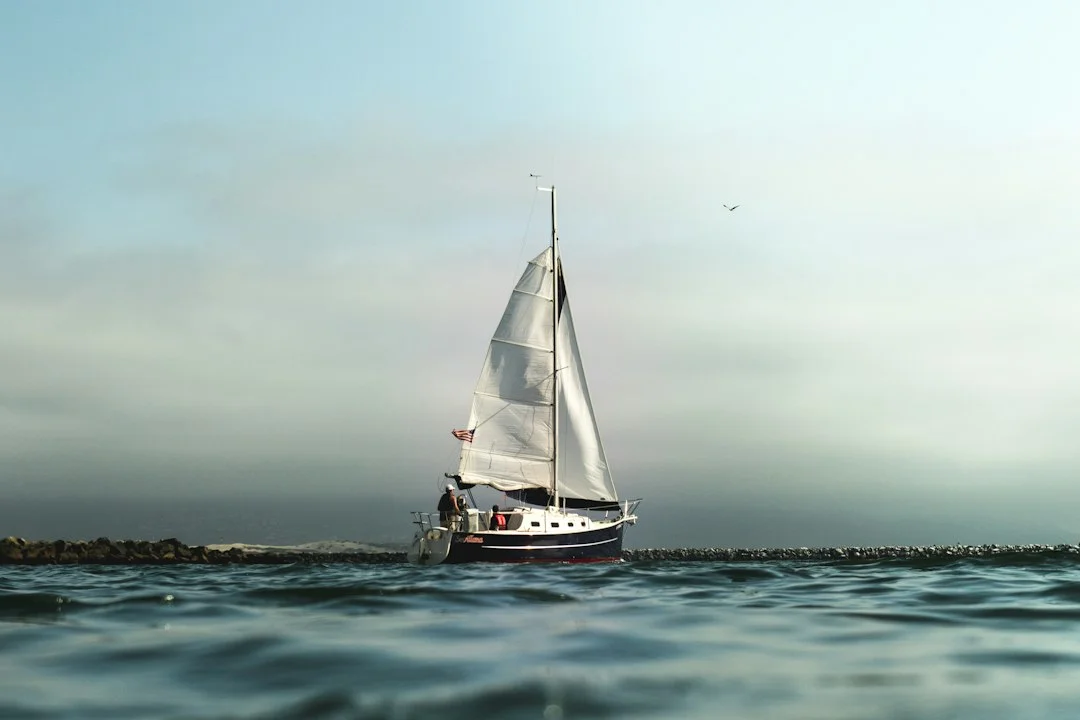
Photo by Jeremy Bishop on Unsplash
Headsail selection by wind band, angle, and route plan
Angle-based cheat sheet using AWA + TWS
Sail choice gets easy when you force yourself to pick by AWA and TWS instead of by emotion. For typical cruising boats, upwind sails (jib/genoa) usually live in ~30–60° AWA, a Code Zero is comfortable in ~45–90°, an asymmetric spinnaker works in ~90–150°, and a symmetric can cover ~120–180° with a pole. The wind band matters just as much: 4–10 kt is light-air inventory territory, 10–18 kt is working-sail weather, and 18–30+ kt is where you stop being romantic about sail area.
Here’s a practical cheat sheet that matches what I see on cruising boats that actually leave the dock:
| TWS (kt) | 30–60° AWA (upwind) | 45–90° AWA (close/beam reach) | 90–150° AWA (reach/run) | 120–180° AWA (deep run) |
|---|---|---|---|---|
| 4–10 | 135–155% genoa or best light-air jib | Code Zero is often fastest | Asym (0.75–1.5 oz) if stable | Sym (light) if you have pole + crew |
| 10–18 | 95–110% working jib or reefed genoa | Code Zero only if engineered and not overpowered | Asym (1.0–1.5 oz) | Sym (all-purpose) in steady conditions |
| 18–30+ | Small jib / heavy-weather jib; consider storm jib | Usually switch away; loads rise fast | Heavy asym (2.2 oz) only with control margin | Sym only if crew/gear are ready |
Sea state and the ‘apparent wind trap’ at higher speed
Sea state is the modifier that makes “textbook” sail choice look silly. In flat water, a Code Zero can carry you fast enough in 6–10 kt TWS that apparent wind moves forward, and suddenly you’re trimming like it’s 12 kt. That’s the good version of the apparent wind trap.
In chop, the trap snaps shut. A boat that can’t accelerate will never build apparent wind, so a reaching sail that wants speed first can underperform. In those conditions, a genoa sheeted for 35–55° AWA can keep drive through the waves better than a Code Zero that’s trimmed too tight and stalling.
The other trap is hanging on too long. As boatspeed increases, apparent wind often builds and shifts forward, which can overload gear quickly—especially on a Code Zero with a torsion cable and furler. If you find yourself thinking, “It’s still fine,” check the load on the sheet and the helm balance; those are more honest than your optimism.
Route planning: sail choice from polars, laylines, and distance
Route planning is where sail choice becomes money. A sail that lets you point 3–5° higher can reduce total distance on an upwind leg, even if peak speed is slightly lower. Conversely, in light air you may do better footing off, sailing a longer distance at higher speed, and arriving earlier with less crew fatigue.
A simple example: imagine a 30 nm leg in 6–8 kt TWS. If you sail high and make 4.2 kt, your ETA is about 7.1 hours; if you crack off, sail 33 nm but average 5.0 kt under a Code Zero, your ETA drops to 6.6 hours. The longer route wins, and you can verify the distance difference quickly with a nautical-mile calculator for timing your passage before you commit.
Polars are ideal, but even rough speed targets work. Track speed at a few AWA points—say 45°, 60°, 90°—and write it down after a couple sails with clean bottom and decent trim. That little notebook will outperform half the advice on the internet, including some of mine.

Photo by Lazarescu Alexandra on Unsplash
Costs, maintenance, and realistic upgrade paths
Sail-only vs full-system costs (hardware adds up)
The sail price is only the cover charge. Code Zeros and downwind sails often require a furler, cable, tack hardware, and sometimes a sprit, and those “adders” can equal the cost of the sail itself. If you budget only for fabric, you’ll end up with a beautiful sail that you fly twice because the setup is a pain.
Here are realistic new-sail and system ranges in USD. These vary by loft, measurements, corner engineering, and cloth choice (Dacron vs laminate), but they’re close enough for planning:
| Item | Boat size (30–36 vs 37–45 ft) | Typical USD range | Notes |
|---|---|---|---|
| Dacron 100–110% jib | 30–36 / 37–45 | $2,200–$4,200 | Dacron often 6.5–9.0 oz/yd² (smaller) to 8.0–10.5 oz/yd² (larger) |
| Dacron 135–150% genoa | 30–36 / 37–45 | $3,200–$6,500 | UV cover adds weight (9–11 oz/yd² fabric) and slightly hurts <10 kt |
| Laminate jib/genoa | 30–36 / 37–45 | $4,500–$9,500 | Better shape holding, less forgiving of abuse |
| Code Zero (structured/laminate) | 30–40 / 41–45 | $4,800–$10,500 | Usually needs torsion cable + top-down furler |
| Asymmetric spinnaker | 30–40 / 41–45 | $3,800–$8,500 | Nylon 0.75 / 1.0–1.5 / 2.2 oz/yd² choices matter |
| Symmetric spinnaker | 30–40 / 41–45 | $3,500–$8,000 | Pole gear adds cost if not already onboard |
| Top-down furler (drum + swivel) | 30–40 / 41–45 | $1,800–$4,500 | Working load often 1,500–3,000 kg class (model-dependent) |
| Anti-torsion cable | 30–40 / 41–45 | $800–$2,500 | Often ~10–14 mm (30–40 ft), larger boats ~14–20 mm |
| Bowsprit (bolt-on/retractable) | 30–40 / 41–45 | $1,500–$6,000 | Typical projection 18–36 in (450–900 mm) |
| Deck hardware + reinforcement + install | 30–36 / 37–45 | $400–$2,500 | Backing plates, core protection, load alignment |
Ongoing maintenance: UV, recuts, furler service, storage
Maintenance costs are predictable if you plan for them, and ugly if you pretend sails are immortal. UV covers eventually die, and replacement often runs $350–$1,200 depending on size and whether the sail needs additional stitching or patching. If you sail in high-UV regions and leave the sail furled on the headstay, you’ll pay this bill more than once.
Re-cuts and repairs are normal, not shameful. Budget $250–$1,500 for a recut/repair depending on whether you’re dealing with seams, leech flutter, or shape correction after years of furling. Furlers also need inspection—swivels, drums, and terminations don’t love salt and shock loads—so treat them like standing rigging, not like a cockpit winch.
Downwind nylon hates being stored wet. If your spinnaker lives in a turtle, air it out; mildew is nature’s way of reminding you who really owns the boat. Code Zeros hate flogging, so if it’s slatting, change angle or change sails instead of “letting it work itself out.”
Minimal quivers: 2–3 headsails that cover most cruising
For many cruisers, the best upgrade path isn’t “buy everything.” It’s building a small quiver you’ll actually use. If you already have a 95–110% working jib, adding a Code Zero is a strong move for 4–10 kt reaching and light-air passages, assuming you’re willing to install the system properly.
If you sail mostly off the wind and want simple downwind miles, consider genoa + asymmetric instead. The genoa covers light-air upwind and close reach; the asymmetric covers 90–150° AWA where cruising boats spend a lot of time. A three-sail “do most things” inventory is often working jib + light-air genoa + asymmetric, but storage and crew bandwidth matter more than perfection.
My rule: optimize for the sail you’ll fly 20+ days a year, not the sail you’ll fly twice on that one perfect reach. Boats are full of “perfect” gear that never gets used because it’s annoying.
Frequently Asked Questions
For a 35–40 ft cruiser, what AWA/TWS crossover typically makes a Code Zero faster than a 135–150% genoa, assuming similar trim and clean bottom?
In my experience, the Code Zero usually starts winning when you’re sailing freer than about ~55–60° AWA in ~6–10 kt TWS, especially in flatter water where you can build boatspeed. If you’re consistently sailing 30–50° AWA and can sheet the genoa well inboard, the 135–150% genoa often matches or beats the Code Zero, particularly in chop. The real answer is VMG: whichever sail lets you sail the target course with the best speed and helm balance is “faster,” even if it looks less dramatic.
How do I calculate LP% from my sail measurement sheet, and at what LP% does a headsail become a genoa for rating/inventory purposes?
Use LP% = (LP ÷ J) × 100, where LP is luff-perpendicular and J is your foretriangle base. A 100% jib has LP = 1.00 × J, a 135% genoa has LP = 1.35 × J, and a 150% genoa has LP = 1.50 × J. Many sailors treat anything above ~110% as “genoa territory” in practical inventory terms, though exact definitions can vary by rating rule and local convention.
What anti-torsion cable diameter and furler working-load class are appropriate for a 30–40 ft Code Zero, and which failure modes show under-sizing (torsional lag, poor head furl, cable ‘candy-cane’)?
For many 30–40 ft boats, an anti-torsion cable in the ~10–14 mm range is common, with larger or higher-righting-moment boats moving upward from there; bigger boats often land in ~14–20 mm. Top-down furlers for this class are often rated around ~1,500–3,000 kg (3,300–6,600 lb) working load, but you still need sizing based on your sail area and intended wind range. Under-sizing shows up as torsional lag (drum turns, head doesn’t), uneven furl starting at the bottom only, and the classic “candy-cane” luff wrap that makes the next unfurl an unwanted event.
How does forestay sag change draft position and entry angle on a genoa vs a Code Zero, and which rig adjustments (backstay/halyard/cunningham equivalents) give the biggest gains?
Forestay sag makes a genoa fuller, moves the draft aft, and often blunts the entry, which hurts pointing and increases helm load—especially in 12–18 kt. A Code Zero relies more on its torsion cable luff tension, so it’s less affected by headstay sag in the same way, but it’s very sensitive to luff tension and lead angle for entry stability. Biggest gains usually come from (1) increasing backstay (if available) to reduce sag upwind, (2) setting proper halyard tension to control draft position, and (3) correcting lead position so the leech isn’t over-closed and stalling the sail.
What sheeting geometry targets (lead position and leech twist cues) prevent a Code Zero from stalling when sheeted inside the lifelines, and when should you move to outboard leads?
If a Code Zero is sheeted too inboard, the leech closes, the top twists off poorly, and the sail stalls—often seen as a hooked leech and a boat that won’t accelerate. Your cues are practical: the luff should break evenly when eased, the telltales should flow, and the leech shouldn’t look like it’s trying to strangle the main. Move to outboard leads when you’re sailing ~70–90° AWA or whenever trimming inboard forces excessive leech tension to keep the luff stable; a wider lead usually opens the leech and lets the sail breathe without losing the entry.
About the Author
Related Articles
Starlink Mini on a Boat: Plans, Power & Offshore Use
Learn Starlink Mini on a boat—plans, power draw, and offshore performance. Compare Roam vs Mobile Priority and get setup tips. Read now.
By Breezada Team
Boat Courtesy Flag & Q Flag Etiquette for Yachts
Learn boat courtesy flag and Q flag etiquette for yachts—what to fly, where to hoist it, and common mistakes. Get the checklist before landfall.
By Breezada Team

French Canals Boat Trip Guide Beyond Canal du Midi
Plan a french canals boat trip beyond the Midi with routes, costs, licenses & lock tips. Compare regions and map your itinerary—start now.
By Breezada Team

Marine Toilet Smells: Eliminate Odors in Hoses & Vents
Stop marine toilet smells fast—diagnose hoses, vents, joker valves, and cleaning routines. Follow this guide and fix odors for good today.
By Breezada Team