Best Sailboat for Beginners: Size, Type, Budget (Realistic Picks That Won’t Bankrupt You)
The best sailboat for beginners isn’t the one with the sexiest sheerline or the biggest winches. It’s the boat that matches where you’ll actually sail, how you’ll actually store it, and what you can actually afford once the first yard bill shows up. Most new owners don’t quit because they “can’t sail.” They quit because the boat is a pain to rig, a pain to dock, and an even bigger pain to pay for.
Below is a practical framework built around ownership reality: handling, systems simplicity, and first-year costs. We’ll keep it standards-based (ABYC/USCG/ISO), because “seems fine” is not a safety standard.
Photo by Kristel Hayes on Unsplash
Define “Beginner” and Match the Boat to Your Sailing
A beginner isn’t just “someone who took ASA 101.” In ownership terms, a beginner is someone still building judgment under pressure: docking in a crosswind, reefing before it gets sporty, and troubleshooting a 12V system that was “upgraded” by a previous owner with a hardware-store special. Your goal is a boat with predictable manners and simple systems, not brand prestige.
The 80/20 rule matters here. If 80% of your days are afternoon sails and dinner back at the dock, don’t buy a boat optimized for 20% overnights. A starter sailboat under 30 feet can do a lot, but it can’t do everything well at once, and pretending otherwise is how you end up with a “project boat” that never leaves the slip.
Beginner profiles: learner, owner-operator, and skipper-in-training
I see three common profiles. The learner sails with friends or a club and wants a forgiving platform for repetition. The owner-operator is the classic two-up couple or solo sailor who needs low workload—roller furling, simple reefing, and easy docking control. The skipper-in-training wants overnights and coastal hops, which means caring about draft, ground tackle, and systems like sanitation and charging.
Crew size drives the decision more than people admit. Solo and two-up sailors benefit from smaller sail loads and fewer winches, while a family crew wants cockpit space and a layout that doesn’t turn every tack into a scramble. If your “usual crew” is 2 people, buying for 6 is a fast way to buy too much boat.
Where you sail matters: lake, tidal bay, coastal day trips, overnights
Protected water hides a lot of sins. On a lake or sheltered bay, a boat with a small outboard and minimal electronics can be a joy. On tidal water, current gates and shoals make draft and auxiliary reliability real planning constraints, and suddenly “it sails great” matters less than “it starts every time.”
For coastal day trips and overnights, comfort thresholds become practical, not luxurious. A portable head can work fine; an enclosed head becomes more important once you’re actually sleeping aboard. A basic galley and 4 berths are “nice-to-have” for weekends, but not a requirement unless you’re routinely hosting guests who still like you the next morning.
Storage reality: slip vs mooring vs trailer vs dry stack
Storage is where budgets get honest. A slip-kept 25–30 footer often runs $10–$30/ft/month (roughly $250–$900/month) before electricity and fees. Insurance on a beginner-owned boat commonly lands around $300–$1,200/year for 22–30 ft, and some underwriters want proof of a course or logged experience—especially in storm-prone zip codes.
Trailer storage can be cheaper, but it’s not “free.” You’ll pay in time, ramp constraints, and tow-vehicle realities, plus maintenance on trailers and brakes. Dry stack can be a nice compromise for smaller boats, but availability and pricing vary wildly.
Budget bands help keep the shopping rational: $5–15k, $15–35k, $35–75k, and $75k+. If you don’t pick a band early, the boat market will pick one for you—usually the expensive one.
Practical tip: Before you shop listings, write down three numbers: your typical crew (solo/2-up/family), your most common sailing area (protected vs open coast), and your storage plan (slip/mooring/trailer/dry stack). If you can’t answer those, you’re not choosing a boat—you’re daydreaming with a wallet.
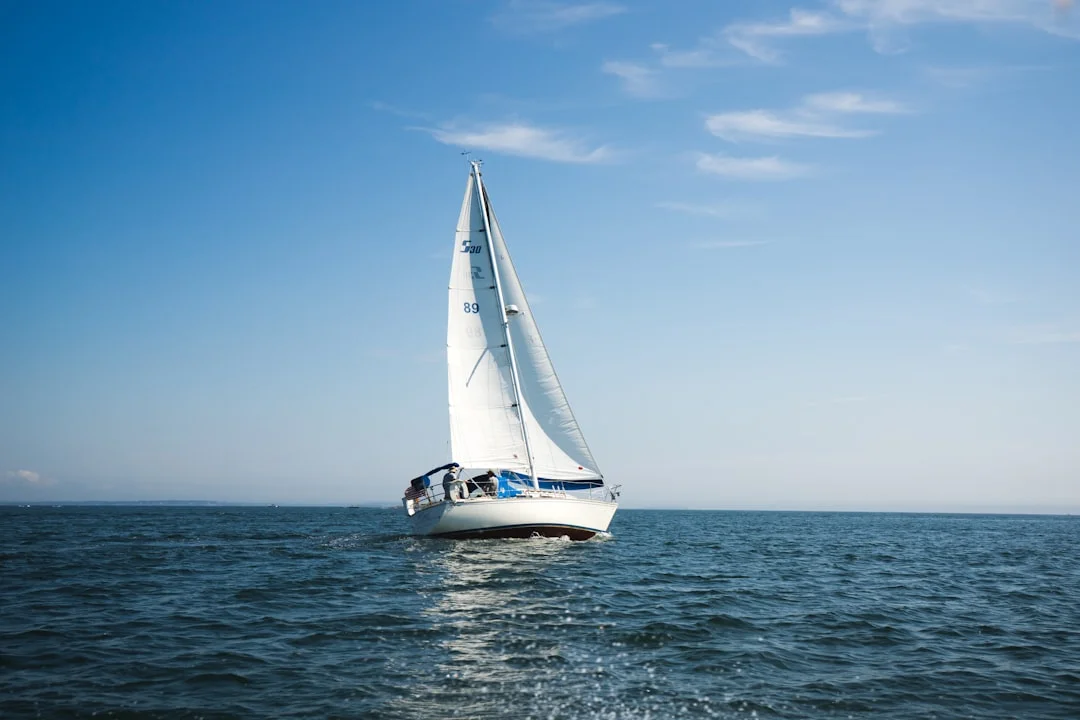
Photo by Evan Smogor on Unsplash
Realistic Beginner Sweet Spot: 22–30 ft (and Why)
If you forced me to pick a single “best beginner sailboat size,” I’d start at 22–30 ft LOA. That’s big enough to feel like a real boat in chop, small enough that sail loads and docking consequences stay manageable, and common enough that parts, sails, and community knowledge exist. It’s also a range that often fits a 30-foot slip category, which matters when marinas price by the foot.
This size range doesn’t magically make mistakes harmless. It just keeps mistakes from becoming five-figure lessons as often. New owners tend to underestimate what a slightly bigger boat does to windage, momentum, and the “spectator factor” at the fuel dock.
LOA vs LWL: handling and speed expectations
LOA (length overall) drives storage and costs. It’s the number the marina uses when quoting $10–$30/ft/month, and it’s the number the yard uses when estimating bottom paint and haul fees. LWL (length at waterline) is the quiet number that influences speed potential and motion, especially when you’re trying to make a harbor before dark.
For planning, I’d rather a beginner internalize realistic averages than brochure speeds. Many 22–30 footers see 4–6 knots as a conservative coastal average depending on wind, sea state, and how much you enjoy sail changes. If you’re consistently “late,” it’s rarely because the boat is slow; it’s because the plan was optimistic.
Draft and keel type: shoal draft vs fin vs swing/centerboard
For beginner coastal cruising, a useful draft target is roughly 3.5–5.0 ft. Many popular 27–30 ft cruisers draw about 4.0–4.5 ft, which works in plenty of coastal harbors but can be limiting in thin-water bays or ICW-style routes. Shoal draft buys access and anchoring options, but you usually pay upwind performance and some pointing ability.
Swing keel/centerboard boats are a different animal. Board-up around ~2.0 ft and board-down around ~5.0 ft is typical geometry on trailerable designs, which is great for ramps and gunkholing. The trade is complexity: pivots, pennants, trunks, and hardware that eventually demand attention—usually when you’d rather be sailing.
Cost scaling per foot: dockage, sails, hauling, and bottom work
Costs scale with length in ways beginners don’t expect. Bottom paint materials often run $20–$35/ft DIY (about $500–$1,050 for 25–30 ft), or $60–$120/ft professionally (about $1,500–$3,600). Slip fees scale monthly, and sails scale painfully: a new mainsail for a 26–30 footer is commonly $2,000–$4,500, and a 135% genoa is often $2,200–$5,000.
If you’re cruising near shoals, draft isn’t just about where you can sail; it’s also about where you can hide. Having the option to duck into a 4-foot anchorage instead of committing to a crowded deep-water marina is sometimes the difference between a relaxing weekend and an impromptu stress seminar.

Photo by Ian Keefe on Unsplash
Day Sailor vs Trailer-Sailer vs Small Cruiser: Choose a Type
Boat “type” is where beginners either set themselves up for success or buy an aspiration. The day sailer vs cruiser for beginners question isn’t philosophical—it’s about workload. What do you want to do at 1700 when you’re tired: flake sails and rinse salt, or cook, troubleshoot the head, and wonder why the cabin lights dim when the water pump runs?
You can learn on anything, but ownership is different. Every additional system on board is one more thing that can break on a Saturday afternoon when parts stores are closed and your patience is already on backorder.
Daysailers: simplest learning curve and lowest systems load
Daysailers are the cleanest learning platform because they’re mostly sailboat, not floating apartment. Fewer through-hulls, minimal plumbing, simpler wiring, and usually no inboard engine means fewer expensive surprises. They also tend to reward good trim and boat handling, because there’s less mass masking bad technique.
New entry-level daysailers often run $25,000–$60,000, which is not “cheap,” but it buys reliability and less refit drama. Used daysailers and small trailerables can be $4,000–$20,000, but condition varies from “ready to sail” to “free boat that costs $12k.”
Trailerable sailboats: flexibility with hidden constraints
The best trailerable sailboat for beginners is the one you can actually tow, launch, and rig without turning every outing into a half-day production. Practical trailering targets: 18–26 ft LOA, <8 ft 6 in beam to avoid wide-load hassles in most states, and a realistic towing package under 5,000–6,500 lb once you include trailer, gear, fuel, and the stuff you swear you don’t pack.
Draft matters at ramps. A swing/centerboard boat with ~2 ft board-up can launch in places a fixed-keel boat simply can’t. But don’t ignore ramp slope, low tide, and the fact that some ramps are designed for bass boats, not sailboats with a mast to step and a rudder to attach while an audience forms.
Pocket and small coastal cruisers: comfort, systems, and maintenance
Small cruisers buy you overnights, privacy, and weather tolerance—at the cost of systems and maintenance. Used 26–30 ft coastal cruisers (roughly 1975–2005 production) commonly list $8,000–$45,000, and the good ones sell quickly because they’re the sweet spot for weekend coastal cruising.
Auxiliary choice is a big divider. Trailer-sailers often use 6–15 hp outboards, and a modern 9.9 hp 4-stroke typically weighs 85–120 lb and costs $2,500–$4,500 new. Used cruisers commonly carry 10–20 hp inboard diesels, and when those finally die, repower quotes of $10,000–$25,000 installed have a way of focusing the mind.

Photo by Tim Gouw on Unsplash
Beginner Sailboat Budget: Purchase Price vs First-Year Reality
Here’s the uncomfortable truth: the purchase price is often the smallest check you’ll write in year one. A beginner sailboat budget needs to include storage, insurance, survey/haul, and an immediate “reset” allowance for safety and reliability. If you spend every last dollar on the boat itself, you’re gambling with deferred maintenance and hoping the previous owner was both skilled and honest—two traits that rarely travel together.
Used can be great value for beginners, because depreciation already happened and the boat may include gear you’d buy anyway. New can be great value if it gets you sailing immediately instead of spending weekends rewiring someone else’s mistakes. The key is being honest about your tolerance for projects and your calendar.
The numbers below are not worst-case horror stories. They’re common, boring costs that show up on otherwise decent boats.
| Example beginner boat (first year) | Purchase price | Storage/dockage | Insurance | Survey + haul/launch | Immediate refit allowance | Bottom paint (year 1) | Estimated first-year all-in |
|---|---|---|---|---|---|---|---|
| Used 27-ft slip-kept cruiser (1975–2005) | $12,000 | $250–$900/mo (=$3,000–$10,800/yr) | $500–$1,200 | $450–$900 + $300–$800 | $2,000–$6,000 | $1,500–$3,600 pro (or $700 DIY) | $19,750–$33,300 |
| Used 24-ft trailer-kept (board-up ~2 ft) | $20,000 | $50–$250/mo yard storage (=$600–$3,000/yr) | $300–$900 | $400–$700 + $0–$500 | $1,500–$4,000 | Often deferred; plan $0–$800 | $22,800–$29,900 |
| New 23-ft daysailer (turnkey) | $85,000 | $150–$600/mo (=$1,800–$7,200/yr) | $600–$1,200 | Optional; still wise $400–$700 | $500–$2,000 | Usually none year 1 | $88,300–$96,900 |
A survey typically runs $18–$30/ft (about $450–$900 for 25–30 ft), plus $300–$800 haul/launch in many yards. Bottom paint is often the first “welcome to ownership” bill, and sails/rigging can dwarf what you saved by buying cheap. If the mainsail is blown and the standing rigging is original, your “deal” can become a refit.
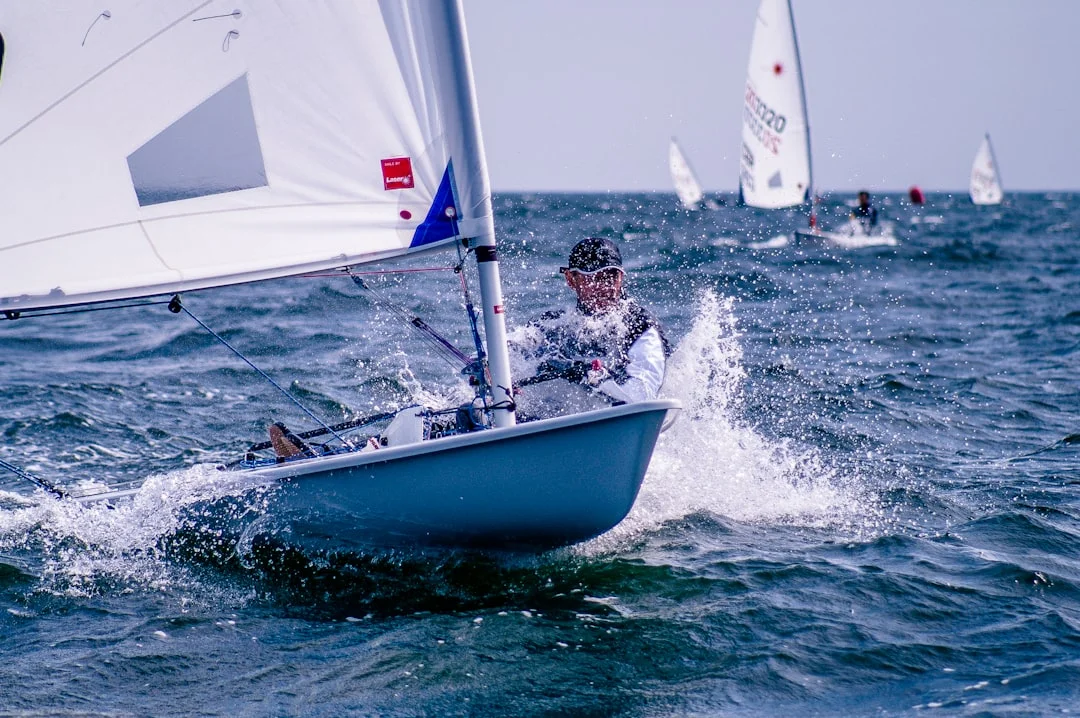
Photo by Ludomił Sawicki on Unsplash
Used-Boat Inspection Checklist (ABYC/USCG Standards-Based)
When beginners get burned, it’s rarely because the cushions are ugly. It’s because of high-consequence failures: flooding, fire, electrocution, or rig loss. This is where ABYC standards earn their keep, because they define what “right” looks like beyond the seller’s confidence and the broker’s smile.
A good surveyor is worth the money, but you should still do your own pre-screening so you don’t pay to discover obvious deal-breakers. Think in layers: flooding first, then fire/electrical, then rig/structure, then the rest. Cosmetics come last, because cosmetics don’t sink.
Through-hulls, seacocks, and flooding prevention (ABYC H-27)
ABYC H-27 is your lighthouse here. Proper seacocks (not household gate valves), solid backing, marine-grade hose, and appropriate clamping are the basics. If you see corroded fittings, mushy backing, or hoses that look like they survived the Clinton administration, assume replacement.
Look for double-clamping where appropriate and correct hose runs with no sharp bends or chafe points. If the boat has multiple underwater penetrations and you can’t easily reach them, that’s not “character”—that’s a maintenance trap. One bad fitting below the waterline is all it takes to ruin your season.
Fuel system red flags (ABYC H-24/H-33, NFPA 302)
Gasoline systems fall under ABYC H-24; diesel under ABYC H-33, with NFPA 302 commonly referenced for fire safety practices. Start with your nose: if you smell fuel in the bilge or cabin, stop rationalizing. Check hose condition, date codes, clamps, venting, and the overall cleanliness of the installation.
Older gasoline boats deserve extra scrutiny because vapor is the real enemy. Look for proper ventilation and wiring that won’t spark at the wrong time. For diesel, contamination and neglected filters are common; budget for a fuel-polishing plan and new hoses if the installation looks tired.
Electrical and shore power safety (ABYC E-11)
ABYC E-11 is where you find the “creative” work. Deal-breakers include missing overcurrent protection, unsafe battery switching, corroded connections that run hot, and shore-power setups that look like they were assembled in a hurry. If you see household solid-core wire, wire nuts, or mystery AC splices, plan on a rewiring project.
Shore power deserves respect. A compromised inlet, reverse polarity issues, or sloppy bonding/grounding can turn a marina into an electrocution hazard. Even on a simple boat, insist on neat conductor runs, proper fusing, and a battery installation that won’t short if the boat gets knocked down.
Rig, keel, rudder: high-consequence structural items
Standing rigging age matters more than shine. On a 25–30 footer, a standing rigging replacement is commonly $2,500–$6,500, and running rigging refresh runs $400–$1,500. If the owner can’t document rigging age, assume it’s older than they think.
Sails aren’t cheap either: a mainsail is often $2,000–$4,500 and a 135% genoa $2,200–$5,000. Inspect chainplates, deck compression around mast partners, keel bolts (if accessible), rudder play, and any signs of hard grounding. If the keel-to-hull joint is weeping rust stains or the rudder has serious slop, treat it as a serious negotiation point—or a reason to walk.
If there’s a head/holding tank, confirm ABYC A-1 practices and compliance with USCG MSD rules (33 CFR 159). Leaky sanitation hoses don’t just smell; they signal deferred maintenance and poor system care.

Photo by Vidar Nordli-Mathisen on Unsplash
Beginner-Friendly Setup: Rig, Reefing, Docking, and Safety
The easiest boat for a new owner is the one that reduces workload at the exact moments beginners get behind the boat: building breeze, busy channel, tired crew. You’re aiming for a rig and deck layout that lets you shorten sail early and dock without drama. If your setup requires heroics to be safe, it’s not beginner-friendly—it’s an accident with a calendar.
This is also where “simple” beats “clever.” Clever systems are great when they’re maintained. Beginners inherit clever systems that haven’t been maintained.
Rig choice and sail handling: masthead vs fractional, furling vs hank-on
For most beginners, a simple masthead sloop or straightforward fractional sloop is ideal. Minimize headsail inventory, because changing jibs in real wind is when crews learn new words. A single furling headsail and a slab-reefing main covers a lot of ground and keeps decision-making simple.
Roller furling isn’t perfect, but it’s forgiving. A partially furled genoa is not as efficient as a proper working jib, yet it’s often safer for short-handed crews because you can reduce sail in 15 seconds instead of three frantic minutes. On boats in the 25–30 ft range, that matters.
Reefing and control layout: reducing workload underway
Plan for two reefs in the mainsail on a beginner coastal setup. Single-line reefing can be convenient, but it adds friction and complexity, so keep it maintained and test it at the dock. A reefing system that “usually works” will fail precisely when you most want it.
Cockpit layout is not vanity—it’s safety. Lines led aft help short-handed crews, but only if the organizers and clutches are sized correctly and not overloaded. Self-tailing winches are nice, not required, but they reduce crew fatigue, which reduces mistakes.
Safety and compliance: what’s required vs strongly recommended
USCG basics are non-negotiable: a wearable PFD per person, a sound-producing device, and navigation lights that actually work. Fire extinguisher requirements depend on configuration and vessel specifics, so verify current USCG rules for your boat’s age and installed systems. Don’t guess—inspect.
For coastal beginners, I strongly recommend a fixed VHF with DSC ($200–$600), a basic chartplotter combo ($300–$1,200), and an autopilot if you sail short-handed ($600–$2,200). Autopilot isn’t laziness; it’s your third hand when you reef, handle fenders, or check a chart.
Ground tackle is where beginners get humbled. A solid baseline is a 10–16 lb modern scoop-style anchor with 15–30 ft of 1/4–5/16 in chain and 150–200 ft of 1/2 in nylon rode, usually $300–$900 depending on chain length and quality. If you skimp here, you’re gambling your boat on a $79 anchor shaped like a coat hanger.
Practical tip: Set up for “reef early” and “dock slow.” If you can reef from the cockpit and you have spring lines cut to length, your stress level drops by about 50%—and so does your crew’s desire to mutiny.
Route Planning and Sea Distance: Your Boat’s Real Range
Beginners often plan trips using optimistic speed and perfect wind angles, which is a lovely way to arrive in the dark. Conservative planning is not pessimism; it’s seamanship. The goal is to pick routes that fit your boat’s real pace and your crew’s real endurance.
A simple workflow keeps you honest: choose waypoints, compute distance, compute time, add margin, identify bailouts. Then check constraints like bridge clearance, tidal current gates, and draft limits—especially if you’re in that ~3.5–5.0 ft draft world where “close enough” can become “stuck.”
Estimating passage time from LWL and realistic averages
Use a conservative average of 4–6 knots for many 22–30 ft cruisers in mixed coastal conditions. Then do the math like an adult: nautical miles ÷ knots, plus a 20–30% margin for tacks, current, sail changes, and time spent looking for a mooring ball that someone painted the same color as the sunset.
This is where checking the nautical miles for your planned route is handy. Punch in your waypoints, get a real number for miles, and then build a daylight plan around it. It’s far easier to shorten a trip than to stretch daylight.
Fuel/charging implications for auxiliaries and electronics
If you’re motoring to make a bridge opening, fuel burn and charging matter. Outboards in the 6–15 hp range are simple, but they can struggle in chop if the prop ventilates. Small inboards (10–20 hp) push better and charge better, but they reward preventive maintenance and punish neglect.
Electronics add load. A simple 12V setup with a 100–200 Ah house bank is common on small cruisers, but only if it’s wired safely and charged properly. Planning an “easy” 25 nm day and then motoring 15 nm because the wind died is how you learn whether your charging system is real or just decorative—and it’s why it helps to estimate your fuel needs based on the voyage distance before you cast off.
Beginner routing workflow: constraints, bailouts, and weather windows
For early coastal trips, I like an alternate harbor or safe anchorage within 10–20 nm whenever geography allows. That doesn’t mean you’ll use it; it means you’re not committed to a bad decision if weather or gear turns sour. Also, don’t forget draft and tide—your 4.5 ft keel doesn’t care about your confidence.
Use a quick tool to calculate the distance between ports again here: compare the “direct” route to a more protected inside option, then decide which fits your crew and forecast. Plan like you’ll be wrong about something, because you will be—just hopefully about something small.
Best Beginner Sailboat Scenarios (Size/Type/Budget Picks)
There isn’t one universal best boat. There are best scenarios that match constraints—crew, water, storage, and budget—and then there are expensive mistakes that look good in photos. The table below is how I’d shortlist options without forcing you into a single make/model.
If you want a rule that holds up: choose the smallest boat that safely meets your most common mission. Bigger is only better when you use what bigger buys you.
| Scenario | Target LOA | Draft target | Storage mode | Propulsion | Typical purchase range | “First $2k to spend” priorities |
|---|---|---|---|---|---|---|
| 1: Protected-water learning + easy trailering | 18–22 ft | Fixed shoal or board-up ~2 ft | Trailer | Outboard 6–10 hp | $5,000–$25,000 | PFDs, VHF handheld, fresh running rigging, trailer tires/bearings |
| 2: Trailerable coastal explorer under 26 ft | 22–26 ft | Board-up ~2 ft, down ~5 ft | Trailer or dry stack | Outboard 8–15 hp | $12,000–$45,000 | Ground tackle ($300–$900), dock lines (1/2 in), chartplotter, service outboard |
| 3: Slip-kept 27–30 ft coastal cruiser for weekends | 27–30 ft | ~4.0–4.5 ft common | Slip/mooring | Inboard diesel 10–20 hp | $15,000–$45,000 | Bottom paint plan ($700 DIY or $1,500–$3,600 pro), VHF DSC, bilge pump/float switch, rig inspection |
| 4: Value-focused used buy that avoids big refits | 22–30 ft | Match local depth | Any | Either | $15,000–$35,000 | Pay for survey ($18–$30/ft), replace suspect hoses/clamps (ABYC H-27/H-24), fix overcurrent protection (ABYC E-11) |
| 5: “I want new and simple” day sailing | 18–23 ft | Minimal | Slip/dry stack/trailer | Outboard or none | $25,000–$60,000 | Safety kit, good covers, decent anchor setup, sailing lessons and dock practice |
| 6: “Small cruiser, new-ish, minimal drama” | 22–26 ft | ~3.5–5.0 ft | Slip | Outboard well or inboard | $60,000–$140,000 | Electronics basics, spare parts kit, line handling setup, decent fenders/springs |
A slip-kept starter sailboat under 30 feet brings recurring costs you should price upfront: dockage often $10–$30/ft/month and insurance $300–$1,200/year in many U.S. markets. For used boats, assume at least one “reset” item—bottom work ($500–$3,600) or a sail ($2,000–$5,000)—unless documentation proves otherwise.
When you narrow to three candidates, run the numbers like you did in the budget table, then schedule a survey and a sea trial. Also, use Breezada’s sea distance calculator to test whether your favorite “weekend hop” is actually a comfortable daylight run at 4–6 knots with a 20–30% margin.
Frequently Asked Questions
For a 25–30 ft masthead sloop, how do you estimate whether a 135% genoa is too much sail for short-handed beginners, and when is a smaller working jib + furling a better choice?
On many 25–30 foot masthead sloops, a 135% genoa is great power in light air and a lot of sail to wrestle in 15–20 knots when you’re two-up. If the boat consistently sails heeled hard with weather helm before the main is even reefed, or the genoa sheet loads feel like a gym membership, it’s “too much” for your crew even if it’s normal for the design. A smaller working jib (often ~100–110%) on furling, or a reefable genoa you’re disciplined about rolling early, is usually the better beginner solution for workload and docking approaches.
What ABYC E-11 electrical findings on a 1980s–1990s cruiser should be treated as immediate no-go items (e.g., missing overcurrent protection, unsafe shore power inlet, improper battery switching)?
Immediate no-go items include missing or bypassed overcurrent protection on primary DC feeds, scorched wiring/terminals, household wire or wire nuts, and a shore-power inlet or AC panel that shows heat damage, corrosion, or improper grounding/bonding practices under ABYC E-11. Also treat “mystery” battery switching (no clear main disconnect, incorrect switch wiring that can kill charging protection, or unfused battery positives) as a serious safety defect. These aren’t “projects”; they’re fire and shock risks that can make the boat uninsurable.
How can you use standing rigging age, wire diameter, and terminal condition to decide between “monitor” and “replace now,” and what is the realistic $2,500–$6,500 replacement scope on a 25–30 ft boat?
If rigging age is unknown or plausibly over 10–15 years in salt water, I lean toward replacement unless inspection and documentation are excellent. Check for broken wire strands, rust at swage fittings, “necking” at terminals, cracks at chainplates, and any history of dismasting or hard grounding. The $2,500–$6,500 scope on a 25–30 footer typically covers new shrouds and stays with swaged or mechanical terminals, plus tuning; chainplate removal/bedding, mast tang work, or new turnbuckles can push it higher.
For a trailer-sailer under 26 ft, how do tow rating, tongue weight, and total towing package limits (<5,000–6,500 lb) affect what boats are truly feasible with a half-ton truck/SUV?
Ignore brochure “dry weight” and focus on loaded towing reality: boat + trailer + outboard + fuel + water + gear. Many combinations that look like 4,800 lb on paper land closer to 5,500–6,500 lb in the real world, which is exactly where marginal tow vehicles feel unsafe in crosswinds and downhill braking. Tongue weight matters too—too light and it sways, too heavy and it overloads the rear axle—so you want the rig balanced and within the vehicle’s rated limits, not just “it pulled it once.”
What is the correct baseline anchor/chain/rode sizing (10–16 lb anchor, 15–30 ft chain, 150–200 ft rode) for a beginner coastal boat, and how should it change with higher windage or shallow anchoring areas?
A solid baseline for many beginner coastal boats is a 10–16 lb modern scoop-style anchor, 15–30 ft of 1/4–5/16 in chain, and 150–200 ft of 1/2 in nylon rode, typically $300–$900 depending on chain length and brand. If you have higher windage (taller cabin, more freeboard) or you anchor in crowded/shallow areas where scope is limited, increase chain length toward 30 ft and consider stepping up anchor size within the manufacturer’s displacement recommendations. In shallow gunkholes, more chain helps keep the pull angle low without needing absurd scope.
Conclusion
The best sailboat for beginners is the one that matches your water, your storage, and your real budget—especially the first-year budget. For many owners, 22–30 ft delivers the best balance of manageable handling, useful capability, and costs you can predict. Pick a simple rig, insist on standards-based safety (ABYC/USCG), and treat surveys and sea trials as mandatory—not optional.
Next step: shortlist three boats, run them through the first-year cost table, map your typical routes with Breezada’s sea distance calculator, then book a survey and sea trial before you commit. That’s how you end up sailing next weekend instead of “refitting” until retirement.
About the Author
Related Articles

San Francisco Bay Sailing: Winds, Tides & Hazards Guide
Plan safer San Francisco Bay sailing with wind patterns, tides, currents, fog and key hazards. Use this guide to pick a route and go sail today.
By Breezada Team
Sailboat Engine Won't Start: Diagnostic Flowchart
Troubleshoot a sailboat engine that won't start with a step-by-step flowchart for batteries, starter, fuel, air, glow plugs & alarms. Fix it now.
By Breezada Team
Sailboat Bottom Paint Guide: Types, Costs & Prep
Learn sailboat bottom paint types, costs, and prep steps—plus how often to repaint. Get the right antifouling plan for your boat today.
By Breezada Team
Diesel Heater Troubleshooting Boat: No-Start & Soot Fixes
Fix diesel heater no-start and sooting on your boat. Step-by-step checks for power, fuel, air/exhaust and maintenance—read the guide now.
By Breezada Team