Sailing Packing List for Bareboat Charters: Bring vs Provided (Plus a Printable Checklist)
Bareboat charters reward the prepared and punish the optimistic. The boat will have what it’s legally required to carry, plus whatever the operator thinks counts as “standard,” which is rarely the same thing you think is standard. The goal with any sailing packing list is simple: bring what you can’t count on, skip what’s already onboard, and confirm the few items that routinely trigger surprise fees.
Use the framework below as you pack: Bring / Provided / Confirm. It’s the difference between a tidy cabin and living out of a damp heap of T‑shirts while you argue over who stole the only USB outlet.
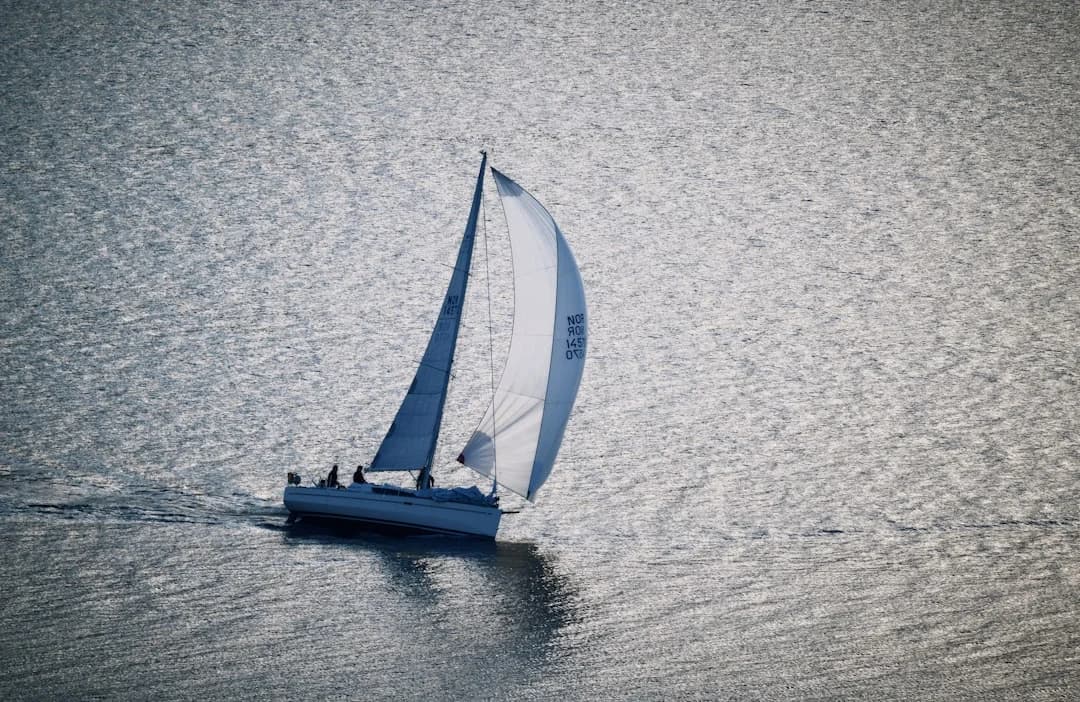
Photo by Kristel Hayes on Unsplash
Bareboat Charter Reality Check: What’s Provided vs What Varies
The operator’s inventory list: your single source of truth
Every charter base has an “inventory list,” and it’s the only document that matters more than your passport. It will spell out whether linens are included, how many towels you get, whether snorkel gear exists, and what’s in the galley beyond a single heroic frying pan. If you don’t have the list, ask for it; if they “don’t have one,” that’s your answer too.
Bareboat also means no crew. You’re handling lines, fuel jugs, trash, and the daily systems routine—water, power, and heads. Expect a functional tender and typical deck gear (lines and fenders), but do not assume adapters, USB outlets, toiletries, or even a sharp knife that isn’t shaped like a butter spreader.
Region differences: Caribbean/USCG norms vs Mediterranean/ISO norms
In U.S. waters (and commonly the BVI operating under U.S.-style expectations), carriage rules matter. Under USCG recreational carriage requirements (33 CFR 175), most boats must carry 1 wearable PFD per person plus 1 throwable Type IV. That doesn’t guarantee comfort, sizing, or that anyone will enjoy wearing them for a breezy upwind bash.
In much of the Med you’ll often see ISO 12402-rated lifejackets rather than USCG-labeled ones, and the gear mix can feel different. It’s usually compliant locally, but fit and condition vary, and inflatable preferences vary by operator policy. The trick is separating “legal onboard” from “you’ll actually wear it,” and confirming what you’re allowed to bring if you want your own.
Confirm-before-you-pack checklist (the 10-minute email)
Linens, towels, and Wi‑Fi are the classic variable-cost traps. Linen packages commonly run $15–$40 per person/week if not included, and hotspot rentals (where offered) are often $50–$150/week. Snorkel gear is another wild card: sometimes free, sometimes rented, sometimes “available” in the same way unicorns are available.
Here’s a copy/paste email template that saves real money and real aggravation:
Inventory confirmation template
- Please confirm linens/towels: included or optional? If optional, cost per person/week ($15–$40 typical).
- Confirm PFDs: count and sizes onboard (adult/child), plus throwable Type IV if in U.S. waters (33 CFR 175).
- Confirm shore power/outlets: 120 V or 230 V, plug type, and whether cabins have USB outlets.
- Confirm snorkel gear: masks/snorkels/fins included, rented, or unavailable; sizes/quantities.
- Confirm tender/outboard: type and hp (often 6–15 hp), fuel can arrangement, and required safety gear.
Practical tip: Pack from the inventory list, not from your imagination. Most overpacking is just distrust in spreadsheet form.
Luggage & Stowage: Soft Bags, Cubes, and Wet/Dry Workflow
Why hard suitcases fail on boats (and what “stowable” means)
Hard-shell suitcases don’t belong on sailboats for the same reason a refrigerator doesn’t belong in a dinghy. Cabins have narrow lockers, under-berth voids, and awkward corners that demand compressible bags. A common practical target is a duffel that collapses to about 8–12 in (20–30 cm) tall so it actually fits under a berth instead of becoming cabin furniture.
You’re also sharing space with someone else’s gear, wet towels, and the boat’s spares. On a 35–45 ft charter boat, your “closet” is typically a locker that was designed by someone who hates hangers. Bring something that squishes, folds, and disappears when empty.
Recommended bag volumes and a two-bag system (cabin + day bag)
For most crews, a 50–90 L soft-sided duffel is the sweet spot, typically $40–$180 depending on build quality. Add a smaller day bag that is happy getting wet, because everything that goes to shore will eventually get splashed, rained on, or sat in seawater. If you want a single do-it-all “tender kit,” a roll-top 20 L dry bag ($20–$60) is the most useful size.
Dry bag sizing is straightforward if you’re honest about what you carry. 10 L is valuables only, 20 L is day kit, and 30–40 L handles beach day bulk like towels and snorkel gear. If your crew fights over dry-bag space, congratulations—you’ve discovered the real hierarchy onboard.
Wet/dry separation that keeps cabins livable
Organize by function and moisture. I like one cube per “system”: swim, deck, shore, sleep, plus a small “boat bits” pouch for sunscreen, headlamp, and spare batteries. It takes about 5 minutes to set up, and it saves hours of rummaging while the boat rolls in an anchorage.
Keep wet gear out of cabins whenever possible. Use the cockpit locker, a dedicated wet bag, and a strict rule: nothing dripping goes on bunks. If you bring snorkel gear, know it eats space: a mask + snorkel typically weighs 0.6–1.2 kg and takes ~3–6 L of volume, before fins even enter the argument.
Practical tip: Your cabin stays sane when “wet” has one home and “dry” has another. Enforce it on day one, not day four.
Clothing System for 7 Days: Quick-Dry Layers and Fewer Items
A repeatable capsule wardrobe built for salt, spray, and sweat
For a 7-day charter, pack clothing that you can rinse, dry, and re-wear without becoming unpopular. Quick-dry technical fabrics beat cotton because cotton holds saltwater like a grudge, and then smells like low tide. A UPF 50 rash guard or sun shirt earns its place immediately, especially in the Caribbean where “cloudy” still burns you.
Separate “deck clothing” from “shore clothing.” Deck gear is about chafe, sun, and spray; shore gear is about not looking like you’ve been sleeping in a lazarette. If you keep one decent set of shore clothes dry, you’ll appreciate it the first time everyone else shows up to dinner in damp board shorts.
Cold nights, rain squalls, and air-conditioned cabins
The Med can cool off fast after sunset, and even the tropics have the classic charter surprise: cabins that feel like they’re air-conditioned by spite. A light mid-layer and a packable rain shell cover 90% of squalls and night watches without eating space. If your boat has a bimini and sprayhood, you’ll still get wet—just in more interesting directions. If conditions turn and you find yourself dealing with stronger winds, understanding how to handle heavy weather under sail is essential knowledge for any bareboat crew, and so is reading weather for sailing from clouds, wind shifts, and the barometer before the forecast app loses signal.
Bring a sleep layer you can tolerate wearing in a damp cabin. It doesn’t need to be thick, but it should be clean and dry. If you’re the kind of person who “runs cold,” you’re also the kind of person who will steal someone else’s towel at 0200.
Laundry reality onboard: why quick-dry wins
Most bareboat charters don’t include laundry access mid-week, and even if you find it ashore, you’ll lose half a day doing it. The onboard method is rinse in freshwater, wring hard, hang in airflow, and hope your crew doesn’t drop it overboard. That cycle only works with quick-dry fabrics, and it’s why you can pack fewer pieces than you think.
Avoid metal accessories that scratch gelcoat and avoid belts with heavy buckles when you’re leaning into stanchions. Also, keep one “clean deck” outfit for passages—less sand, fewer stains, better grip when you’re moving around. Your future self will thank you quietly, which is the highest form of gratitude at sea.
Footwear, Sun, and Swim Gear: Deck Safety Meets Comfort
Two-shoe rule: non-marking deck shoes + dinghy/water shoes
Flip-flops have their place, and that place is not during docking. Lines, cleats, and fuel cans don’t care about your toes, and most tenders carry 6–15 hp outboards that encourage awkward lifting and slippery boarding. A closed-toe, non-marking deck shoe is your “work boot,” and it’s usually $25–$140 depending on brand and build.
The second shoe is for wet landings—something that drains and grips on algae-slick steps. Water shoes also make beach-to-dinghy logistics less comedic when you’re carrying groceries. The simplest rule onboard: one pair of shoes stays clean for deck use only, and it never touches sand.
Sun protection with numbers: UPF, SPF, and how much to pack
Sun is a safety issue offshore, not a vanity issue. Start with physical protection—hat, UPF 50 top, and polarized sunglasses—then backfill with sunscreen where fabric can’t cover. A good pair of polarized sunglasses runs $25–$200, and a floating strap is $8–$20, which is cheaper than donating your eyewear to Poseidon on day two.
For sunscreen, numbers matter because reapplication is real on a boat. A typical full-body application is about 30 mL (1 oz), and a 150 mL bottle is roughly 5 full applications—less if you’re reapplying properly after swims. Reef-safe sunscreen often costs $12–$28 per 150–200 mL, so covering up with clothing reduces both cost and skin punishment.
Snorkel strategy: bring for fit, rent for volume
Masks are personal, and a leaky rental mask can sour a perfect anchorage. I like bringing my own mask and snorkel for hygiene and fit, then deciding on fins based on luggage space. Remember the numbers: mask + snorkel is typically 0.6–1.2 kg and ~3–6 L of volume, which is manageable in a duffel.
If the base rents fins, that’s often the best compromise. If they don’t, you can still snorkel without them in calm water, but it’s more work and less range. Either way, pack a 20 L dry bag as the default “wet day” hauler, because it’s the piece of gear that saves phones, wallets, and tempers.
Practical tip: Closed-toe shoes for docking and dinghy fuel runs prevent the two injuries that ruin charters: crushed toes and sliced feet.
Safety & Compliance: PFDs, Lights, VHF, and Guest Add-Ons
What the boat should carry (USCG/ISO/ABYC context)
The boat should already be equipped to meet local requirements—PFDs, flares where required, navigation lights, and fire extinguishers consistent with standards like ABYC A-4 and fire protection norms such as ISO 9094. In U.S. waters, 33 CFR 175 drives the PFD baseline: one wearable per person plus a Type IV throwable on most recreational boats. That’s the minimum, not a promise of comfort.
In non-U.S. regions, you’ll more commonly see ISO 12402 lifejackets and MOB gear aligned with local practice and often influenced by ISO 15085 ideas around recovery equipment. Translation: you’ll probably have lifejackets and some MOB kit, but you may not love the style, sizing, or condition. Confirm counts and sizes early, and inspect on day one.
Personal safety items worth packing (and why they’re personal)
Some safety gear is best treated like toothbrushes: personal, not communal. A whistle, a small waterproof clip light, and a simple line cutter weigh almost nothing and are useful exactly when you don’t want to go hunting through lockers. If allowed and legal in your region, an inflatable PFD can be worth it for comfort, commonly $90–$250, but check base policy before you arrive with one.
A handheld waterproof VHF (look for IPX7/IPX8 ratings) is a smart add-on if your crew splits between boat and shore, or if you do frequent dinghy runs at night. The fixed VHF at the nav station is great until you’re 200 meters away in the tender with a dead phone and a sudden squall. Redundancy isn’t paranoia; it’s just math.
Night checks at anchor: light discipline and deck routines
Night routines are where small gear becomes big comfort. A headlamp with 200–400 lumens and a red mode is ideal, typically $20–$60, and it keeps your hands free for anchor snubbers, windlass controls, or “what is that noise” investigations. Avoid blasting white light into other boats; it’s rude and it ruins your own night vision.
Most charter boats carry ~50–80 m of rode/chain, and you’ll sleep better if you run an anchor-alarm app and keep a spare charging cable for the phone running it. This is also where a tool to check the nautical miles for your planned route helps: if you know tomorrow’s run is 10–25 nm, you can plan arrival in daylight and reduce night anchoring drama. In popular grounds like the Balearics and Spain’s Atlantic coast, most charter itineraries fall squarely in that daily-hop range. Night arrivals happen, but they shouldn’t be the default plan.
Toiletries, Med Kit, and Seasickness Plan: Pack for Scarcity
Heads (marine toilets) and what not to flush
Charter boats generally provide basic cleaning supplies, not your personal toiletries. Assume you’re bringing shampoo, toothpaste, deodorant, and any reef-safe products you care about. More important: understand the head system, because marine toilets are not forgiving, and repairs are not a fun way to spend a vacation.
Holding tanks on charter boats commonly range ~60–150 L, and that capacity disappears fast with a full crew and enthusiastic flushing. Many operators enforce a “nothing but paper” policy, and some enforce “only the paper we provide.” Never put wipes, tampons, paper towels, dental floss, or anything “flushable” into a marine head unless you enjoy hand-pumping regret.
A minimal but effective onboard medical kit
Charter first-aid kits vary from excellent to “one Band-Aid and a prayer.” Bring blister care (hydrocolloid pads), antiseptic wipes, a small roll of gauze, and adhesive tape. Add pain relief, an antihistamine, and rehydration/electrolyte packets, because sun and salt quietly dehydrate people who swear they’re fine.
Plan for minor cuts and coral scrapes if you’re swimming, and pack tweezers and a small irrigation syringe if you have one. A reusable water bottle in the 0.75–1.0 L range ($12–$50) is a practical item, not a lifestyle statement. You’ll drink more if it’s always within reach, and headaches decline accordingly.
Seasickness timing: prevention beats treatment
Seasickness meds work best before symptoms start, not after you’re green and negotiating with the horizon. Common OTC options like meclizine are often taken about ~1 hour before travel (follow the product label and your clinician’s advice). Scopolamine patches are typically applied several hours before exposure and can last up to ~72 hours per patch, again per labeling and prescription guidance.
If you expect a bumpy upwind leg, plan meals accordingly: light, salty snacks, simple carbs, and steady hydration. This is where route planning helps: calculate the distance between ports to estimate passage time and pick departure windows that reduce exposure. A “quick” 15 nm hop can feel like a transoceanic passage if you leave into chop at the wrong tide.
Practical tip: Pack seasickness meds where you can reach them on deck. The time you need them is exactly when going below feels impossible.
Electronics & Power: 12V/120V/230V and Charging Workflow
Know your destination voltage and plug type
Expect power differences between regions. Many Caribbean/BVI boats and U.S.-based fleets use 120 V shore power; much of the Mediterranean uses 230 V. Outlets onboard may only be live when connected at the dock, and sometimes there are fewer sockets than crew members with phones.
Bring the correct plug adapter and consider a compact power strip that’s properly rated for local voltage. Keep it simple and marine-sensible: no questionable travel gadgets that get hot, and no high-draw salon appliances unless you like tripping breakers at the dock. If you must bring something like a hair dryer, check the wattage and ask the base first.
A realistic charging plan: phones, nav apps, cameras, speakers
A crew charging plan prevents the nightly “who stole my cable” ritual. Set one charging station near the nav table, label cables, and top up daily before you leave the dock or before sunset at anchor. A 10,000–20,000 mAh power bank ($20–$70) is the right scale for day use and dinghy runs.
Be realistic about conversion losses. A 20,000 mAh bank often yields about 1–2 full phone charges in real-world use when phones have ~5,000–10,000 mAh batteries and you factor inefficiency and cable losses. That’s still worth it—just don’t treat the number on the box like it’s delivered by a deity.
Waterproofing and redundancy: cables are mission-critical
On a charter, cables fail faster than anything with a screen. Bring at least one spare cable for each critical device (USB‑C, Lightning, or whatever your crew uses). Protect phones with an IPX8-style waterproof case ($10–$40) and assume anything in a cockpit pocket will eventually get soaked.
If you rent a Wi‑Fi hotspot, expect $50–$150/week and variable performance. Download charts, cruising guides, and charter docs for offline use, and keep copies in both the cloud and offline storage. This is not paranoia; it’s what you do after you’ve watched one phone take a swim on day one.
Galley, Provisioning, and Route Timing: Pack for the First 24 Hours
What’s usually in the galley vs what’s missing (and why it matters)
Most charter galleys include cookware, plates, cups, and basic utensils, plus a refrigerator that works best when nobody leaves it open deciding between yogurt options. What’s commonly missing are consumables: spices, cooking oil, foil, coffee filters, zip-top bags, decent trash bags, and sometimes even dish soap. That’s why “charter boat essentials” are mostly boring items you notice only when they’re absent.
Bring or buy early: zip bags, a sponge, microfiber cloths, and a few reusable shopping bags. Confirm what the base supplies, because some fleets provide a starter pack and some provide an empty sink and a confident smile. Avoid glass where you can; broken glass on a moving boat becomes an onboard religion, and nobody wants that faith.
Water and trash budgets: provisioning that respects tankage
Freshwater capacity on many 35–45 ft monohulls is often ~300–600 L, and conservative crews target ~10–20 L/person/day for showers, dishes, and drinking. That number sounds generous until you start “just rinsing” everything like you’re at home. Plan dish strategy (wipe first, minimal rinse), and bring drinks that don’t require endless washing and ice management.
Trash is the other quiet constraint. Island-hopping means trash offload opportunities are intermittent, and food packaging multiplies quickly. Choose foods with less bulky packaging, decant dry goods into zip bags, and keep wet trash contained so it doesn’t turn into cockpit perfume.
Route planning and sea-distance reality: how it changes food, ice, and timing
Food planning changes with distance and sea state. A typical island-hopping day might be 10–25 nm, but headwinds and chop can double the perceived effort even when the distance looks small. Use a tool to estimate your fuel needs based on the voyage distance before you commit to longer legs (especially if you expect motoring), then plan lunch for motion: wraps, fruit, crackers, and snacks that can be eaten one-handed.
Ice resupply is often the first provisioning problem crews underestimate. If tomorrow is a longer leg, buy ice the afternoon before and pre-chill the fridge overnight on shore power. If you’re doing a late checkout and a short hop, plan a first-night meal that doesn’t depend on perfection—pasta, pre-cooked chicken, or a no-cook fallback like tortillas and tuna.
Provisioning services can be worth it when time is tight. Fees commonly run $50–$250 + groceries, and they’re justified when arrival times are late or local stores are limited. If you self-shop, build a “first 24 hours” list that covers dinner, breakfast, coffee, and water, so you’re not forced into a midnight snack strategy of rum and regret.
Printable Sailing Checklist (Bring vs Provided vs Confirm)
Use this as your sailing checklist printable template. Copy it into a note app and tick items into three columns.
BRING (you’ll want your own)
- Soft duffel 50–90 L (compresses to 8–12 in / 20–30 cm height)
- Dry bag 20 L (plus 10 L valuables pouch if desired)
- UPF 50 shirt/rash guard, hat, polarized sunglasses + strap
- Reef-safe sunscreen 150–200 mL + after-sun aloe 100–200 mL
- Non-marking deck shoes + drainage water shoes
- Headlamp 200–400 lm with red mode
- Toiletries + any special hygiene items (no “flushable” wipes)
- Small med kit + seasickness meds (per label/Rx)
- Power bank 10,000–20,000 mAh, spare charging cables, adapters
- Mask/snorkel (optional; 0.6–1.2 kg, 3–6 L volume)
PROVIDED (usually onboard)
- Fenders and dock lines (common fenders 6–8 in diameter, 20–28 in length)
- Basic safety gear (PFDs, flares as required, fire extinguishers per ABYC/ISO norms)
- Cookware, plates, basic utensils
- Tender with outboard (often 6–15 hp) and standard deck gear
- Anchor rode commonly 50–80 m
CONFIRM (varies a lot)
- Linens/towels: included or $15–$40 per person/week
- Snorkel fins: included/rented/unavailable
- Wi‑Fi hotspot: $50–$150/week and coverage expectations
- Outlet availability, 120 V vs 230 V, USB ports, inverter use
- Paper policy for heads (what TP is allowed/provided)
- Any restrictions on bringing your own inflatable PFD/PLB
FAQ
If my charter is in the BVI or U.S. waters, how do I verify the onboard PFD inventory meets USCG 33 CFR 175 (wearable sizes/count + Type IV throwable), and what should I bring if the fit is poor?
Ask the base to confirm one wearable USCG-approved PFD per person and one Type IV throwable (common requirement under 33 CFR 175). Then, on boarding day, physically count them and check sizes (adult/child) before leaving the dock. If fit is poor, ask for exchanges immediately; if none are available, bring your own properly sized PFD if the operator permits it, especially for kids.
How do I choose a dry bag size (10 L vs 20 L vs 30–40 L) for dinghy runs, and what items must stay double-waterproofed (phone, car keys, passports)?
Use 10 L for phone/wallet/keys only, 20 L for your normal tender kit (water, sunscreen, light jacket), and 30–40 L for beach days with towels and snorkel gear. Double-waterproof anything that ends the trip if it gets wet: passport, car keys, and phone. That usually means an IPX8 phone case inside the dry bag, and documents in a sealed pouch inside the bag.
What’s a safe charging setup on a 120 V vs 230 V charter boat, and how do I avoid tripping shore-power breakers with high-draw devices (e.g., hair dryers, kettles)?
Confirm whether the boat’s shore power is 120 V (common US/BVI) or 230 V (common Med), then bring adapters/power strip rated for that voltage. Keep charging low-draw: phones, tablets, cameras, power banks. Avoid high-wattage devices like hair dryers and kettles unless the base explicitly says they’re acceptable; those are classic breaker-trippers, especially when someone else is also running a water heater or battery charger.
Given typical holding tank capacity (~60–150 L), what toilet paper and hygiene products are least likely to clog a manual/electric marine head, and what should never go into the bowl?
With ~60–150 L holding tanks, treat the system gently: use the paper the base supplies if they specify it, and use minimal amounts. Never flush wipes (even “marine” or “flushable”), tampons, pads, paper towels, floss, or cotton swabs. If you want a happier trip, keep a small lidded bin in each head for anything that isn’t toilet paper.
How should I time and combine seasickness prevention (meclizine ~1 hour before vs scopolamine patch applied hours before, up to ~72 hours) when I expect a bumpy upwind passage?
Prevention beats rescue. For many people, meclizine is taken ~1 hour before departure (follow label/medical advice), while scopolamine patches are applied several hours before and can last up to ~72 hours per patch (per labeling). Don’t experiment underway; trial any medication before the trip if possible, and avoid mixing meds unless your clinician says it’s appropriate. Then plan the passage like a grown-up: earlier departure, shorter legs, and food that’s easy on the stomach.
Recap: Bring vs Provided vs Confirm (and your next step)
Bareboat packing is a systems problem, not a fashion problem. Bring the personal items that affect safety, comfort, and hygiene; assume the boat provides the big-ticket hardware like fenders and basic safety gear; and confirm linens, snorkel gear, Wi‑Fi, and charging options before you fly. Pack stowage-first with a soft duffel, run a wet/dry workflow, and respect water and power budgets so the boat stays pleasant.
If you want to reduce last-minute chaos, turn this article into your printable sailing checklist, and use a tool to plan your route using a sea distance calculator when mapping daily legs so food, ice, and arrival timing match reality. The ocean doesn’t care that the itinerary looked easy on a brochure, and neither will your crew when dinner depends on it.
About the Author
Related Articles
Sailboat Engine Won't Start: Diagnostic Flowchart
Troubleshoot a sailboat engine that won't start with a step-by-step flowchart for batteries, starter, fuel, air, glow plugs & alarms. Fix it now.
By Breezada Team
Sailboat Bottom Paint Guide: Types, Costs & Prep
Learn sailboat bottom paint types, costs, and prep steps—plus how often to repaint. Get the right antifouling plan for your boat today.
By Breezada Team
Diesel Heater Troubleshooting Boat: No-Start & Soot Fixes
Fix diesel heater no-start and sooting on your boat. Step-by-step checks for power, fuel, air/exhaust and maintenance—read the guide now.
By Breezada Team
Docking a Catamaran: Maneuvers, Springs & Crew
Master docking a catamaran with close-quarters maneuvers, spring lines, and crew roles. Learn the steps and dock with confidence—read now.
By Breezada Team