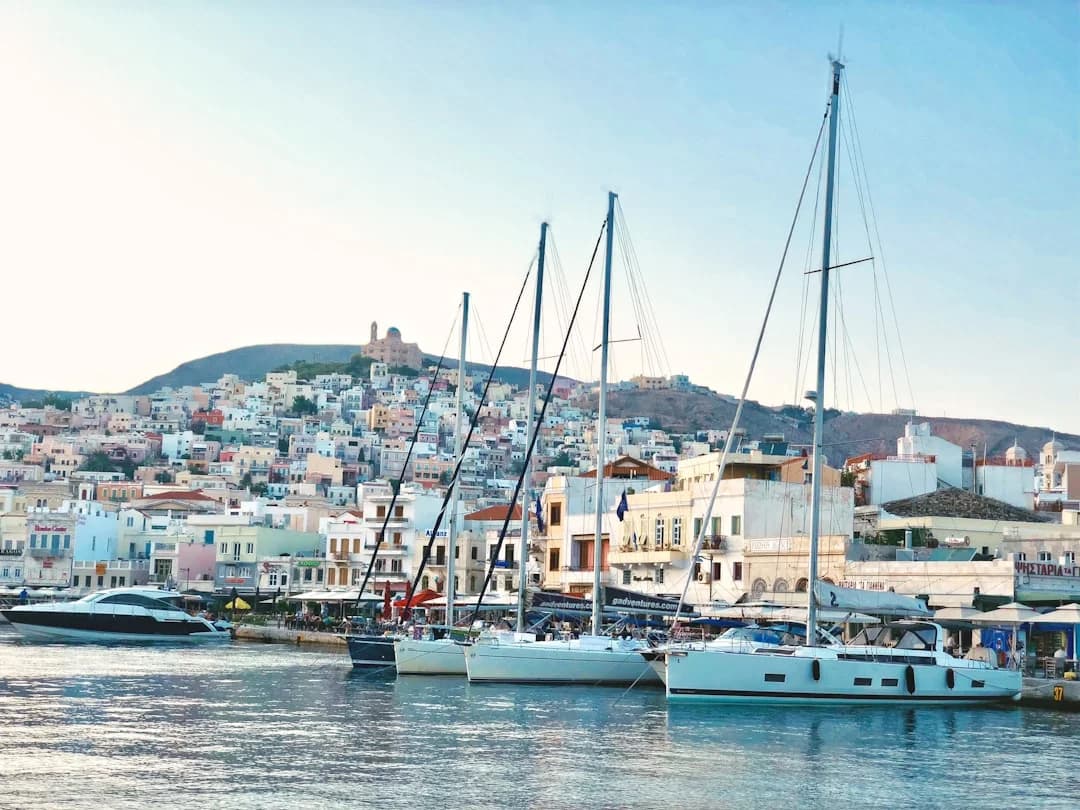
Cyclades Sailing Itinerary: 7–14 Day Route Guide
The Cyclades reward good seamanship and punish wishful thinking. Distances look small on a chart, but a 23 NM hop can turn into a wet, tacking slog when the Meltemi decides you’ve had enough fun for one lifetime. Plan your Cyclades sailing itinerary around exposure, lee shores, and realistic ETAs, and you’ll spend your week swimming and eating well instead of chasing your anchor at 02:00.
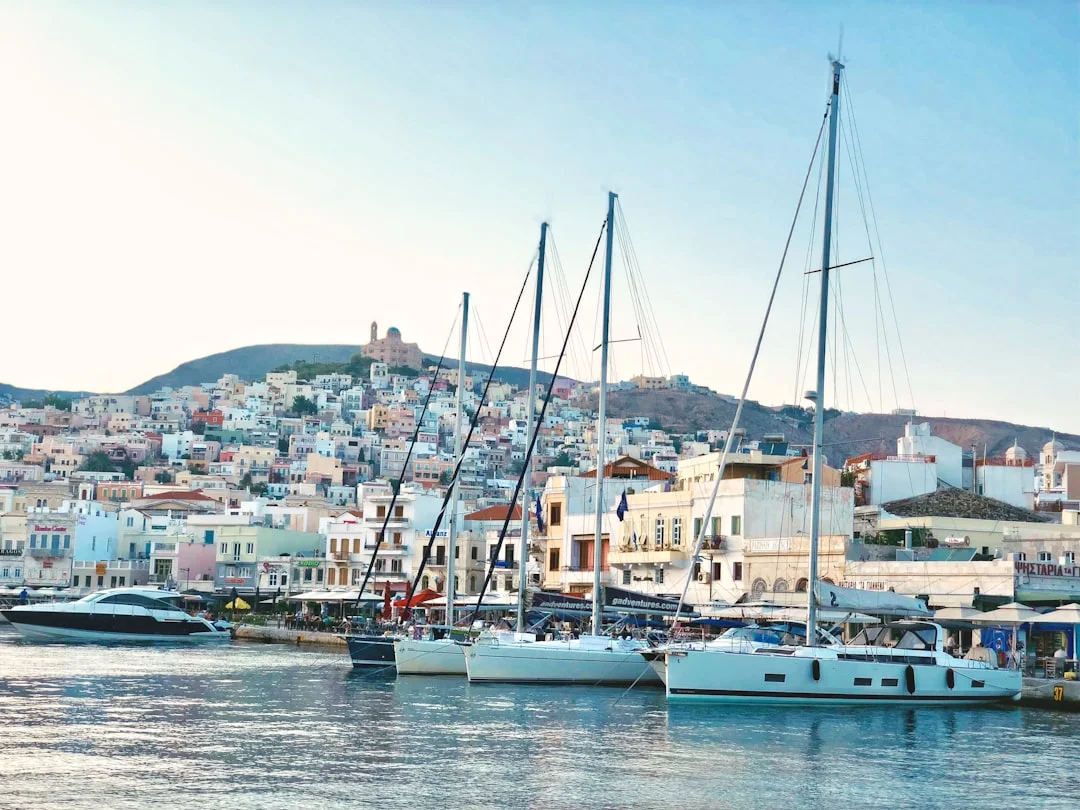
Photo by Despina Galani on Unsplash
Cyclades Sailing Conditions: Meltemi, Sea State, Seasons
Meltemi basics: direction, timing, and gust patterns
The Meltemi is the signature summer wind of the Aegean, typically N to NE, and it’s the reason short-looking legs become hard work. In July–August it’s common to see 25–35 kn sustained in the funnels between islands, with gusts that feel personal near headlands. The sea state builds fast because the chop is short and steep, especially when wind opposes leftover swell.
If your crew has mixed experience, treat sustained ~25 kn with Aegean chop as the point where “we can do it” becomes “why are we doing it.” You can sail in more, but comfort and safety margins shrink quickly, and so does morale. The Cyclades are not where you want to discover your crew’s seasickness threshold.
Season windows (May–Oct): wind vs crowds vs sea temperature
May and October can be excellent: fewer boats, more berth availability, and water temps often around ~19–23°C depending on the year and island. June and September are the sweet spot for many crews—enough wind to sail, fewer full-harbor afternoons, and less pressure to elbow into a quay spot. August is hot, busy, and windy, with sea temps typically ~24–26°C, which is great until you’re trying to sleep in a gusty anchorage.
In peak season, plan for the reality that the best spots fill early and the wind often builds later. A simple operational rule that saves charters: include ≥1 lay day per 7 days in July–August. It’s not “wasted” time; it’s what keeps you from making bad calls to meet a reservation.
How conditions shape route direction and daily departure timing
In strong northerlies, the lee strategy is boring and effective: favor southern-coast anchorages around Paros, Naxos, and Santorini areas, where the land knocks down the sea. North-side bays that look idyllic in light air can become rolly or unsafe when swell wraps in, and gusts tumble off the terrain. If you’re wondering why the anchorage is empty at 13:00 in August, the answer is usually “because it’s miserable.”
Time your day like a local fisherman, not a vacationer. Aim to be berthed or anchored by 15:00–16:00, because the breeze often hardens in the afternoon and the docking circus gets more athletic. Build a Plan A / Plan B mindset: Plan A for <20 kn days, and Plan B for 25–35 kn days where you shorten legs, hug lee shores, and stop earlier than your ego wants.
Tip box (captain’s habit): If the forecast is flirting with 25 kn sustained, I plan the day so the “bailout port” is within 10–12 NM after my departure. That way, turning back isn’t a drama—just a decision.
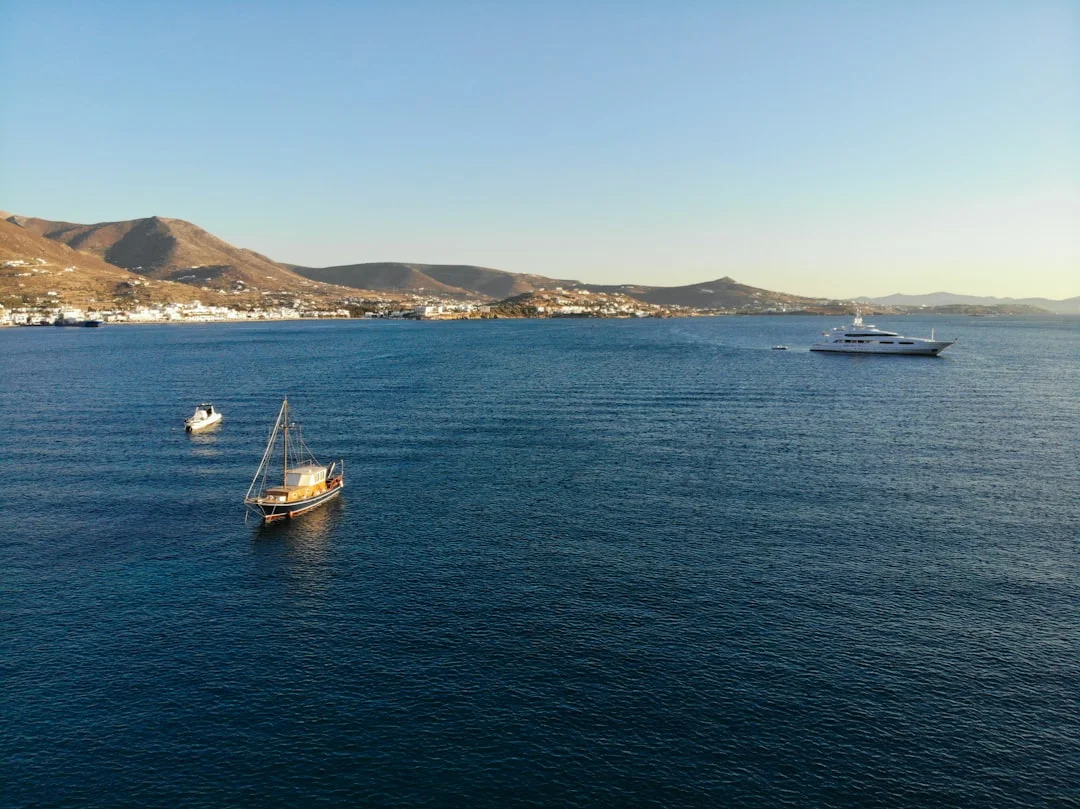
Photo by Dimitris Kiriakakis on Unsplash
Charter Planning: Bases, Boat Choice, Qualifications, Budget
Picking a base: Athens/Alimos vs Lavrio vs Paros/Mykonos
Your base determines your first two days more than your “dream itinerary” does. Most Greek charters run the Saturday rhythm: ~17:00 check-in, then Friday return and Saturday morning disembark (operator-dependent). That means day one is often a provisioning-and-shakedown evening, not a heroic offshore push.
Alimos (Kalamaki) near Athens is convenient for flights and logistics, but it adds sea miles before the Cyclades feel “Cyclades.” Lavrio can shorten the first jump into the island group, which matters if you only have 7 days and don’t want to spend day two motor-sailing in a building northerly. Starting from Paros or Mykonos (when available) puts you right in the core, but you’ll usually pay for that convenience in availability and flight coordination.
One-way charters can be the smartest way to make a 14 day Cyclades sailing route without backtracking, but they’re operator-dependent. Expect a relocation/one-way fee of €300–€1,000+, and verify the return-day rules early so you don’t buy flights that force bad weather decisions.
Monohull vs catamaran for the Cyclades (Meltemi comfort tradeoffs)
A 38–45 ft monohull (draft typically ~1.9–2.3 m) will generally point better and feel more “honest” upwind, but it can be lively in the chop when the wind pipes up. A 40–45 ft cat (draft ~1.2–1.4 m) offers space and steady living at anchor, yet the bridgedeck slap in short Aegean waves can be tiresome. Cats also bring extra beam at the dock and sometimes higher fees, plus Med-mooring is less forgiving when you’re wide and the wind is rude.
In the Cyclades, the boat choice is less about speed and more about how your crew handles motion and how confident you are docking in gusts. Cats can be wonderfully comfortable in the right anchorage, but they tempt crews into over-ambitious crossings because “it’s stable.” The sea doesn’t care that you paid more.
Bareboat requirements, skipper options, and insurance/deposit strategy
Greek bareboat paperwork varies by operator, but experience matters more than paper miles once the Meltemi starts tossing spray over the dodger. If your crew hasn’t done Med-mooring, heavy crosswind docking, or anchoring in crowded bays, hiring a skipper at €180–€250/day + food can be the best money you spend. A hostess runs €150–€220/day + food, and they’re worth it if you’d rather sail than argue about dish duty.
Budget beyond the headline charter rate. End cleaning is usually mandatory: €150–€300 for monohulls and €200–€350 for cats, plus fuel, port fees, and power/water. Deposits often sit at €2,000–€5,000, or you can buy a damage waiver around €250–€600 with a reduced deposit—useful if you don’t want a bad docking to ruin your month.
Here’s the cost reality most first-timers underestimate:
| Cost item | Monohull 38–45 ft | Catamaran 40–45 ft |
|---|---|---|
| Weekly charter (May/Oct) | €2,000–€4,500 | €4,000–€7,500 |
| Weekly charter (Jul/Aug) | €4,500–€8,500+ | €7,500–€14,000+ |
| End cleaning (typical) | €150–€300 | €200–€350 |
| Skipper (optional) | €180–€250/day + food | €180–€250/day + food |
| Deposit / waiver approach | €2,000–€5,000 or €250–€600 waiver | €2,000–€5,000 or €250–€600 waiver |
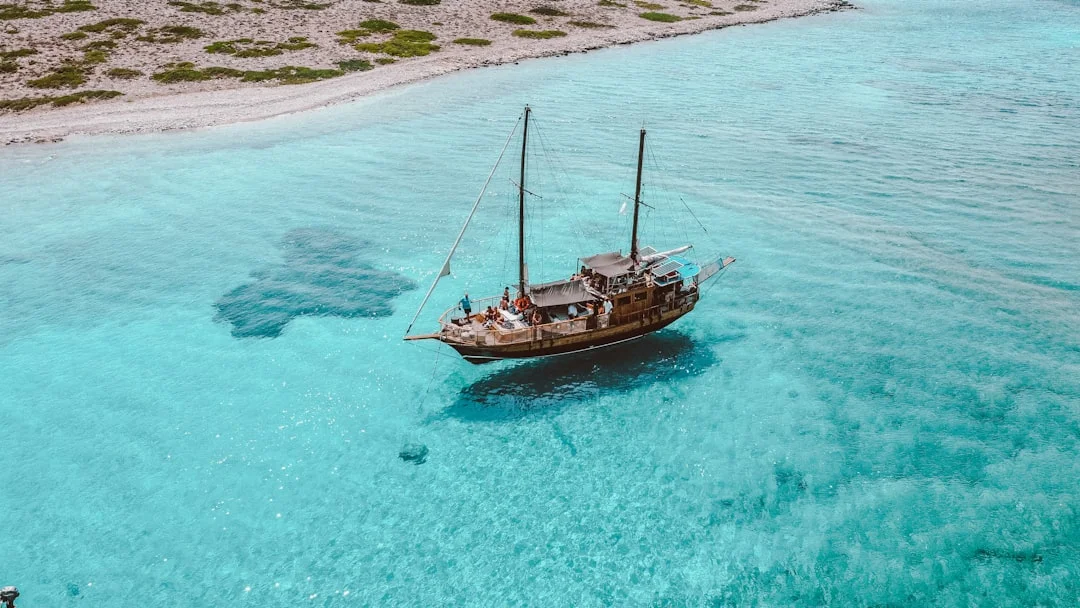
Photo by Johnny Africa on Unsplash
Cyclades Sailing Distances: NM, ETAs, Fuel and Water Planning
Distance-to-time math for realistic daily planning
A Cyclades plan should start with NM, not Instagram pins. Use a simple baseline: at 6 kn, 25 NM ≈ 4.2 hours underway; at 7.5 kn, it’s ≈ 3.3 hours. Then add reality: tacks, traffic, sail changes, and harbor approach time can easily add 30–90 minutes, especially when you’re short-tacking around a cape.
Key core legs you’ll likely use in any Paros Naxos sailing route: Mykonos–Paros ~23 NM, Paros–Naxos ~10–12 NM, and Naxos–Santorini ~40–45 NM depending on routing. Treat that Santorini leg as a proper passage, not a “long day sail,” particularly when the forecast is above 20–25 kn. If you want quick, accurate numbers, calculate the distance between ports to sanity-check your route planning and avoid optimistic time estimates.
A comfortable Meltemi daily range for most charter crews is ~15–30 NM/day with early starts. Save 40–55 NM days for stable forecasts, a rested crew, and a clear bailout plan.
Fuel burn and engine-hour budgeting in mixed sail/motor weeks
Meltemi weeks often mean more engine hours than people expect. Upwind angles, motor-sailing to keep speed through chop, and repeated docking attempts can quietly eat your diesel. A typical 40–45 ft monohull burns around 3–6 L/h, so 25 engine-hours can mean ~75–150 L depending on RPM and sea state.
Budgeting by hours is more reliable than “we’ll sail most of the time.” If you expect 20–30 engine-hours in a week, plan the fuel spend accordingly, and top up whenever you can—especially before heading to smaller islands where fuel delivery may be limited or scheduled. You can also estimate your fuel needs based on the voyage distance when you’re comparing alternate legs; it helps you see the NM impact of “just one more stop,” which often turns into “just one more fueling problem.”
Water autonomy: tank size, crew usage, and refill tactics
Water is the quiet limiter on Cyclades charters. Many 40–45 ft monohulls carry ~300–500 L, and conservative use runs 20–40 L/person/day including quick showers, dishes, and basic hygiene. With 6 people, you’re realistically at 3–4 days before refilling unless you have a watermaker (and unless everyone treats freshwater like it’s champagne).
Quay water isn’t guaranteed, and hoses can be missing, leaking, or already claimed by the boat that arrived at 14:59. Carry a simple backup: a couple of jerry cans (10–20 L) and a deck filler funnel, and refill opportunistically. On the electrical side, Greece is 230V/50Hz shoreside; onboard you’ll typically run 12V DC plus 230V AC via shore power, and adapters sometimes save the night.
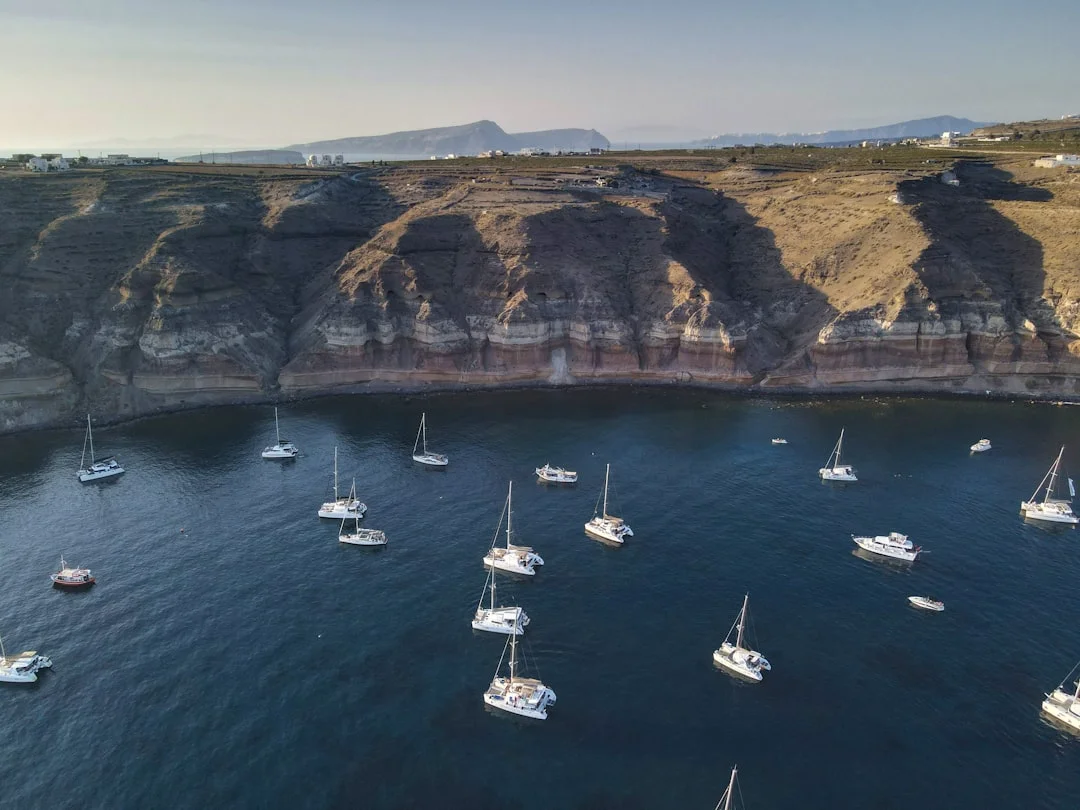
Photo by Dimitris Kiriakakis on Unsplash
7-Day Cyclades Sailing Itineraries (3 Practical Variations)
Variation A: Conservative Paros–Naxos–Mykonos loop
This is the 7-day plan that works most often, especially from Mykonos or Paros bases. Keep legs short, arrive early, and build one real buffer day so you’re not forced into an exposed crossing in 25–35 kn. Typical tender setups are 2.3–3.2 m inflatables with 2.5–10 hp outboards and 5–12 L portable tanks, which makes anchoring off and commuting ashore practical when quays are full.
A workable structure: Day 1 short hop and shakeout near base; Day 2 Mykonos–Paros (~23 NM) early; Day 3 Paros–Naxos (~10–12 NM); Day 4 lay day or short reposition; Day 5 island hop on the lee side; Day 6 return toward base; Day 7 back to base per the Friday return rule. Keep your daily target inside 15–30 NM unless the forecast is genuinely friendly.
Variation B: Sportier ‘outer leg’ to Santorini (forecast-dependent)
Santorini is the poster child of ambitious planning on a 7-day round-trip. The Naxos–Santorini (~40–45 NM) leg can be reasonable in <20 kn and settled sea, but it becomes a long, wet day when the wind is up. Make it a go/no-go decision at least 24 hours ahead, not a cockpit debate after you’ve already left the lee.
If you’re determined, the only way this works comfortably is by starting close (Paros/Mykonos base), departing at first light, and arriving early enough to anchor or berth before 15:00–16:00. You also need a clean “escape plan” if the caldera area is crowded or rolly; otherwise you’ll spend the evening doing anchor drills you didn’t ask for.
Variation C: Family-friendly short hops with lee anchorages
For kids, first-timers, or anyone who gets grumpy when the boat is slamming, keep hops to 10–20 NM and prioritize southern coasts. Think “two swims a day” rather than “one heroic passage.” In strong northerlies, a calm anchorage on the south side of Paros or Naxos beats a famous bay that’s exposed to swell wrap.
The family plan also benefits from an earlier daily rhythm. Depart by 08:00–09:00, arrive by lunchtime, and let the afternoon breeze do what it wants while you’re already secure. Your crew will think you’re a genius, and you don’t have to tell them it’s mostly just respect for physics.
Contingency swaps when Meltemi is 25–35 kn
When it’s blowing, don’t “push through” to keep the itinerary intact. Swap exposed crossings for lee-side moves, shorten legs to ≤12–15 NM, and use your buffer day. If you’re building your route on the fly, check the nautical miles for your planned route to quickly see whether a Plan B stop is a minor detour or a fuel-and-time problem.
The goal in a Meltemi week is simple: never let the schedule force the seamanship. The Cyclades will still be there after you stop bouncing the rig to death.
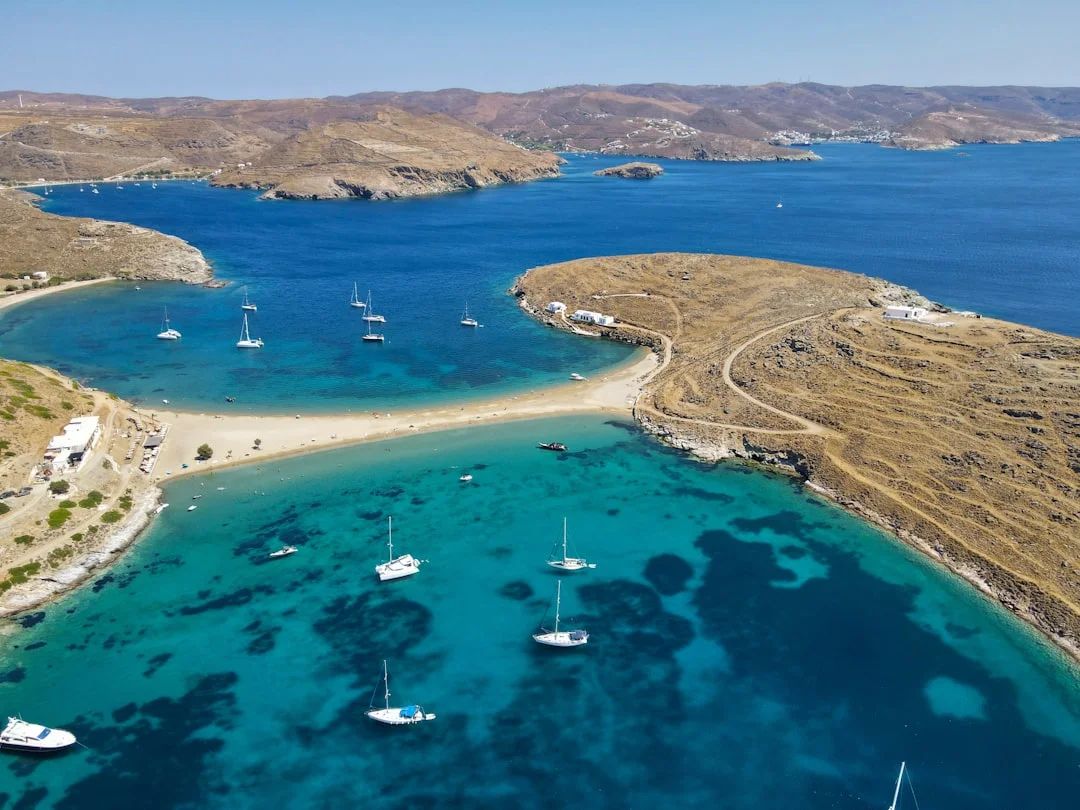
Photo by Dimitris Kiriakakis on Unsplash
10–14 Day Cyclades Routes: Small Cyclades and One-Way Options
14-day ‘core + Small Cyclades’ with built-in weather days
Extra days change everything because you stop racing the forecast. On a 10–14 day plan, keep the normal pace at ~15–30 NM/day, and use the flexibility to wait out a 25–35 kn cycle rather than bashing into it. Build 1–2 weather/lay days as part of the design, not as an apology.
The Small Cyclades cluster—think short legs and more anchor-focused nights—pairs well with Paros and Naxos because you can string together protected moves and choose your weather windows. With water temps often ~24–26°C in August, it’s the kind of plan where the boat becomes a swimming platform instead of a transportation device.
Adding Ios/Sikinos/Folegandros without creating upwind traps
Once you extend south, the main tactical risk is cornering yourself into a tough beat north when it’s time to return. A good rule is to only push farther south when you have at least a 48-hour forecast window that includes a manageable return leg, or a credible one-way plan. Long legs like 40–55 NM are fine in the right weather, but they’re not what you want when the crew is already tired and the wind is building.
Use “decision gates” at natural junctions: Paros/Naxos is one; the moment you commit beyond that, you’re increasing exposure. The best skippers I know aren’t braver; they’re better at turning around before pride gets involved.
One-way charter logic: reduce backtracking, increase flexibility
If your operator offers it, a one-way structure can turn a stressful loop into an easy downwind progression. Paying €300–€1,000+ for relocation can be cheaper than burning extra diesel, losing two days to backtracking, or forcing uncomfortable crossings. It also reduces the pressure of returning to the same base by Friday, which is a common cause of bad calls.
One-way charters also play nicely with real-world logistics: flights, crew changes, and rest days. Just confirm the fine print—some companies allow one-way only on certain weeks or only between specific bases.
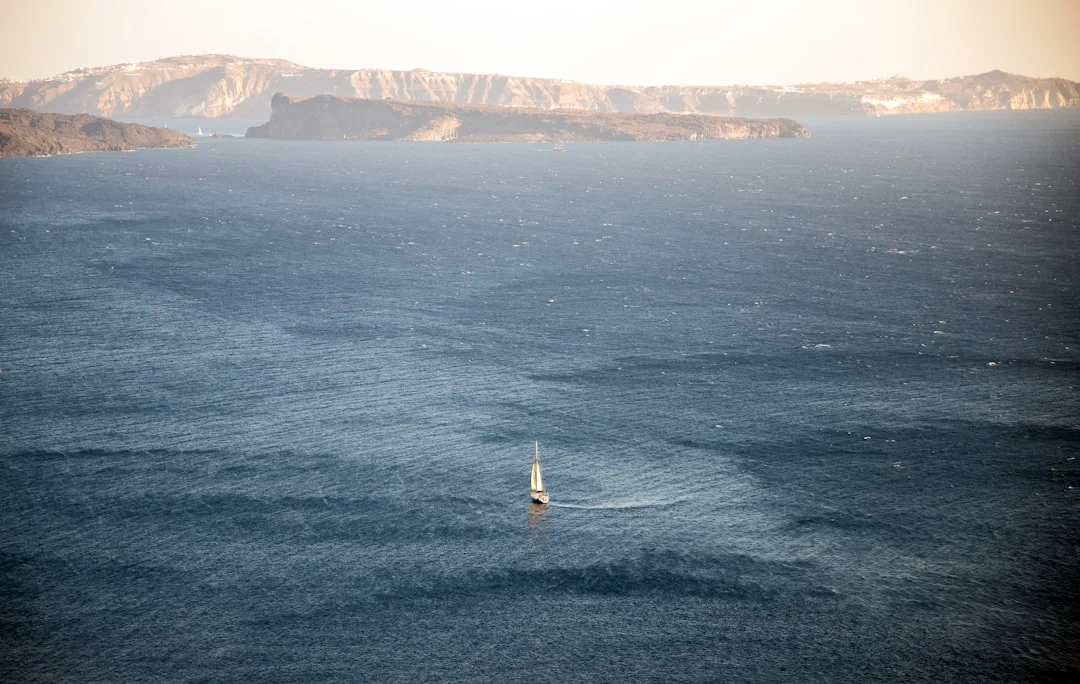
Photo by Sander Crombach on Unsplash
Ports, Marinas, Fees, and Anchoring Techniques in the Cyclades
Berthing methods: Med-moor, town quay, and anchoring off
Most Cyclades nights are some version of Med-mooring: bow anchor down, stern lines to the quay, and enough reverse power to keep control in gusts. Have your stern lines ready, fenders set high and low, and a crew brief that includes hand signals—because shouting in 30 kn is mostly theatre. Keep a sharp eye on your anchor lead; dragging it sideways across a crowded harbor is a quick way to make enemies.
Anchoring off is often calmer than fighting for quay space, provided the bay has holding and room to swing. In strong northerlies, lee anchorages on south coasts are worth more than a waterfront table. Don’t get seduced by a pretty north-facing bay if there’s swell wrap; the roll will win.
Fees, shore power/water realities, and arrival strategy
Fees vary widely by port type and how official the setup is. Expect €10–€40/night in smaller ports, and €30–€100+/night in busier marinas depending on length and season. Power and water, when metered, often add the equivalent of €5–€20/night, and sometimes you’ll pay and still get a pedestal that’s seen better decades.
Arrive early—again, 15:00–16:00 is a practical cutoff in peak season. Have a second-choice harbor in mind that’s within 5–12 NM so you’re not hunting in fading light. Nothing improves seamanship like knowing you can leave and try elsewhere without losing the day.
Anchoring scope, swing room, and gust management in Meltemi
Charter ground tackle is usually adequate but not magical. On many 40–45 ft boats you’ll see a 20–30 kg main anchor with 50–80 m of 10–12 mm chain, but you still need proper scope and a good set. Baseline scope is 5:1 in settled weather and 7:1 when it’s honking; in 5 m depth, ~25 m of rode is the minimum at 5:1, and more is often smarter.
In crowded bays, verify the set like you mean it. Back down gradually to a known RPM, watch transits ashore for movement, and confirm the chain direction matches your load. If you can’t swing safely, don’t pretend you can; reset or move before you become the evening entertainment.
| Overnight option | Typical cost (40–45 ft) | Power/water likely? | Noise/crowds | Arrival difficulty (Jul–Aug) |
|---|---|---|---|---|
| Town quay (small port) | €10–€40/night | Sometimes; often limited | Moderate; tavernas nearby | High after 15:00 |
| Full-service marina | €30–€100+/night | Likely 230V/50Hz; water often available | Higher; busy docks | Very high; book/arrive early |
| Anchoring off | €0 | No (unless you run generator) | Low–moderate; depends on bay | Medium; depends on holding/space |
Safety, Regulations, and Onboard Systems: What to Check
Standards and compliance to reference (CE/RCD, ISO, COLREGs)
Most charter yachts you’ll see in Greece are CE marked under EU RCD 2013/53/EU. The CE Design Category (A/B/C/D) is not trivia; it’s a shorthand for the conditions the boat is intended to handle when properly operated. In Cyclades summer conditions, a well-found Category B yacht is typical, but the category never replaces seamanship, maintenance, or conservative routing.
For a framework of “what good looks like,” the ISO standards are useful anchors (no pun intended): ISO 12217 for stability categories, ISO 10133 and ISO 13297 for DC/AC electrical installations, and ISO 10239 for LPG systems. You’ll still operate under COLREGs, and local traffic habits, which can be… interpretive around harbor mouths.
Pre-departure technical checks: LPG, electrics, comms, ground tackle
The handover is where you prevent the Cyclades classics: dragging anchors, tripping shore power, and mystery gas smells. Check the anchor system under load: run out 30–40 m of chain, confirm the windlass behaves, and make sure the chain counter (if fitted) is believable. Inspect the bridle/snubber and confirm you have chafe gear; Meltemi gusts love sawing through unprotected lines.
For LPG, do a sniff test at the locker, verify the solenoid switch works, and confirm you know where the shutoff is. ISO-wise, ISO 10239 is the benchmark conceptually; practically, you’re looking for intact hoses, secure bottles, and no “creative” fittings. On electrics, shore power is typically 230V/50Hz; confirm the boat’s inlet (often 16A) and that you have adapters, and test the RCD/ELCB trip before you trust it overnight.
Comms: fixed VHF should be DSC-capable with an MMSI programmed on many boats, and a handheld VHF is worth having for docking and as backup. Emergency in Greece is 112, and VHF Ch 16 is standard, but local port authority working channels vary—verify them in pilot books and local notices before you need them.
Heavy-weather operating habits for Cyclades charters
Reef earlier than you think you should, because the Meltemi builds and the chop steals speed. Plan your day to avoid lee shores and awkward approaches in the afternoon peak, and don’t be shy about taking a rest day when the crew is cooked. If nobody sleeps because the anchorage is rolling, the next day’s passage is automatically higher risk.
Fire and fuel checks aren’t glamorous, but they matter: look for obvious issues in fuel hoses (think ISO 7840 conceptually) and general fire protection expectations (see ISO 9094 as a reference point). You don’t need to quote standards to the charter rep; you need to spot problems before they become your problems at sea.
Practical Cyclades Skipper Tips: Crowds, Provisions, Plan B Stops
Crowd strategy: timing, anchoring etiquette, and ‘second-choice’ bays
In July–August, the best crowd strategy is boring: leave earlier and arrive earlier. A 30-minute delay at breakfast can mean the difference between an easy Med-moor at 14:30 and a three-try docking attempt at 17:00 in gusts. Always have a second-choice bay within 5–10 NM, and brief the crew that changing plans is normal, not a failure.
Anchoring etiquette matters because Cyclades bays can be tight. Give boats room to swing, avoid dropping over someone’s chain, and assume gusts will increase to 25–30 kn even if it’s calm at noon. If you need to reset your anchor, do it before dark; the spectators multiply at night, and none of them will help.
Provisioning and onboard consumption: water, power, and meals ashore
For 6 people/7 days, provisioning runs about €350–€800 depending on how often you eat aboard versus tavernas. Buy heavy items once near the base—water, snacks, pasta, breakfast—and then top up fresh produce every couple of days. In summer, manage the cold chain like you care: fridge temps creep up when people stare into it, and you’ll lose food faster than you lose winch handles.
Water discipline is the big one: 20–40 L/person/day is a realistic planning number, and on 300–500 L tanks you’re refilling every 3–4 days for a crew of six. Power is usually fine with shore power, but at anchor you’ll ration: instruments, fridge, and lights add up over a hot night.
Plan B routing when forecasts tighten
Plan B in the Cyclades means shorter legs and better shelter, not a different set of “must-see” islands. If the forecast trends from <20 kn to 25–35 kn, you either hold position, tuck into a southern lee, or move early to reduce exposure. The moment you start saying “we’ll be fine,” ask yourself if you’d still say that at 03:00 with a dragging alarm.
When you’re comparing alternatives quickly, Breezada’s sea distance calculator is useful for turning “it’s not far” into actual NM and time, which helps with fuel, daylight, and crew-rest decisions. Your best itinerary is the one that still works when the wind doesn’t cooperate.
| Scenario | Wind & sea | Recommended legs (typical) | Lee-friendly areas to favor | Avoid exposures |
|---|---|---|---|---|
| Plan A | <20 kn, moderate sea | 20–30 NM hops; e.g., Mykonos–Paros 23 NM, Paros–Naxos 10–12 NM | Mix of ports and anchorages; more flexibility | Long open-water legs late in day |
| Plan B | 25–35 kn Meltemi, steep chop | 10–20 NM hops; early departures; add lay day | South coasts of Paros/Naxos; well-protected bays; conservative harbors | North-facing bays, headland passages mid-afternoon, 40–55 NM crossings |
Tip box (budget reality): A typical weekly “extras” spend (fuel + port fees + water/power + provisions) can easily be €500–€1,400 for a monohull crew, before tavernas and transport. If that number scares the group chat, fix it before you pay deposits.
Frequently Asked Questions
For a 40–45 ft monohull averaging 6 kn, how do you compute ETD/ETA and daylight margin for a 23 NM Mykonos–Paros passage, including a 1-hour contingency for tacks and harbor approach?
Compute passage time as distance ÷ speed: 23 NM ÷ 6 kn ≈ 3.8 hours. Add your contingency (+1.0 hour) for tacks, traffic, and the final approach, giving ~4.8 hours total. If you want to be tied up by 15:00, plan an ETD around 10:00 at the latest, and earlier if the Meltemi is forecast to build after noon.
What anchoring scope and chain length should you actually deploy in 6–8 m depth with 25–30 kn Meltemi gusts, and how do you verify a proper set in crowded Cyclades bays?
In 6–8 m with 25–30 kn gusts, use 7:1 when space allows. That’s about 42–56 m of rode (plus bow height), and on an all-chain setup it usually means paying out 45–60 m depending on depth and swing room. Verify by backing down steadily to a firm load, watching shore transits for movement, and confirming the chain is not slowly “walking” as gusts hit; if it is, reset before the bay fills tighter.
How many liters of diesel should you budget if you expect 20–30 engine-hours in a week (3–6 L/h burn), and how does motor-sailing in chop change the range calculation?
At 3–6 L/h, 20 hours is 60–120 L, and 30 hours is 90–180 L. Motor-sailing in chop often pushes you toward the higher end because you’ll use higher RPM to maintain control and speed, and you may motor longer to hit arrival windows before 15:00–16:00. Budget conservatively, and top up when fuel is available rather than when it becomes urgent.
What shore-power constraints matter most in Cyclades quays (230V/50Hz, 16A inlets, adapters), and how do you prevent nuisance trips or reverse-polarity issues on charter boats?
Most pedestals are 230V/50Hz, and many charter boats use 16A shore inlets, but you may need adapters depending on the quay hardware. Prevent nuisance trips by turning high loads on gradually (water heater, kettle, battery charger), checking the boat’s ELCB/RCD, and inspecting the shore lead for heat or damaged pins. Reverse polarity is less of a headline issue on typical EU 230V systems than in some other regions, but you should still use the boat’s built-in protection and avoid sketchy pedestals that trip under modest load.
Which CE Design Category (A/B/C/D) and ISO-based system checks (LPG/electrical) are most relevant to confirm at handover before committing to a 40–45 NM leg toward Santorini?
For an exposed 40–45 NM leg, you want a properly maintained CE-marked yacht, commonly Design Category B in this charter size range, and you want to confirm systems are functioning as intended. Use the ISO standards as a checklist mindset: ISO 10239 concepts for LPG (no leaks, proper shutoffs, sound hoses), and ISO 10133/13297 concepts for DC/AC electrics (secure batteries, charging works, shore power protection trips correctly). Also confirm ground tackle condition and that the windlass can reliably deploy and retrieve 50–80 m of chain, because anchoring failures are a more common Cyclades problem than “the boat wasn’t rated for it.”
About the Author
Related Articles
Amalfi Coast vs French Riviera Sailing Guide (Costs & Routes)
Compare Amalfi Coast vs French Riviera sailing—costs, crowds, mooring rules, best months, and 7-day routes. Choose your coast and plan now.
By Breezada Team
Puget Sound Cruising Guide to Gulf Islands Routes
Plan routes, anchorages, and weather windows with this Puget Sound cruising guide for the Gulf Islands & San Juans. Read now and start plotting.
By Breezada Team
Sailing Amalfi Coast Guide: Ports, Anchorages & Rules
Sailing Amalfi Coast guide to Capri, Positano & Amalfi: best ports, anchorages, fees, VHF and rules. Plan your route—read now.
By Breezada Team
Dry Tortugas Sailing: Routes, Anchoring & Permits
Plan Dry Tortugas sailing from Key West with routes, weather windows, anchoring/moorings, and permits. Read the guide and plan your trip.
By Breezada Team